


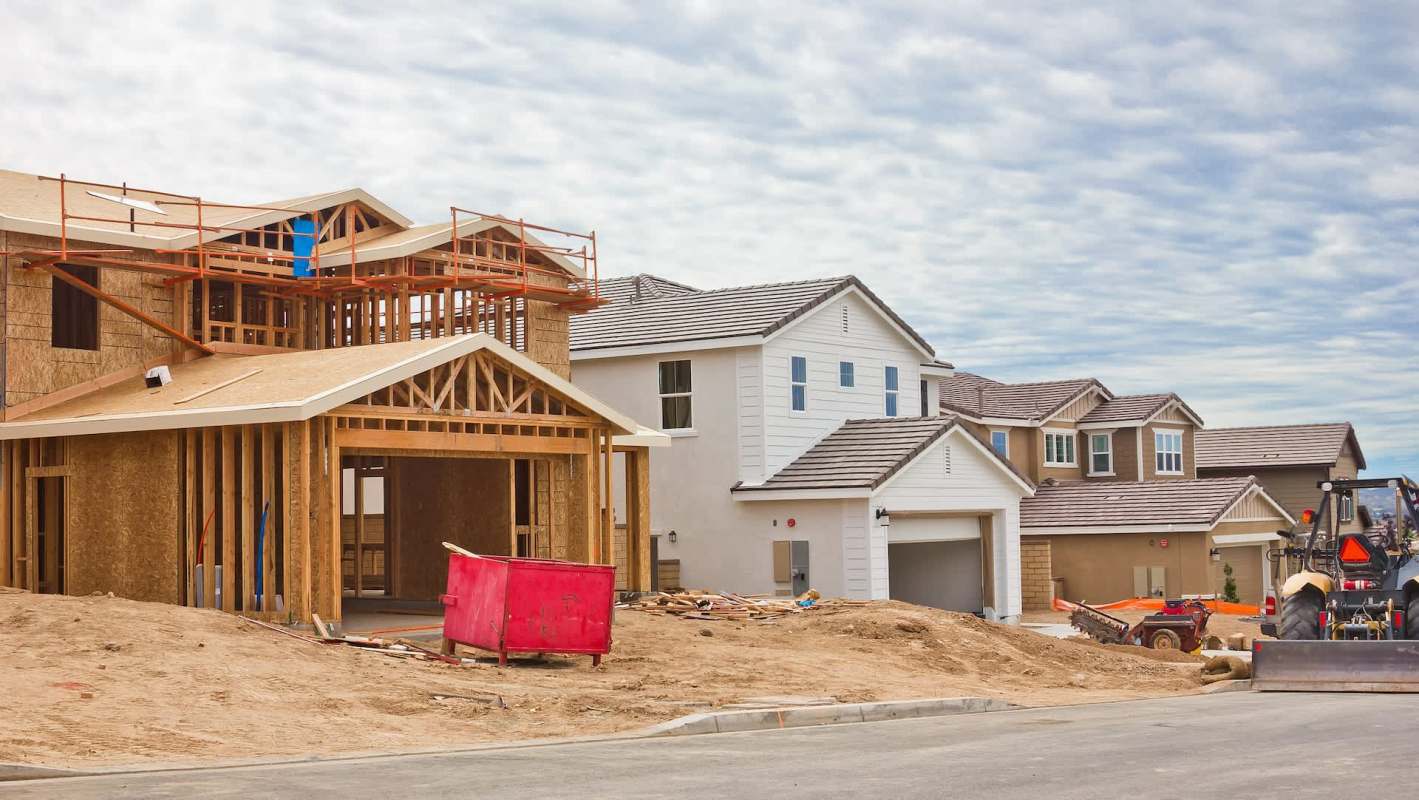
Massachusetts has made measurable progress toward its ambitious housing goal, but a bigger question remains: Can the state build fast enough to ease mounting costs?
Housing Secretary Juana Matias suggested the answer may come down to reducing delays before projects even get underway.
Here's what to know
A statewide housing production tracker launched by the Executive Office of Housing and Livable Communities shows Massachusetts has reached about 15.6% of its 2035 goal of creating 222,000 homes, WWLP reported.
Data from the tracker shows 34,561 homes were added in 2025, leaving 187,259 more to produce.
At a downtown Boston event hosted by the Commercial Real Estate Development Association, Matias identified site plan review reform in an economic development bill as the change under discussion that could matter most.
"In terms of project feasibility and what we see would have the greatest impact, it's site plan review. Nothing is more important than time and certainty when it comes to projects," she said.
TCD Picks » Quince Spotlight
💡These best-sellers from Quince deliver affordable, sustainable luxury for all




The politics and economics of affordability continue to center on housing. A MassINC Polling Group survey found that residents still see Massachusetts as a highly desirable place to live, but affordability is shaping whether they stay in the state. Respondents said cost of living, housing, and taxes are the issues leaders should prioritize, and Gov. Maura Healey has called housing the "No. 1 issue facing the state."
Matias did not provide an updated count of how many homes have been built in 2026, and Matias spokesperson Kevin Connor said the state plans to update the tracker annually.
More background
The strong 2025 output is also accompanied by warning signs that construction may already be slowing.
According to WWLP, a Pioneer Institute report found that Massachusetts added 21,891 units to its housing stock from July 2025 to July 2026, down from 40,069 from July 2024 to July 2025, though still ahead of the pace seen since 2020.
Fewer completed homes can mean tighter supply, higher rents, and fewer opportunities for homeownership in a state where affordability is already pushing some people to consider leaving.
Matias also pointed to pressures outside the state's control.
"Every new tariff is a tariff on a new home. It's increasing costs, whether it's, you know, lumber, steel, appliances," she said, arguing that federal policy, interest rates, and inflation can all make private development more difficult to build.
She said state leaders are focusing on the factors they can control, particularly permitting and approval systems that can delay otherwise viable projects.
What's being done?
Matias said underused state-owned land could support more than 5,600 homes, while the state has approved more than 2,000 accessory dwelling units since those units became legal by right, according to WWLP.
Additional efforts aim to convert existing buildings or unlock development at the local level. A commercial conversion tax credit has supported nearly 1,200 units, and the Housing Development Incentive Program has helped generate 3,400 homes in Gateway Cities.
Massachusetts also has another 10,000 homes moving through the pipeline under the MBTA Communities Law, which the Supreme Judicial Court upheld on Sept. 18.
On top of that, the state is drafting rules for a sales tax break on materials used in multifamily construction, and advancing a "Move-In Mass" concept for manufactured or modular single-family homes designed to serve as a starter-home option.
Matias framed expectations cautiously: "I want to be straight with all of you. This work is going to take time."
Where can I learn more?
These stories follow similar efforts in Massachusetts and elsewhere to speed housing production by cutting delays and broadening building options.
• In Massachusetts, lawmakers altered long-standing gas hookups for new homes as building policy shifts.
• In California, legislators moved to fast-track infill housing where jobs, transit, and services already exist.
• In Nevada County, supervisors approved tiny homes on wheels as another lower-cost housing path.

Get TCD's free newsletters for easy tips, smart advice, and a chance to earn $5,000 toward home upgrades. To see more stories like this one, change your Google preferences here.






