


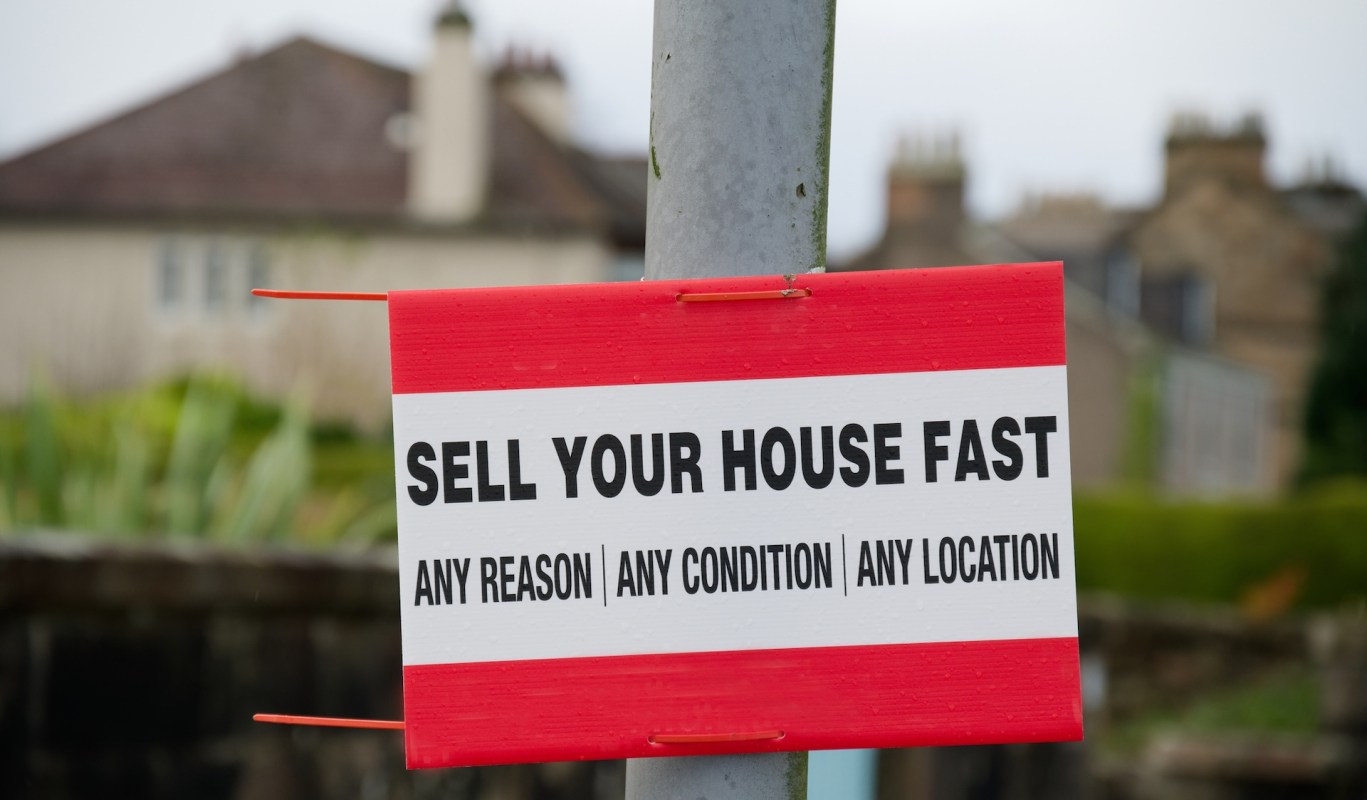
For someone dealing with repair bills, debt, or an inherited house they don't want, a hand-lettered "We Buy Houses" sign can look like an easy way out.
Missouri is one of several states now taking a closer look at real estate wholesaling, which critics say can leave vulnerable homeowners selling for far less than their homes are worth.
Here's what to know
Lawmakers in at least 15 states have recently approved new rules for home wholesalers, Stateline reported, and Missouri now requires wholesalers to send sellers a written notice at least two weeks before closing.
The notice warns sellers that a wholesaler might offer less than the home is worth and could hand the deal off to another buyer. It also urges them to talk with an attorney.
Unlike a typical home sale, wholesaling doesn't start with a public listing. Instead, a wholesaler agrees to buy an off-market home at a discount, then passes the contract to another investor before the deal closes and keeps a profit as the middleman.
State Rep. Chris Brown, a Republican who sponsored the bill in the House, said the law is meant to require disclosure, not end wholesaling.
TCD Picks » Quince Spotlight
💡These best-sellers from Quince deliver affordable, sustainable luxury for all




Brown told Stateline, "We're just trying to make sure that there's transparency there and that the seller of the property is in fact educated and fully informed as to what the wholesaler plans to do with the property. That's all it is."
He also said wholesalers go after people in financial trouble or owners of homes with major problems. "Some of these wholesalers become a little bit predatory in nature, and then people just lose a lot of equity in their house," he added.
More background
Jenn Jones, an AARP vice president focused on retirement security and livable communities, said the stakes are especially high for older homeowners.
"For a lot of older adults, their retirement security, their financial security, is in that house," she said.
Critics say minority, low-income, and older homeowners are often the ones approached, and they may not realize what their home is worth or that the cash buyer may never own it.
Jeff Watson, general counsel at the National Real Estate Investors Association, acknowledged that "they're not the majority" and added, "There is a small percentage of wholesalers, in my opinion, that do the business correctly."
He added that wholesalers can help sell the most run-down homes, such as when heirs living in another state want to part with a damaged house quickly.
What's being done?
States aren't all handling the issue the same way. Per Stateline, Maryland, Ohio, Oklahoma, and Texas now require wholesalers to disclose details to sellers, while Illinois, South Carolina, and Rhode Island have required many wholesalers to get a real estate license, which gives state regulators oversight of them.
In Rhode Island, state Sen. Robert Britto said the licensing measure drew "literally no opposition."
Rebekah Wagoner, an associate counsel at the Rhode Island Association of Realtors, said the group's concern is transparency because "a lot of the consumers didn't understand the transaction."
Jones said sellers should be told when the wholesaler isn't the final buyer, get time to arrange an independent valuation, and should be able to back out of the deal if they have second thoughts.
"This is about making sure that people understand fully the decision that they're making, and they don't end up in a situation where they are potentially jeopardizing either their own financial security or that of their kids because they were pressured to sell," Jones explained.
Where can I learn more?
These housing stories examine other cases where homeowners and buyers can be put at a disadvantage and how states are trying to step in.
• In Michigan, lawmakers are targeting big investors buying homes unless they add housing or rehab.
• In Colorado's Green Valley Ranch, a homeowners association is selling people's homes over debts and evicting residents.
• Across several states, lawmakers now require flood risk history disclosure before homeowners commit to a purchase.
• Buyers considering rural property can miss red flags buried in deeds, access rights, and utilities.
• Many Americans now find home insurance denied, leaving mortgages out of reach in riskier areas.

Get TCD's free newsletters for easy tips, smart advice, and a chance to earn $5,000 toward home upgrades. To see more stories like this one, change your Google preferences here.






