


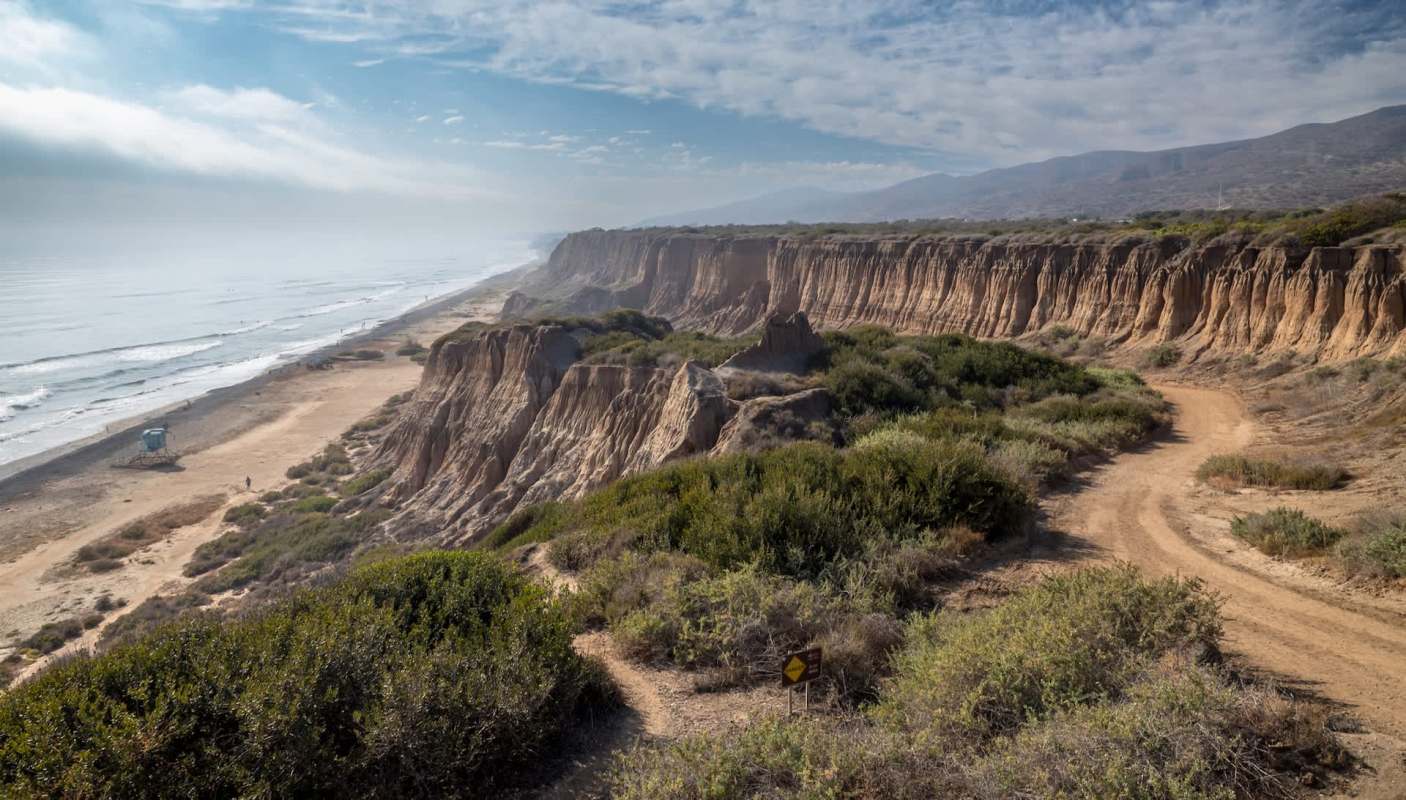
California is bracing for flooding and landslides ahead of the super El Niño expected in 2026.
In San Clemente, that threat is already visible at North Beach, where rising seas and crashing waves have effectively cut in half what was once a long, walkable stretch of sand, according to The Independent.
The Southern California city offers a clear example of what happens when sea-level rise meets coastal development: beaches narrow, bluffs become unstable, and key transportation routes start to break down.
Here's what to know
Erosion has steadily stripped San Clemente, a town of 62,000 people, of shoreline. Waves have worn away North Beach, while instability along nearby bluffs has repeatedly interrupted a coastal passenger rail line that also carries freight and military traffic. That vulnerable 7-mile stretch is part of a 351-mile corridor connecting San Diego, the Los Angeles County port complex, and San Luis Obispo.
Sean Vitousek, a U.S. Geological Survey research oceanographer, says the direction of change is clear: "It is going to keep rising, and rising, and the beaches will retreat landward."
Scientists have been warning that this kind of damage would spread, and researchers projected that more than half of Southern California's beaches may be significantly eroded by 2100.
TCD Picks » Quince Spotlight
💡These best-sellers from Quince deliver affordable, sustainable luxury for all




El Niño years can worsen those threats. Storm surge has already pushed seawater into homes in Long Beach near Los Angeles, and Pacifica, south of San Francisco, shut down its damaged concrete pier. A study found that El Niño events are intensifying because of human-caused climate change.
More background
A big part of San Clemente's problem is that its beaches are no longer being naturally rebuilt the way they once were. Development has limited the sediment supply that once replenished the shoreline, while larger waves leave less buffer against the ocean.
City Manager Andy Hall said the city faces about a 3 million-cubic-yard sand shortfall, and hauling that amount in would take roughly 300,000 truck trips.
For residents, the change is immediate and visible.
Cameron Cosgrove, a San Clemente resident who wrote the local tax measure, said, "We've lost our walkable beach. It used to be you could come to North Beach, walk the beach trail, or on the beach to the pier and actually all the way down to the south end of town. Can't do either anymore."
What's being done?
Placing rock along the coastline has been one step transportation officials have used to protect the rail line, but that approach can create new erosion problems. When waves hit those rocks, they can pull more sand out to sea, potentially worsening beach loss and putting the tracks at risk again.
Hall and Orange County Transportation Authority CEO Darrell Johnson have both said more sand is needed, as San Clemente voters consider a ballot measure for a 1% sales tax to fund wildfire protection and beach replenishment.
Beach nourishment has been used in places such as Huntington Beach, though City Councilman Zhen Wu, an opponent of the measure, argues that San Clemente should pursue a broader regional strategy rather than a local tax.
Johnson said securing state permits for additional sand has been difficult, and that California's emergency declaration ahead of El Niño may help speed up the process. Over time, he said, officials plan to examine moving trains inland.
"If we can't figure out how to shore up properly in a way that is long-term in nature, and we can't figure out how to relocate, I think that is a question that's going to have to be asked. 'What happens to passenger rail? What happens to freight?'" Johnson said.
Where can I learn more?
San Clemente's shrinking shoreline reflects pressures playing out on coasts far beyond Southern California.
• Across the U.S., rising seas are overwhelming roads, homes, and basic coastal infrastructure.
• Along Tunisia's coast, this beach won't exist within years as erosion devours shorelines.
• In Maine's Sipayik, sea-level rise is washing away land central to Passamaquoddy tradition.
• In South Florida, citywide flooding keeps getting worse as seawater pushes into neighborhoods.
• On Massachusetts' Cape Ann, there is no central plan for coastal retreat.

Get TCD's free newsletters for easy tips, smart advice, and a chance to earn $5,000 toward home upgrades. To see more stories like this one, change your Google preferences here.






