


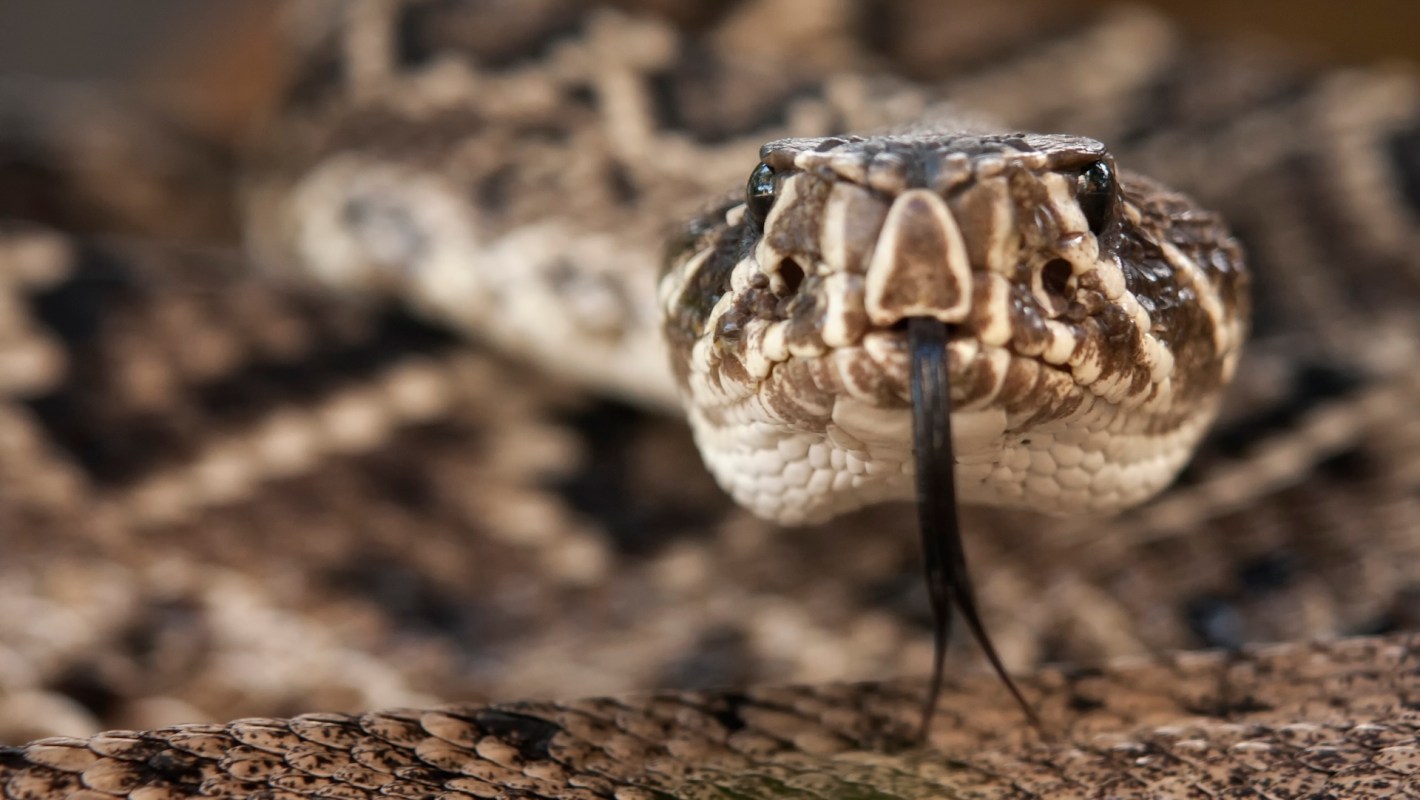
A backyard pool on Hilton Head Island turned into an unlikely wildlife crossing as a huge rattlesnake swam from one end to the other, lifted itself out headfirst, and moved across the patio toward nearby woods.
The startling video reminds many homeowners that the line between built spaces and wild habitat is thinner than it might seem.
Here's what to know
According to Ellen McIlvaine, who shared footage taken by her mother, Jill McIlvaine, the snake in the Palmetto Dunes pool was an eastern diamondback rattlesnake.
After reviewing the footage, Jay Cantrell, assistant chief of wildlife for the South Carolina Department of Natural Resources, told The Island Packet the snake was "absolutely" an eastern diamondback and a "very healthy one."
The species usually measures between three and six feet long, although some individuals can reach eight feet, based on information from Smithsonian's National Zoo and Conservation Biology Institute. The South Carolina Department of Natural Resources said the eastern diamondback is the world's largest rattlesnake and the most venomous snake in North America.
Smithsonian's National Zoo and Conservation Biology Institute also said the snake's venom contains a hemotoxin that destroys red blood cells and damages tissue, and bites can be fatal to humans. The report showed that South Carolina Department of Natural Resources information identifies the species by "dark diamond-shaped dorsal blotches defined by a border of yellowish scales."
TCD Picks » Quince Spotlight
💡These best-sellers from Quince deliver affordable, sustainable luxury for all




He also gave a seasonal reason the snakes may be easier to spot in August and September.
"They are more visible this time of year (August and September) as it is breeding season, and they are on the move."
More background
In comments to The Island Packet, SCDNR state herpetologist Andrew Grosse said eastern diamondbacks are commonly found in the Lowcountry. DNR said the species lives in "coastal lowlands from southeast North Carolina to the Florida Keys."
The encounter happened in a residential setting rather than deep in undeveloped habitat.
He said the snake's range has shrunk dramatically. Grosse attributed that decline in part to rapid development threatening the longleaf pine ecosystems the species depends on, and he said snake fungal disease remains an ongoing and lethal problem for rattlesnakes.
Where can I learn more?
Strange snake encounters around homes have made headlines elsewhere, and rattlesnakes are drawing attention for other reasons too. They include snakes turning up in houses, a breeding-season showdown in Colorado, and warnings that venomous species may move closer to coastal communities.
• In Arkansas, taking over a home startled viewers before experts offered a surprisingly harmless explanation.
• In Australia, a snake in a shower hissed and struck as a catcher moved in.
• At Colorado's Garden of the Gods, battling for breeding rights, prairie rattlesnakes were mistaken for mating.
• Along vulnerable coastlines, venomous snakes move toward populated areas as habitat pressures reshape their range.

Get TCD's free newsletters for easy tips, smart advice, and a chance to earn $5,000 toward home upgrades. To see more stories like this one, change your Google preferences here.







