


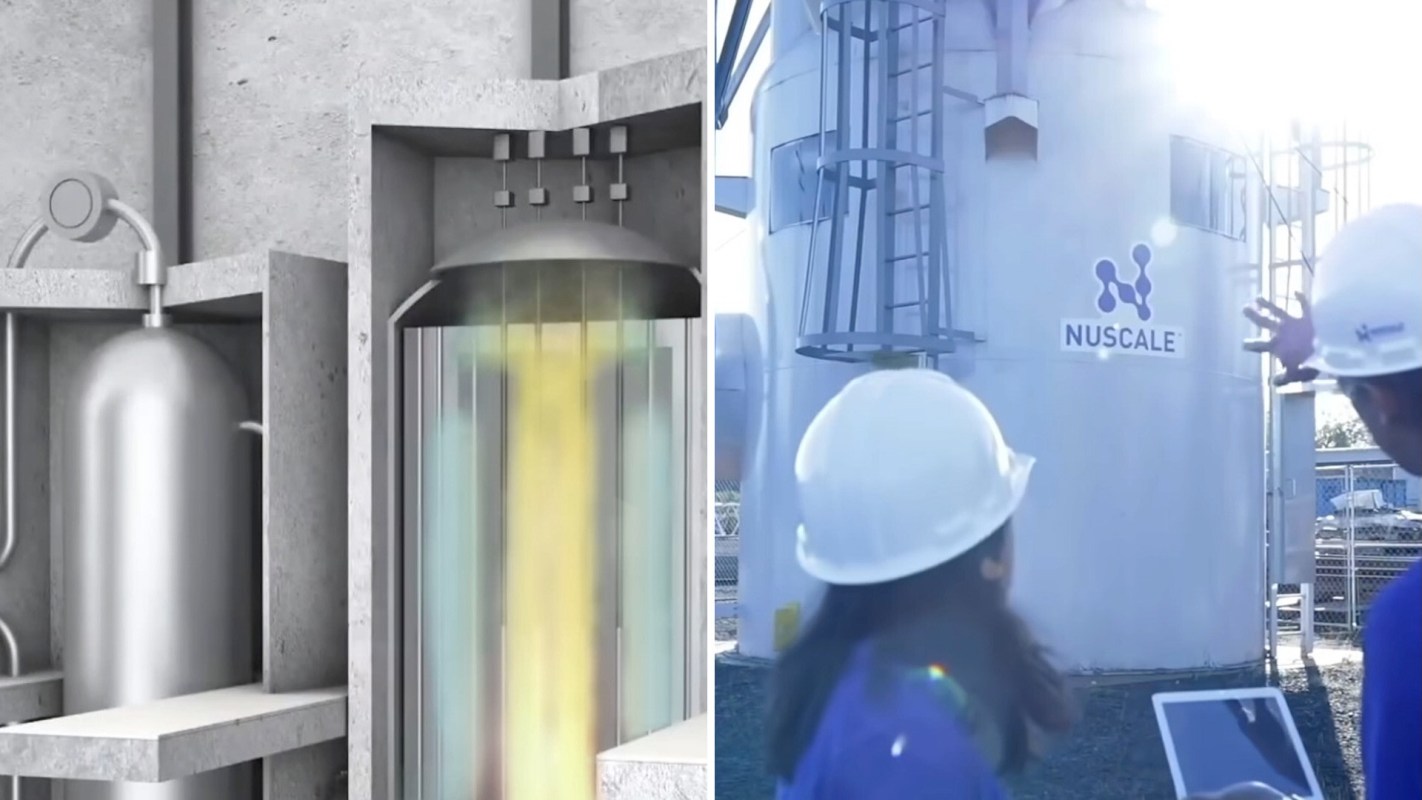
In 2023, NuScale's flagship small-reactor project collapsed under soaring costs, and the central question around nuclear power has since shifted to whether small modular reactors are finally becoming real or whether 2026 is just another round of expensive optimism.
For utilities, taxpayers, and households facing rising electricity demand, the answer carries major implications. If SMRs work, they could add reliable, low-pollution power to the grid. If they don't, they could siphon time and money from cheaper options already scaling up.
Here's what to know
An Undecided video argued that 2026 may be the most encouraging year yet for small modular reactors.
Matt Ferrell, who hosts the channel, said that optimism is tied to a burst of activity. Several commercial nuclear projects are starting construction after about a decade without new groundbreakings, and the Trump administration has reserved $900 million for SMRs. Ferrell added that $94 million has already been awarded.
The renewed interest is notable partly because NuScale's Utah project failed so publicly. Ferrell said projected costs rose from $3 billion in 2015 to $4.2 billion in 2018, then $6.1 billion in 2020 and $9.3 billion in 2023, before customers backed away.
His repeated assessment of SMRs had been: "promising, but unproven."
TCD Picks » Quince Spotlight
💡These best-sellers from Quince deliver affordable, sustainable luxury for all




Compared with the 600-to-1,500-megawatt output typical of conventional reactors, Ferrell said SMRs are intended to produce about 70 to 350 megawatts, with major equipment built in factories and assembled later on-site.
To sum up the idea, Ferrell pointed to Reuters columnist Gavin Maguire, who wrote: "The goal is simple. To turn nuclear power from a construction industry back into a manufacturing industry."
But that business case still assumes a manufacturing scale the sector has not yet achieved. Ferrell said SMR power currently comes out to roughly $214 per megawatt-hour before any factory-scale learning effects, versus about $40 to $98 for utility-scale solar and $37 to $99 for onshore wind.
More background
In the U.S., Ferrell noted, nuclear still provides about one-fifth of electricity even though much of the reactor fleet was built before 1990.
He said more nuclear capacity could cut reliance on coal, oil, and gas and provide steadier support for the grid as electricity demand rises.
But nuclear power still carries the familiar downsides of very high upfront costs, long construction periods, and radioactive waste.
He also said some SMR concepts face fuel-supply and regulatory limits, making deployment more complicated than optimistic headlines suggest.
Even nuclear supporters voiced doubts in the video's comments. One commenter wrote, "Meanwhile solar and battery storage just keep getting cheaper and easier to deploy."
Ferrell also pointed to a crowded development pipeline. With more than 100 SMR designs now under development worldwide, he said, it may be harder for any single design to be repeated often enough to bring costs down.
Where can I learn more?
These stories look at whether advanced nuclear projects can move beyond the hype. They cover NuScale's partnership, warnings about SMR hurdles, and technical progress on molten-salt reactors.
• NuScale and Paragon reached a deal to push forward tiny reactor development in the United States.
• Experts warned that smaller nuclear reactors face stubborn cost, fuel, and regulatory hurdles.
• Researchers made progress on safer, scalable nuclear energy by tackling molten-salt corrosion and leak risks.

Get TCD's free newsletters for easy tips, smart advice, and a chance to earn $5,000 toward home upgrades. To see more stories like this one, change your Google preferences here.






