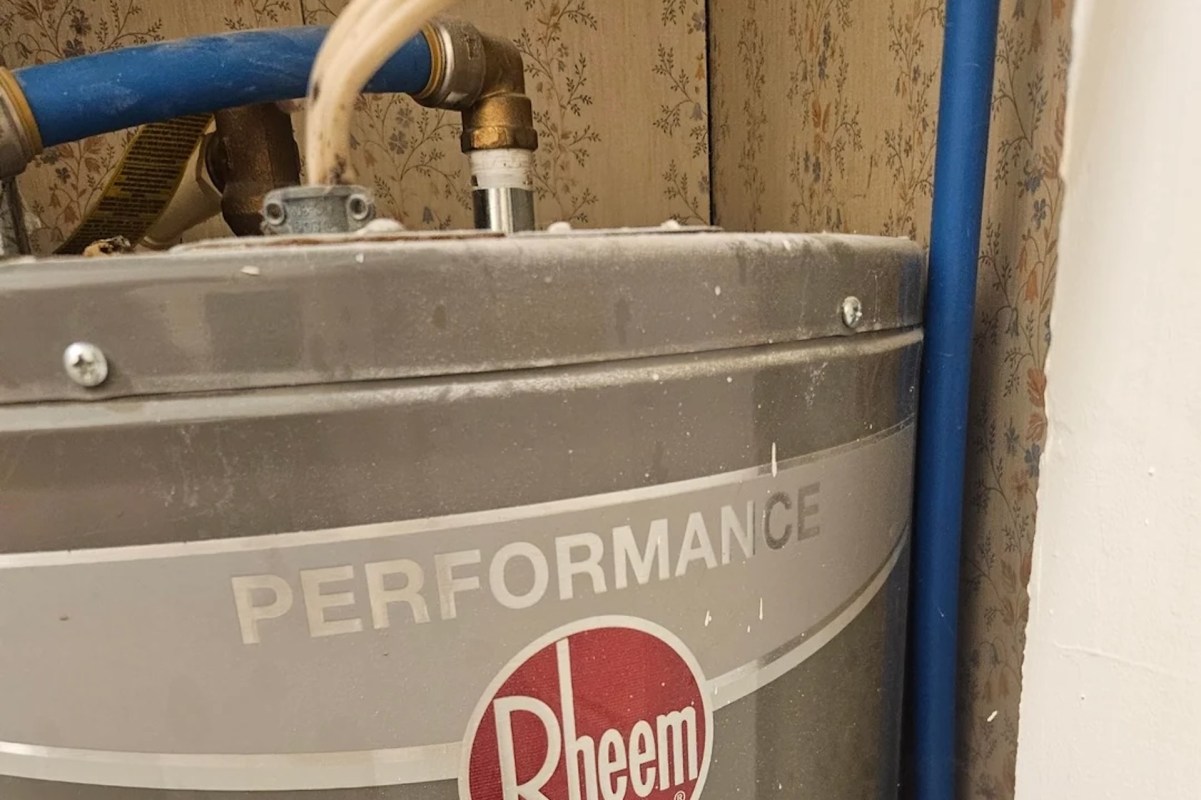
A little dampness around a water heater can mean an easy fix or a full system upgrade, and seeing that sight can make a homeowner's head start to spin.
That was the unsettling discovery for one buyer who said a "poorly flipped" single-wide came with a 40-gallon electric water heater whose temperature-and-pressure relief line empties behind the tank, out of sight.
Here's what to know
On Reddit, the homeowner wrote, "I am the unfortunate owner of a poorly flipped single wide." They said moisture had appeared near the base of a Rheem 40-gallon electric water heater dated Dec. 23, 2018, even though the tank itself appeared dry.
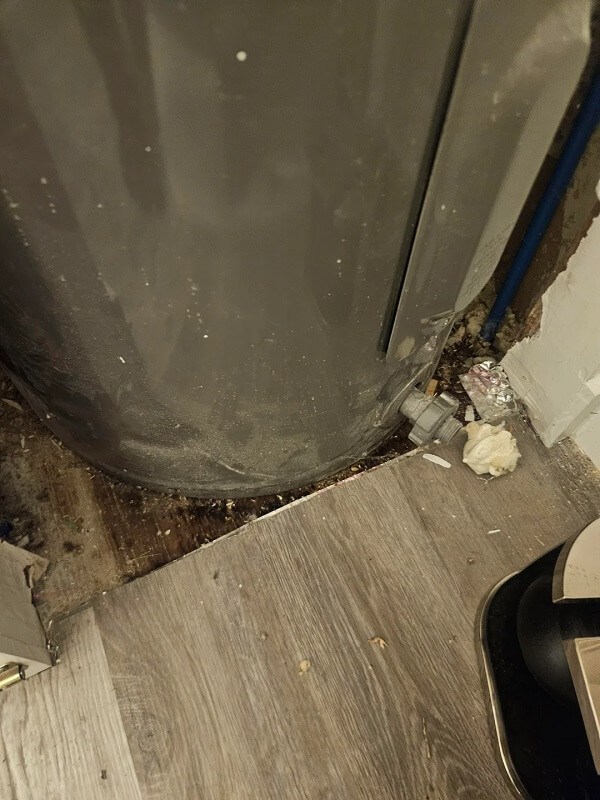
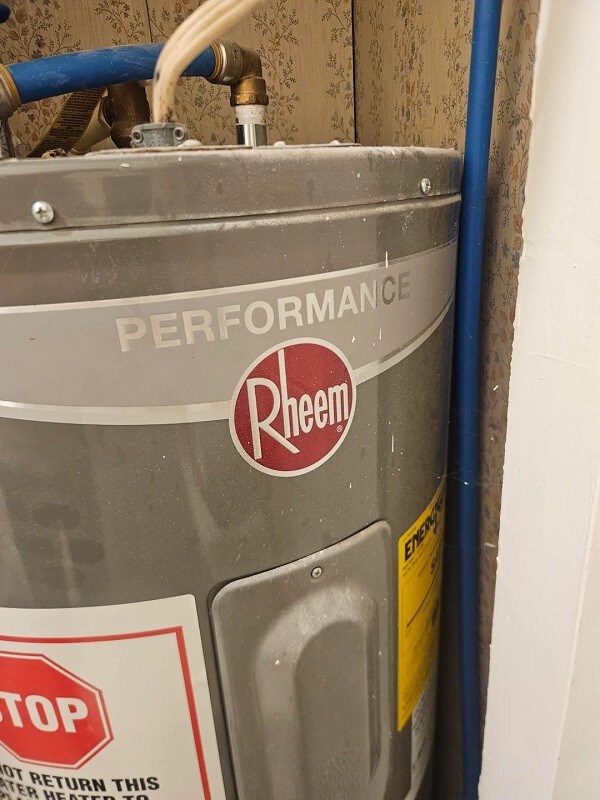
The bigger concern was the hidden discharge point. The homeowner said that the T&P valve line runs "to the floor behind the tank, which I can't see or access." Because they could not see where that line ended, it was much harder to judge whether the valve had opened or whether the tank itself was beginning to fail.
For homeowners who end up replacing a standard electric unit, that can also be an opportunity to lower monthly costs. Heat pump water heaters can save a household hundreds of dollars per year on utility bills; Energy Star says a family of four could save about $550 annually compared with a standard electric model.
One reply said a warm valve by itself was not a red flag: "So the valve itself being warm is just a byproduct of the water being heated." The commenter added that if the T&P valve is actually releasing water, "you can usually hear it hissing or water moving through it" and said tank failure seemed more likely than a valve issue.
The homeowner added that they had received a boil water notice from the trailer park "due to pressure related issues." That raised the possibility that unusual water pressure may have contributed to the dampness, but because the discharge line was hidden, the system's early warning sign may have been masked.
More background
A T&P valve is designed to protect a water heater from dangerous temperature or pressure buildup. When it opens, it should direct hot water to a safe discharge point. However, if that outlet drains somewhere invisible, a homeowner may miss drips that could signal excess pressure, a failing valve, or a water heater nearing the end of its life.
Save $10,000 on solar panels without even sharing your phone number Want to go solar but not sure who to trust? EnergySage has your back with free and transparent quotes from fully vetted providers in your area. To get started, just answer a few questions about your home — no phone number required. Within a day or two, EnergySage will email you the best options for your needs, and their expert advisers can help you compare quotes and pick a winner. Solar panels can save you more than $50k over their 25-year lifespan, and EnergySage can help you save as much as $10k on installation. Which begs the question — isn't that worth an email or two? |

A hidden leak can damage flooring, subfloors, and walls, especially in tight utility spaces like manufactured homes, where repairs can quickly become more invasive and expensive. In this case, the poster said removing the tank would even require removing a toilet.
Another commenter urged the homeowner to "read and follow the entire installation manual that comes with your next water heater." They also said the new unit should be "rated for manufactured homes."
What can be done?
A first practical move discussed in the thread was making the relief discharge easier to watch. One commenter said repiping the T&P line so that it would end somewhere visible wouldn't hurt, and another suggestion was using an inexpensive gauge on a hose bib to check the home's water pressure.
If a replacement water heater is on the table for you, Cala is one company worth checking out. Its customizable smart heat pump water heaters help homeowners lower their energy bills by heating water exactly when it's needed.
By matching hot-water production to a household's routine instead of constantly reheating water with conventional electric resistance, those systems can help reduce wasted electricity and make bills more predictable.
Other ideas mentioned in the thread included a catch pan, a pressure regulator, and a thermal expansion relief valve, especially if local pressure swings are suspected. Those relatively small planning choices can help prevent much bigger water-damage headaches later.
For anyone already facing a replacement, comparing a basic electric tank with a smart heat pump option such as Cala could turn a frustrating repair into a longer-term, money-saving upgrade.
One commenter put it bluntly, "This isn't likely to get better, and best to replace it on your terms, rather than when it completely bites the dust and you're stuck without hot water."
Where can I learn more?
These stories cover maintenance, corrosion, hidden leaks, unusual heater behavior, and replacement choices.
• A few habits that keep your water heater running longer can delay leaks and replacement.
• On Reddit, whole-house softeners can kill tanks faster as anodes corrode away.
• A homeowner's abnormal phenomenon under a water heater pushed commenters to suggest calling a plumber.
• A cagey plumber's perplexing appliance advice left one homeowner rethinking a switch away from tanks.

Get TCD's free newsletters for easy tips, smart advice, and a chance to earn $5,000 toward home upgrades. To see more stories like this one, change your Google preferences here.