


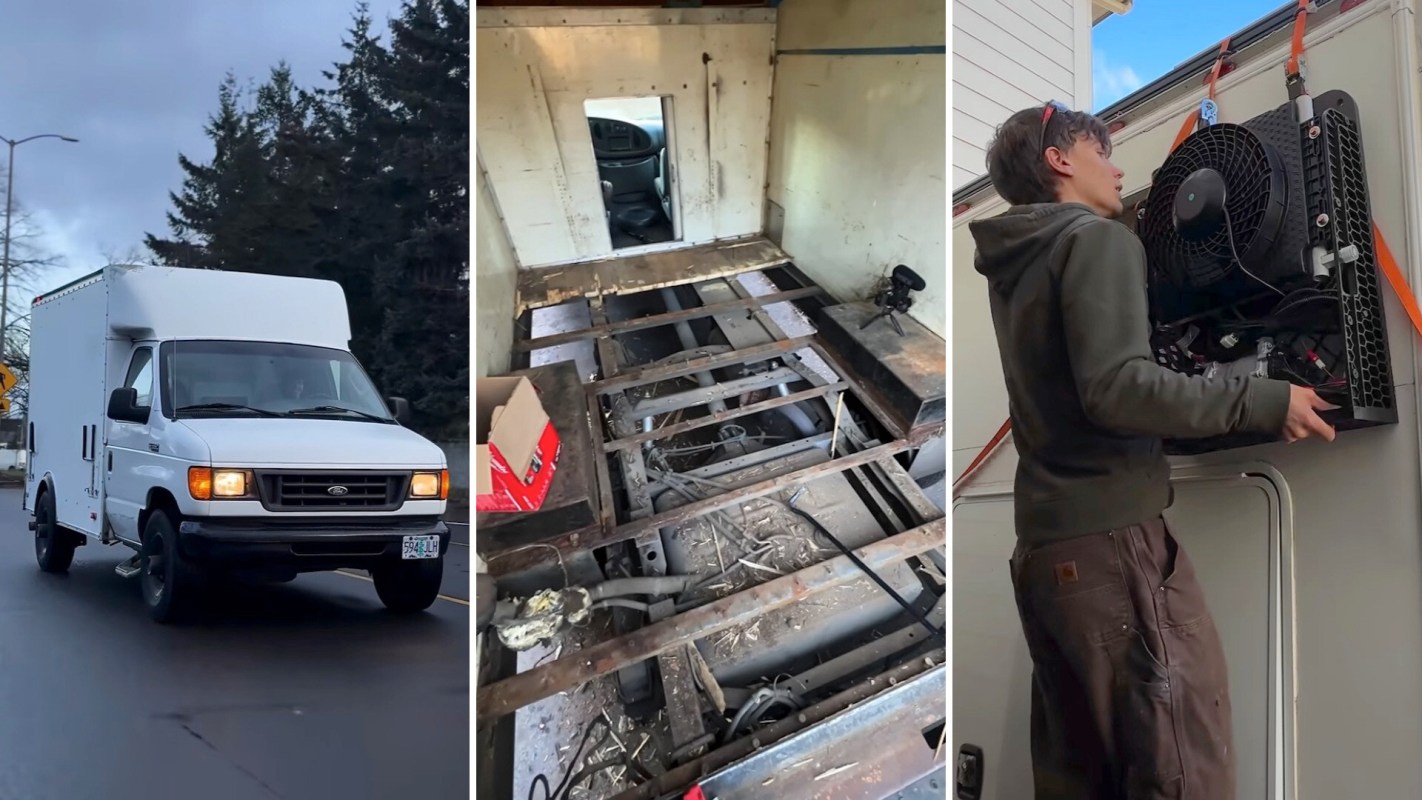
Sleek, high-end Sprinter vans may dominate van-life videos, but a YouTube creator spent about a year-and-a-half turning a 25-year-old Ford E350 box truck with rotten floors and a leaking roof into an off-grid tiny home.
According to MotorBiscuit, YouTube creator Maxwell Peters added solar power, a full kitchen and tool storage to an aging work truck.
Here's what to know
Peters said, "In this video, we are completely transforming a 25-year-old box van from an old work vehicle into a luxury tiny home equipped with 800 Ws of solar, a massive electrical system, and a full kitchen."
One of the first major tasks was dealing with heavy water damage left behind by the truck's leaking fiberglass roof.
He explained, "The boards were screwed directly into the metal frame of the box and after 25 years most of the screws were seized. So instead of just unscrewing them I basically had to pry each board up one by one."
Although he began with no background in van conversions, plumbing, or electrical work, Peters taught himself through the rebuild, adding RV windows, a custom entrance door, lightweight interior framing, insulation, and a cedar-plank ceiling.
TCD Picks » Quince Spotlight
💡These best-sellers from Quince deliver affordable, sustainable luxury for all




In the finished setup, a floating bed leaves the area below open for garage-style storage, including space for tools and a gasoline heater.
More background
Compared with the costly, polished builds that often appear on social media, an older box truck can look like a lower-cost way into travel or tiny-home projects.
Peters' off-grid system used 640 amp-hours of batteries, a 3,000-watt inverter, and four 200-watt panels on a custom roof rack, giving him enough power to run a fridge, microwave, and two-burner induction cooktop.
There have been challenges, though. The Ford blew a head gasket during Peters' first road trip.
He said, "Things got even worse when a mechanic quoted me $13,000 for an engine replacement."
Instead of paying for the repair, he bought a remanufactured engine, rented a hoist, and completed the engine swap himself.
What can be done?
A bargain vehicle can quickly become expensive if hidden water damage, drivetrain trouble, or outdated systems surface after purchase.
His build also shows that some of the most appealing parts of van life can be adapted on a smaller scale. Better insulation, more efficient storage, simple cooking appliances, and modest solar setups can all improve camping, road trips, and weekend travel without requiring a full-time off-grid lifestyle.
He picked up new skills as the project progressed, and the build demanded time, money, and careful attention to safety.
Peters said, "If there's anything I hope you take away from this video, it's that you don't have to be an expert to try something new. And if you are willing to try, you might just be surprised at what you can do."
Where can I learn more?
If Peters' solar setup caught your attention, these stories dig deeper into the batteries, solar planning, and day-to-day power use that come with off-grid living. They show how homeowners and families put those systems together and keep them running through changing conditions.
• One off-grid homeowner built an impressive battery garage setup and even charges visiting EVs.
• One family living off-grid shares their money-saving energy solutions for cooking and heating.
• On Reddit, a homeowner planning solar for an off-grid home admits there's plenty to learn.
• Another off-grid homeowner said solar works through winter without relying on a generator.

Get TCD's free newsletters for easy tips, smart advice, and a chance to earn $5,000 toward home upgrades. To see more stories like this one, change your Google preferences here.






