


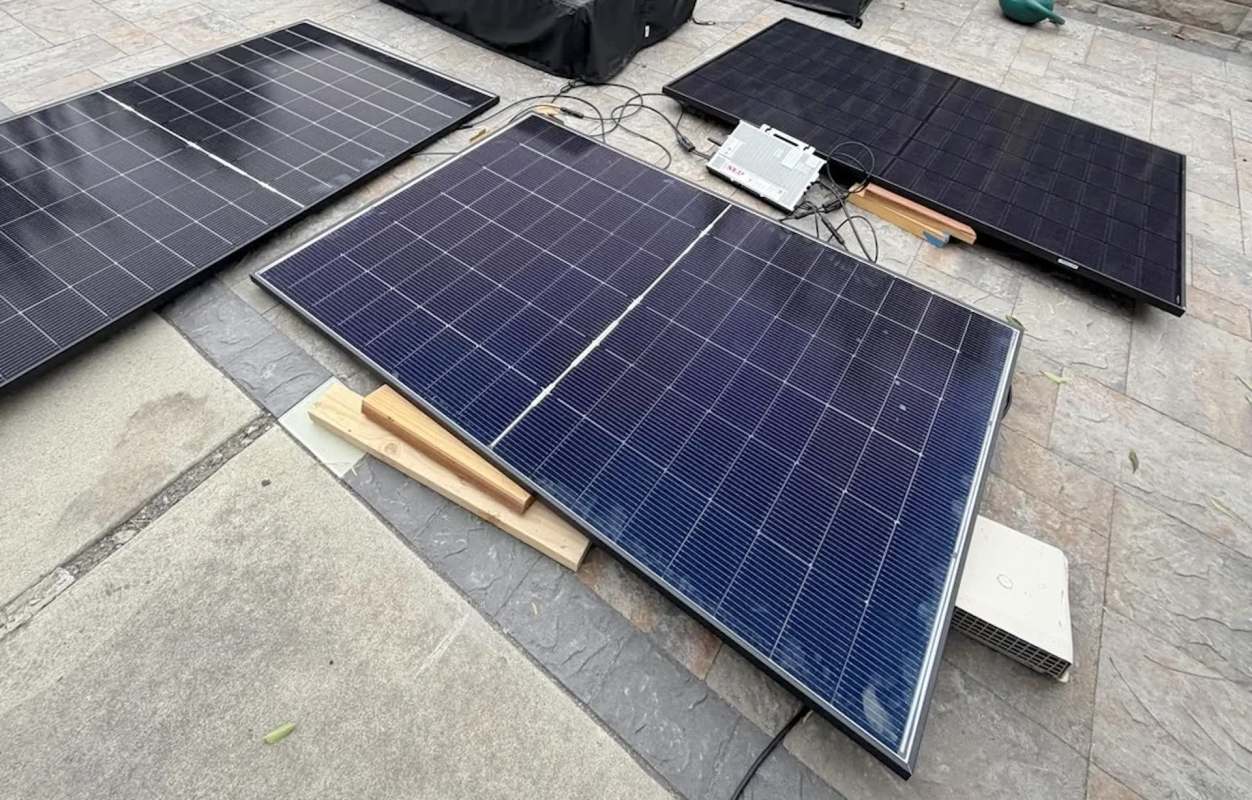
Plug-in solar may sound like a simple way to save money: plug a microinverter into an outlet, capture more daytime power, and reduce your reliance on the grid.
But one California DIYer's account on Reddit's r/SolarDIY shows that while the setup can be easy, the experience may still come with frustrating software, export concerns, and regulatory gray areas.
Here's what to know
The original poster said an NEP 1200 LV microinverter ordered from Ware Solar in California arrived in about a week despite being listed as a November preorder. They quickly paired it with three 450-watt bifacial panels.
In a Reddit post, the OP said, "I would say even if you are noob with diysolar, this was pretty simple."
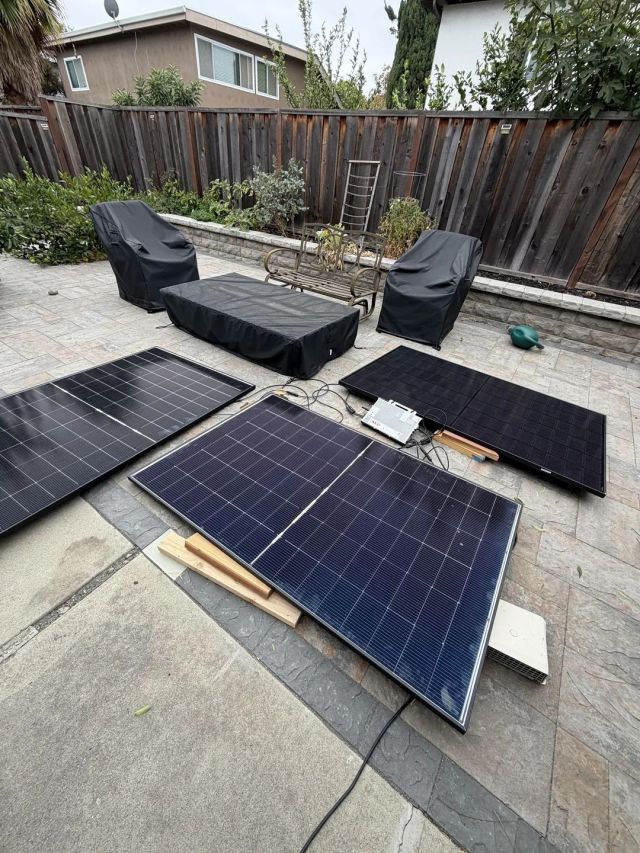
Although the system used its own dedicated 20-amp circuit, the OP said the actual outlet hookup was straightforward, while also noting that the experience was not entirely hassle-free.
They said the current three-panel combination would likely make it hard to reach the full 1,200-watt rating. Their strongest criticism was aimed at the software.
The OP said, "The app is atrocious. Hoping their API is better."
They also said the purchase did not end with just panels and an inverter. Extension cables from Amazon were "expensive $25 for 20 feet," the poster noted, and the cables behind the panel were "incredibly small," suggesting extra accessories may be necessary.
Save $10,000 on solar panels without even sharing your phone number Want to go solar but not sure who to trust? EnergySage has your back with free and transparent quotes from fully vetted providers that can help you save as much as $10k on installation. To get started, just answer a few questions about your home — no phone number required. Within a day or two, EnergySage will email you the best local options for your needs, and their expert advisers can help you compare quotes and pick a winner. |

Reddit users quickly turned to one of the biggest concerns surrounding plug-in solar: exports to the grid.
One Redditor asked, "How do you ensure you don't back feed to the grid?"
Another person suggested, "You can pair with NEP BDNZ WiFi-2 and set it up to zero export. I have this inverter too [and have been using it] for a week. So far my consumption during the day is free."
For homeowners who want a larger, permanent system, going solar is one of the best ways to save money on home energy. EnergySage can help you get free solar installation estimates and compare quotes before committing.
More From EnergySage
💡Go deep on the latest news and trends shaping the residential solar landscape


More background
In the comments, the OP explained, "My home is using 800w just regular running. Just fridge (400-500), lights in just two rooms and you reach 700ish. Not even counting endless other things constantly running."
They also described what happened before PG&E approval: "It did not give me credit for solar exported but reduced my bill for my usage."
Another Reddit user raised "regulations, insurance, etc." as potential California issues, warning that a plug-in setup does not automatically mean it is permit-free or utility-approved.
What can be done?
If you are considering rooftop solar instead, EnergySage's solar map shows the average cost of a home solar panel system on a state-by-state level, along with details on solar panel incentives for each state.
Together, those resources can help homeowners get the best price for rooftop solar panels and access available incentives. With EnergySage's help, the average person can save up to $10,000 on solar purchases and installations.
Adding battery storage to a solar setup is one of the best ways to protect your home during outages, save money on energy, and go off-grid. Homeowners can explore EnergySage for information about home battery storage options, including competitive installation estimates.
Where can I learn more?
• In California, lawmakers moved closer to legalizing plug-in solar without requiring permits.
• California senators approved wall-outlet plug-in solar so residents can cut power costs.
• A California homeowner found PG&E's NEM 3.0 pays little for excess solar.
• Across the U.S., plug-and-play solar panels are gaining support after long being banned.

Get TCD's free newsletters for easy tips, smart advice, and a chance to earn $5,000 toward home upgrades. To see more stories like this one, change your Google preferences here.






