


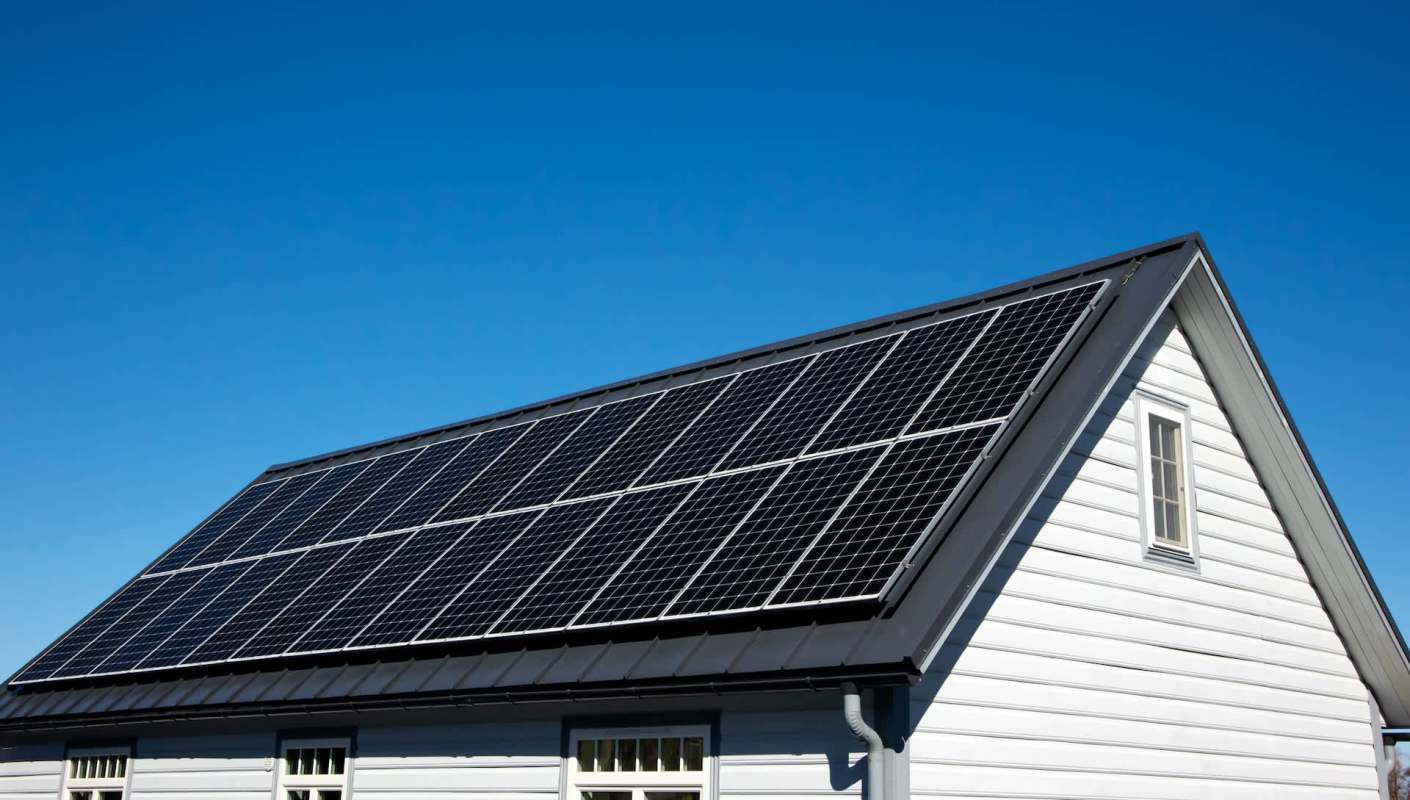
A New Jersey homeowner thought adding 28 rooftop solar panels would help keep their summer power costs under control.
But when the resident opened their electric bill and saw a total of $386, they turned to the internet to ask whether the utility math made any sense at all.
Here's what to know
In a Reddit thread on the site's r/Solar forum, the original poster said the bill "really seems excessive" considering the panels generated about 674 kilowatt-hours in August.
Commenters largely agreed that the bill was alarming, with one writing, "That bill looks painful, $386 for a 1,000sqft place with 28 panels is wild." Another added, "unless you have a grow house, or your AC unit is depleted of refrigerant, this bill is crazy… It shouldn't reach that level with solar on your roof."
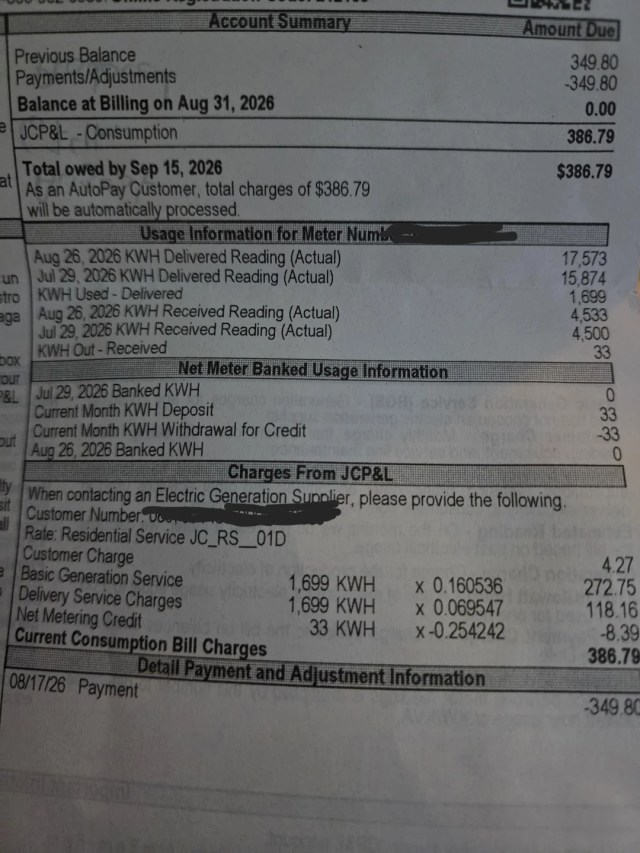
The statement appeared to credit only 33 kWh sent back to the grid while billing the homeowner for 1,699 kWh taken from it.
A common point in the replies was that the utility bill may not show the full picture because it tracks electricity imported from and exported to the grid without listing solar power used inside the home as it was produced.
As one commenter explained, "Your bill is showing you that you sent 33 kWh to the grid and you used 1,699 kWh from the grid," adding that the statement "does not show you how many kWh you used directly from the system."
Using that interpretation, the panels may not be the real problem. If 674 kWh were produced and 33 kWh went back to the grid, then about 641 kWh could have been consumed directly in the house, putting total monthly electricity use at roughly 2,340 kWh once the 1,699 kWh from the grid is included.
Save $10,000 on solar panels without even sharing your phone number Want to go solar but not sure who to trust? EnergySage has your back with free and transparent quotes from fully vetted providers that can help you save as much as $10k on installation. To get started, just answer a few questions about your home — no phone number required. Within a day or two, EnergySage will email you the best local options for your needs, and their expert advisers can help you compare quotes and pick a winner. |

As the discussion continued, attention shifted toward the air conditioner. One commenter said the home's overall electricity use looked to be about twice what would normally be expected for a gas-heated, gas-appliance house of that size and suggested the AC system or the ductwork could be behind the unusually high usage.
Others agreed and urged the homeowner to get measured performance data from the AC system instead of settling for a simple "it's working fine," while also looking into duct leaks, weak insulation, or windows that could be letting cool air escape.
Another put it more bluntly, saying, "Your solar's doing its job. Chase the AC and the ducts."
Other suggestions from commenters included pulling hourly consumption data from JCP&L and comparing it directly with production records from the inverter or any monitoring app tied to the solar system.
More From EnergySage
💡Go deep on the latest news and trends shaping the residential solar landscape


What can be done?
Still, going solar is one of the best ways to save money on home energy, especially when utility rates rise. Homeowners who want to compare options can try EnergySage to get free solar installation estimates and compare quotes.
If you're considering a new system or a replacement, EnergySage can help cut through the confusion. With EnergySage's help, the average person can save up to $10,000 on solar purchases and installations.
Plus, EnergySage's solar map shows the average cost of a home solar panel system by state, along with details on solar panel incentives for each state. Adding battery storage to a solar setup is also one of the best ways to protect your home during outages, save money on energy, and go off-grid.
Homeowners interested in backup power and lower bills can explore EnergySage for information about home battery storage options, including competitive installation estimates.
Where can I learn more?
Other homeowners with rooftop solar have run into the same kind of sticker shock when their electric bills came in much higher than expected.
• A new homeowner was stunned when the first bill hit $420 despite rooftop panels.
• In South Carolina, a solar owner saw a $150 bill and said 900 kWh still came from the grid.
• In Ohio, a homeowner learned net metering may leave much of a solar bill untouched.

Get TCD's free newsletters for easy tips, smart advice, and a chance to earn $5,000 toward home upgrades. To see more stories like this one, change your Google preferences here.






