


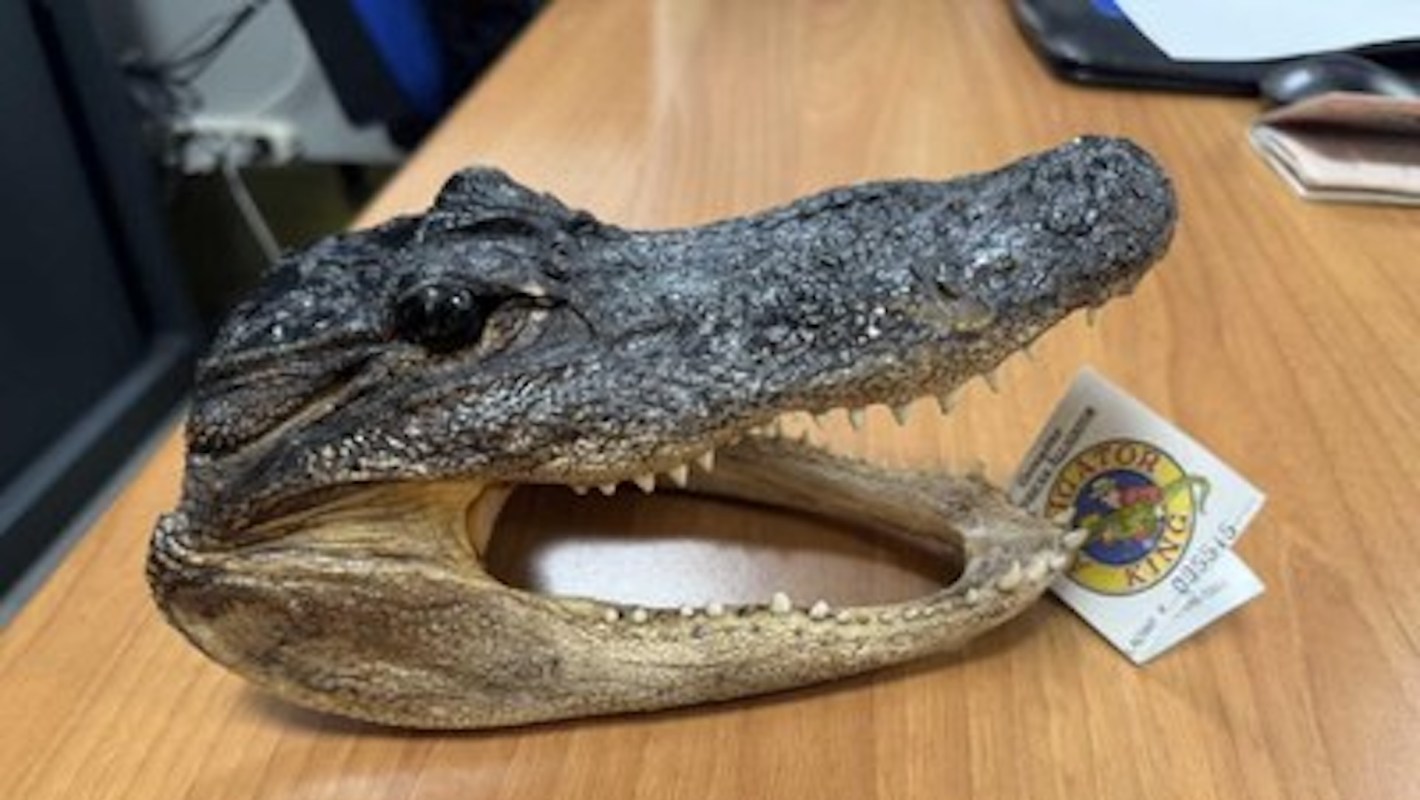
When Italian customs officials searched the luggage of a passenger arriving at Turin Airport from Miami, they made a shocking discovery: a dried crocodile head wrapped in packing paper.
The find underscored the massive scale of cross-border trade in protected wildlife.
Here's what to know
According to authorities, the crocodile specimen came from a species covered by an international treaty that prohibits the trade of endangered plants and animals, Local 12 reported.
The passenger was reported to law enforcement on suspicion of importing the crocodile head without the required documents.
Officials did not release the traveler's name. The Italian Guardia di Finanza said the allegation is that he brought in a protected specimen without a certificate or license, an offense that can carry a fine of €20,000 to €200,000 ($22,662 to $226,621) or six months to a year in jail, per Local 12.
Protected species rules are designed to limit the market for animal parts and specimens, which can fuel poaching and trafficking as well as add pressure on already vulnerable populations.
TCD Picks » Quince Spotlight
💡These best-sellers from Quince deliver affordable, sustainable luxury for all




When illegal animal products move through airports and across borders, they can strain enforcement resources, undermine conservation efforts, and harm communities that benefit from healthy ecosystems and nature-based tourism.
More background
The Convention on International Trade in Endangered Species of Wild Fauna and Flora is an international agreement to regulate trade in wild animals and plants so that commerce does not threaten their survival. In practice, that means travelers and importers may need permits or licenses before moving animal parts across borders.
Even a single specimen can raise red flags if it comes from a protected species. Customs agencies are not just watching for live animals; they also look for trophies, skins, shells, carvings, taxidermy, and other wildlife products that may seem to travelers like harmless souvenirs or collectibles.
When many people imagine wildlife trafficking, they picture organized smuggling involving massive shipments. However, this does not always reflect reality. Sometimes wildlife trafficking can consist of a single bag, one traveler, and one item, yet the potential harm to ecosystems, the environment, and at-risk species can still be enormous.
What's being done?
The Guardia di Finanza said the discovery was made during heightened summer inspections of flights it considered likely to be used for trafficking of protected wildlife, according to Local 12. Screening is one of the main tools officials use to intercept illegal animal products before they enter the market.
The risk of encountering screening at ports of entry can be a significant deterrent to wildlife smugglers.
Additionally, international agreements such as CITES provide a framework for countries to coordinate enforcement and standardize required documentation for species that receive protected status. Those rules are intended to make it harder for trafficked wildlife to move undetected among continents.
Bringing home an animal-based souvenir, trophy, or decorative item can require verifying what the product is, whether the species is protected, and what permits are required before crossing a border.
Where can I learn more?
Wildlife trafficking often occurs via everyday travel and trade routes, and these stories show what that can look like.
• At an airport in India, officers uncovered exotic reptiles in luggage during a passenger inspection.
• U.S. authorities said more than 100 endangered animal parts were smuggled across the border.
• In Thailand, investigators found 87 endangered animals in airport luggage and arrested six alleged smugglers.
• Scientists examining U.S. records found imports of crocodiles and tigers put ecosystems at risk.
• In Malaysia, traffickers used fishing trips to move endangered tiger body parts with little scrutiny.

Get TCD's free newsletters for easy tips, smart advice, and a chance to earn $5,000 toward home upgrades. To see more stories like this one, change your Google preferences here.







