


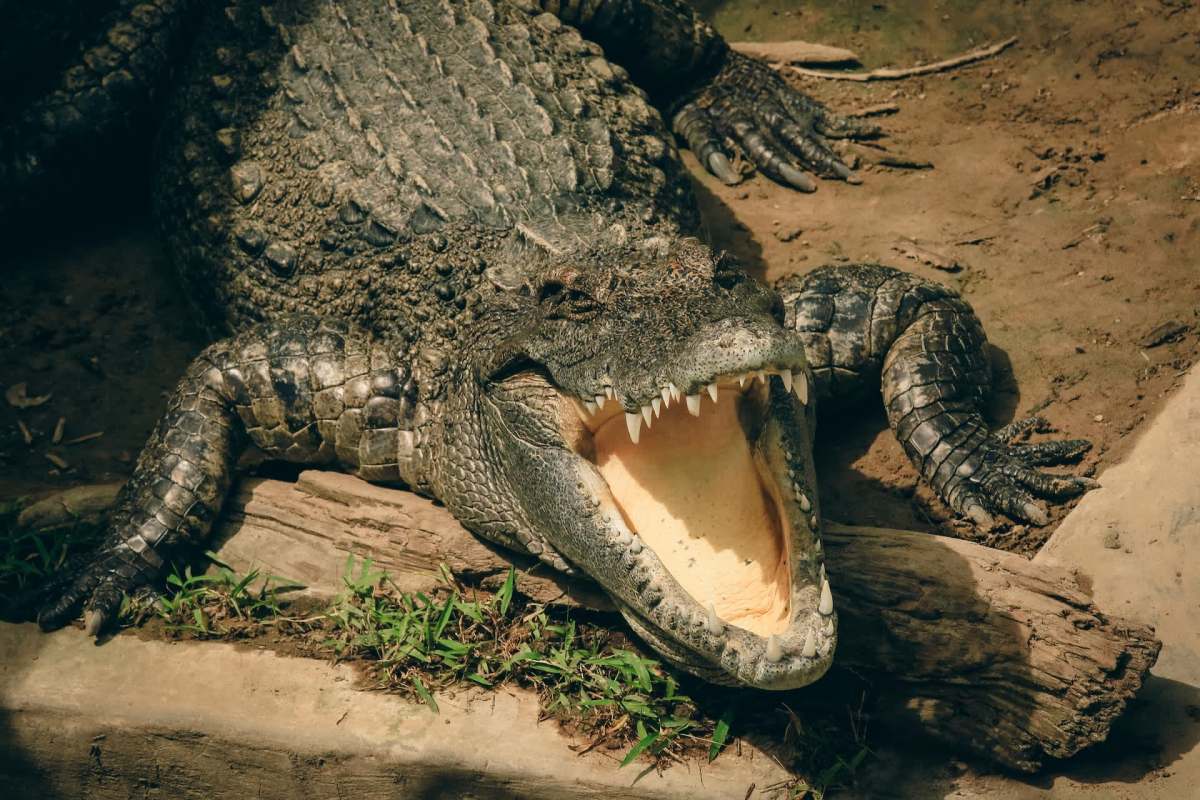
Two Australian teenagers accused of breaking into a Perth Zoo enclosure and attacking a massive crocodile are facing legal consequences in court. Experts warned that the outcome could have been much worse for the alleged trespassers.
According to the Australian Broadcasting Corp., the 16- and 17-year-olds appeared in Perth Children's Court after allegedly cutting the locks on a Perth Zoo enclosure and hitting the crocodile with a metal pole. They face charges of criminal damage, trespass, and animal cruelty.
Here's what to know
Police said the event unfolded at Perth Zoo in South Perth at about 7:15 p.m. Sept. 13, when the pair allegedly struck the enclosure wall and caused the crocodile to lunge at them, the ABC reported. The court heard that one teen then hit the reptile with the pole while the other held a flashlight.
The following morning, zoo staff discovered damaged security cameras and summoned police, who later found the teens at separate suburban addresses.
The ABC noted that Dangalabba, the 45-year-old crocodile, suffered minor injuries and was being watched by zoo veterinarians.
Luke Campbell, a crocodile handler who worked with Dangalabba when he was kept at Broome's Malcolm Douglas Crocodile Park, said the animal's history helps explain how dangerous the situation was.
TCD Picks » Quince Spotlight
💡These best-sellers from Quince deliver affordable, sustainable luxury for all




He told the ABC that handlers never turned their backs on Dangalabba and described him as a "problem crocodile" that had been removed from Darwin Harbour after endangering fishers.
In Campbell's view, the alleged perpetrators were lucky to be alive after messing with the 4-meter (13-foot), 400-kilogram (880-pound) croc.
"Three metres and over is basically a killer," he said, per the ABC.
More background
Dangalabba began life in the wild and was placed in captivity over safety concerns. However, despite what some might expect, captivity did not make him tame or predictable.
Barriers around wild animals exist for everyone's protection. Animals that appear lethargic or familiar can be extremely dangerous, and provoking them can be life-threatening.
"It doesn't matter how long that crocodile's been in captivity, it can never be tamed," Campbell told the ABC. "If anything, they can be more dangerous, as they know our patterns and they've got more confidence."
Where can I learn more?
This case is one of several crocodile stories involving dangerous situations around the powerful reptiles.
• In Australia's outback, a guide drew scrutiny after a dangerous move beside a massive crocodile.
• In Australia, parents were blasted after children played near crocodile-infested waters despite safety warnings.
• In Western Australia, scientists built a unique baiting system to keep crocodiles from eating toxic cane toads.
• In Australia, researchers warned that shocking crocodile behavior may reflect dangerous body-temperature shifts.
• At a Philippines zoo, a tourist crossed barriers and tried to interact with a crocodile.

Get TCD's free newsletters for easy tips, smart advice, and a chance to earn $5,000 toward home upgrades. To see more stories like this one, change your Google preferences here.







