


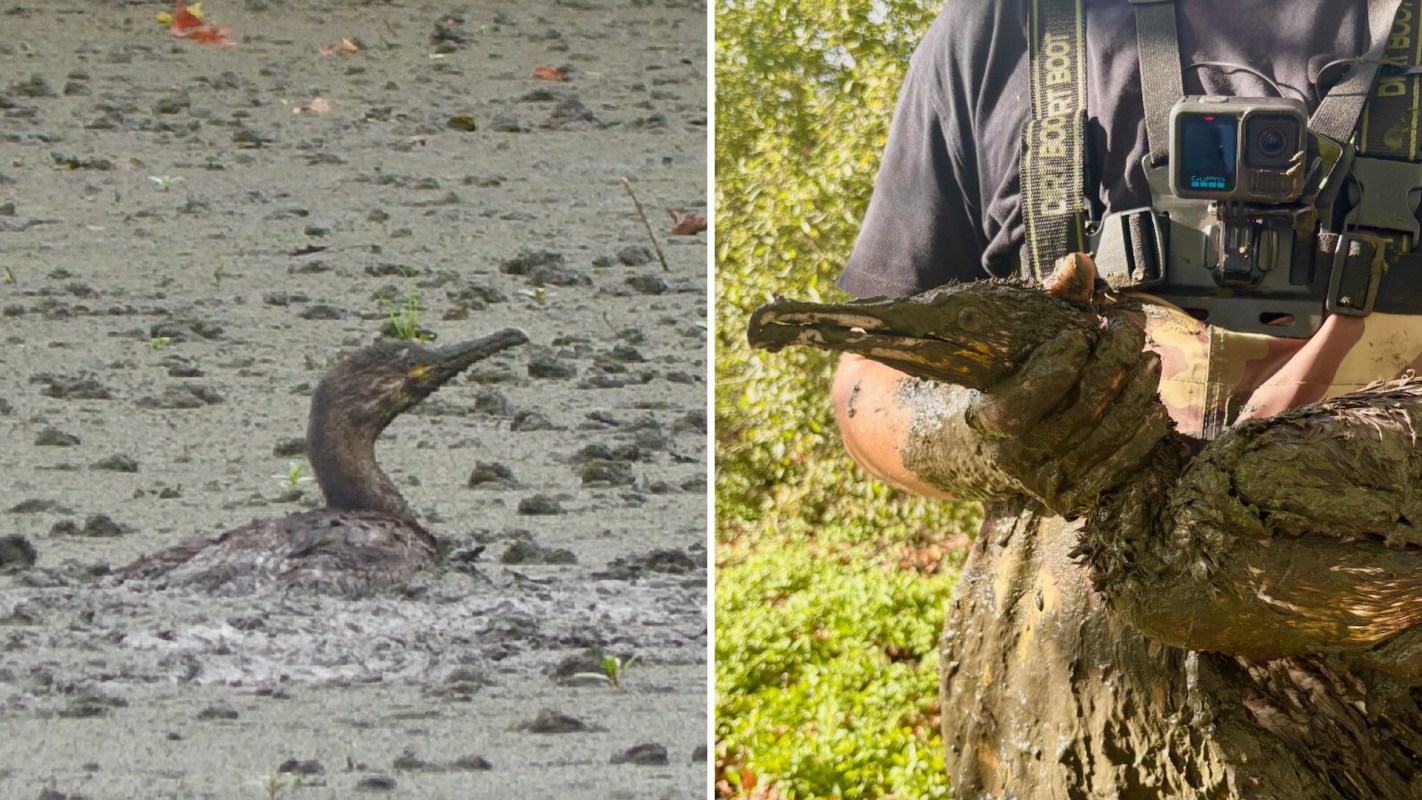
Rescuers slogged through a bog in England to rescue a trapped cormorant.
The animal's plight showed how quickly a damaged habitat can become dangerous for the animals that rely on it.
Here's what to know
Images shared by Wildlife Aid Foundation (@WildlifeAid) on TikTok show the stages of the rescue.
The organization said in the caption that rescuers Louis and Jack were called out to save a cormorant in danger. One photo shows the bird stuck in the predicament with mud almost all the way up to its beak.
Once on scene, the rescuers had to figure out how to reach the bird without putting themselves at unnecessary risk. Wildlife Aid said Louis and Jack eventually "had no choice but to head in, wading through the thick sludge to reach the poor soggy cormorant."
Afterward, the bird was brought back to Wildlife Aid to be cleaned up and examined. Veterinarians found that the mud the bird had swallowed was making it difficult to breathe. The cormorant is now under close observation and recovering.
TCD Picks » Quince Spotlight
💡These best-sellers from Quince deliver affordable, sustainable luxury for all




"Thanks to the fantastic efforts of Louis, Jack and our team, this cormorant was saved from what could have been a very different outcome," Wildlife Aid wrote.
More background
Cormorants are waterbirds, but deep mud presents a very different kind of danger. A bird that can swim and dive with ease can still become trapped when soft ground gives way beneath it.
Fortunately, Louis and Jack successfully balanced compassion with real physical risk throughout the rescue.
"Brilliant work," a commenter wrote.
What's being done?
Beyond this one rescue, supporting rehabilitation groups can make a real difference for wildlife closer to home. Joining habitat cleanups or taking local environmental action can also help reduce risks for birds and other animals that rely on ponds, wetlands, and green spaces.
Financial support can also be valuable, particularly for organizations that need equipment, transport, and veterinary resources on short notice. Wildlife Aid provided a donation link in its caption.
Where can I learn more?
This rescue is just one of many examples of how a familiar habitat can turn dangerous for wildlife.
• On a beach, rescuers found a seal pup tangled in ghost gear and badly injured.
• In Namibia, conservationists stepped in when seal pups were trapped by dangerous plastic waste.
• Along U.K. coastlines, volunteers uncovered a surprising threat to wildlife during the Great British Beach Clean.

Get TCD's free newsletters for easy tips, smart advice, and a chance to earn $5,000 toward home upgrades. To see more stories like this one, change your Google preferences here.







