


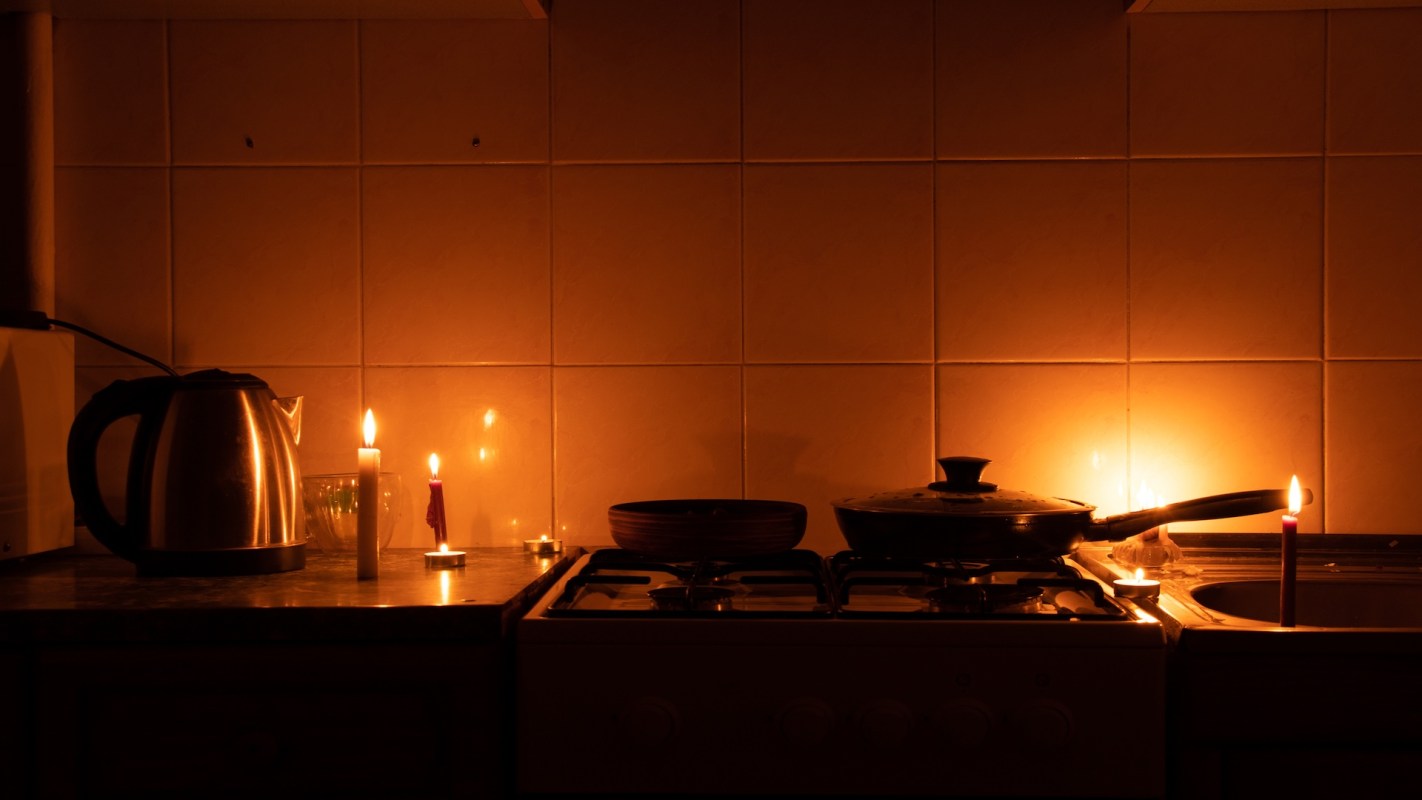
As power costs rise in Florida, one Tampa retiree says he now spends some evenings at home by candlelight to trim his electric use.
Thaddeus Williams, a 75-year-old veteran who rents in Tampa, says electricity is taking roughly $300 a month out of his fixed Social Security income.
Here's what to know
Residential customers served by Florida's large investor-owned utilities are seeing some of the nation's steepest electric bills, a burden that in Tampa is hitting older adults, renters, and lower-income residents particularly hard, according to WUSF.
Williams said Tampa Electric Company's charges keep climbing. "TECO is just — they're going up and up and up and up. You know, it shouldn't be this high for electricity."
In WUSF's 2025 review of U.S. Energy Information Administration figures, all four of Florida's major investor-owned utilities ranked in the national top 50 for typical residential bills, and TECO placed eighth at $195 per 1,000 kilowatt-hours.
State utility filings reviewed by WUSF show how sharply bills have risen since 2016. Duke Energy Florida's typical bill went from $108 to $185, or about 70%, while TECO increased by about 60% and Florida Power & Light by 46%.
TCD Picks » Quince Spotlight
💡These best-sellers from Quince deliver affordable, sustainable luxury for all




Even after trying to conserve electricity, Williams said, the monthly total keeps climbing. "I'm thinking I'm using the same amount, you know, each month, and then I try to use less … and then it still be the same thing. At the end of the month, it's more," he said.
Brooke Ward, Florida state director for Food & Water Watch, said the high bills are not the result of residents being careless with energy use. "Unfortunately, as is often the case, it's those who can afford it the least who are carrying the heaviest burden," she said.
More background
The squeeze is coming from more than just a higher sticker price for power.
Beyond the base electricity charge, Florida utility customers can be billed for fuel, storm protection, storm surcharges, and other cost-recovery items.
Looking over a TECO statement with nine separate line items, Williams said, "We paying for stuff on our bill that we have no idea what we paying for."
Ward said focusing only on "rates" misses much of what appears on a customer's bill, because utilities can also pass through costs tied to fuel, grid upgrades, storm hardening, and other system expenses.
According to Walt Trierweiler, who heads Florida's Office of Public Counsel, those add-on clauses have expanded to the point that "in many cases these clauses now account for up to 50% of the bill."
Opponents of the current model argue it encourages utilities to spend more, not to keep service affordable.
Susan Glickman, vice president of the climate nonprofit CLEO Institute, told WUSF that investor-owned utilities can continue adding projects while collecting "a guaranteed rate of return."
WUSF reported that those companies took in more than $6 billion from Florida residents in 2025, more than any other state.
Using the American Council for an Energy-Efficient Economy's benchmark, households spending more than 6% of income on energy face a high burden; Williams spends about 8% of his fixed income on electricity alone.
What can be done?
Groups pushing for change want broader reforms, such as stronger oversight of the Florida Public Service Commission and limits on utility profits.
They say customer charges should receive tougher review to determine whether the underlying costs are justified.
Utility companies, however, say some increases reflect unavoidable expenses.
Florida Power & Light representative Andrew Sutton said customers are paying for every part of the process. "First is the cost of fuel to generate electricity at our power plants. Second is the cost of delivering that electricity to your home through poles, wires, and substations across the grid, and third is the ongoing work to maintain and strengthen that system."
Duke Energy Florida spokesperson Ana Gibbs also said, "I just want to assure our customers that for every cost that we put on our bill, we look for every possibility to save them every cent that we can."
For everyday residents, though, the options are often limited, especially for renters.
Williams has joined a utility payment plan, but renting means he can't qualify for weatherization help or install solar panels without a landlord's approval. That leaves many households trying to use less power in a state where air conditioning is often a necessity, not a luxury.
Ward said the answer should not be forcing people into deprivation.
"There are solutions, and the solution is not to turn off your AC," she said. "The solution is not to go without electricity. The problem is being caused by the system."
Where can I learn more?
These stories look at the same squeeze from rising power bills and the limited options many households have to cope.
• In Florida, a homeowner saw an $800 power bill become a $300 credit after going solar.
• Across the country, utilities are hitting homeowners with huge bills through opaque extra charges many customers barely understand.
• U.S. utilities are seeking billions in rate hikes in 2025 as household costs climb.
• Across the United States, soaring energy costs are pushing more households to consider home efficiency upgrades.
• Renters facing skyrocketing energy bills are trading practical tips as high monthly charges feel normal.

Get TCD's free newsletters for easy tips, smart advice, and a chance to earn $5,000 toward home upgrades. To see more stories like this one, change your Google preferences here.






