


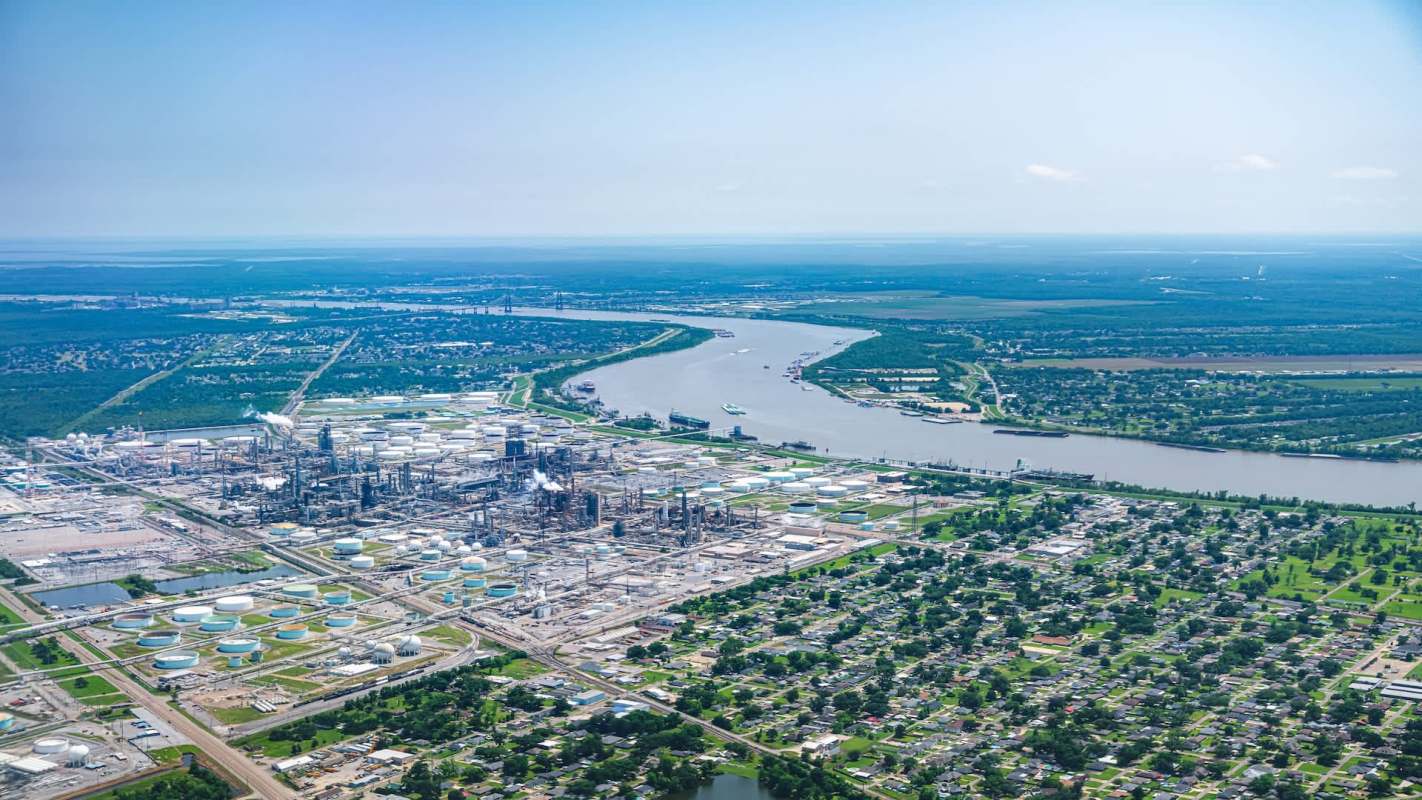
A review of enforcement in southwest Louisiana is drawing scrutiny over how long state regulators can take to address air-pollution violations in a region crowded with major industrial facilities.
For families living near plants in the Lake Charles area, the issue is not merely bureaucratic delay. It is what can happen when enforcement drags on for years while pollution problems continue.
Here's what to know
In the Lake Charles area, roughly three out of five formal air enforcement actions covered by a new review were issued more than five years after the earliest cited violation, according to an analysis from the Environmental Integrity Project and Sulphur-based Micah 6:8 Mission, The Advocate reported.
The report also said that when the Louisiana Department of Environmental Quality pursued civil penalties, the proposed fines averaged $66,300, even though the companies involved were typically valued in the hundreds of millions or billions of dollars.
Cynthia Parker Robertson, executive director of Micah 6:8 Mission, said slow-moving enforcement and modest penalties can leave residents near industrial sites exposed for extended periods, and she said regulators must require industries "to correct the causes of their violations and prove they are protecting the people who live downwind."
State regulators pushed back on the findings, with DEQ enforcement chief Jerry Lang saying the analysis examined only a small portion of the department's work and centered on some of the Lake Charles area's biggest and most complicated industrial facilities.
TCD Picks » Quince Spotlight
💡These best-sellers from Quince deliver affordable, sustainable luxury for all




More background
The report's findings carry particular weight in southwest Louisiana, where neighborhoods sit near refineries, petrochemical plants, and other heavy industry. Among the examples it highlighted was Phillips 66, which logged hundreds of air-pollution exceedances between 2020 and 2023, while DEQ did not issue a detailed compliance order until late 2025.
According to that order, the exceedances involved chemicals tied to ground-level ozone, rotten egg-like smells, regional haze, and respiratory irritation that can affect asthmatics and young children.
The analysis also highlighted Phillips 66 and Equistar Chemicals Lake Charles Polymers Facility as examples in which alleged air violations dating to the early and mid-2000s were not reported by the companies until about 15 years later. The groups said that shows why inspections and independent compliance checks are needed instead of depending mainly on self-reporting.
Because Louisiana generally has five years from the first notice of a possible environmental problem to assess penalties, the report said delays can reduce the state's ability to collect meaningful fines from polluters.
What's being done?
Lang said DEQ has changed its enforcement approach since a 2021 Louisiana Legislative Auditor's Office report faulted the agency for slow action, according to The Advocate. He said the department has since adopted formal timelines, added monitoring, and set a one-year target for some air-quality enforcement matters that do not involve citizen complaints or high-priority violations.
Lang also argued that the statewide record is broader than the analysis suggests. He said the agency issued 3,456 enforcement actions across Louisiana between January 2021 and August 2026, including 975 involving air quality, and said: "The vast majority of these actions include matters that were identified, evaluated and processed without the extended timeline highlighted in the EIP report."
Environmental advocates, though, say the state still needs to act more quickly and impose stronger consequences. They pointed to an Indorama Ventures Olefins matter in which a company lawyer contended DEQ had missed the five-year deadline to seek penalties for alleged violations from 2016 to 2019.
"Our communities are breathing the consequences of an enforcement system that responds too slowly and demands too little," Robertson said in a statement.
Where can I learn more?
Questions about air-pollution enforcement like the ones raised in Lake Charles have also surfaced elsewhere, as these stories highlight.
• After the Journey for Justice tour, the Environmental Protection Agency pursued hefty Clean Air Act fines against Louisiana plants.
• Federal regulators ordered Marathon to pay the largest-ever pollution fine for emissions affecting U.S. towns.
• Mewbourne agreed to a $5.5 million penalty after failing to comply with the Clean Air Act.

Get TCD's free newsletters for easy tips, smart advice, and a chance to earn $5,000 toward home upgrades. To see more stories like this one, change your Google preferences here.






