


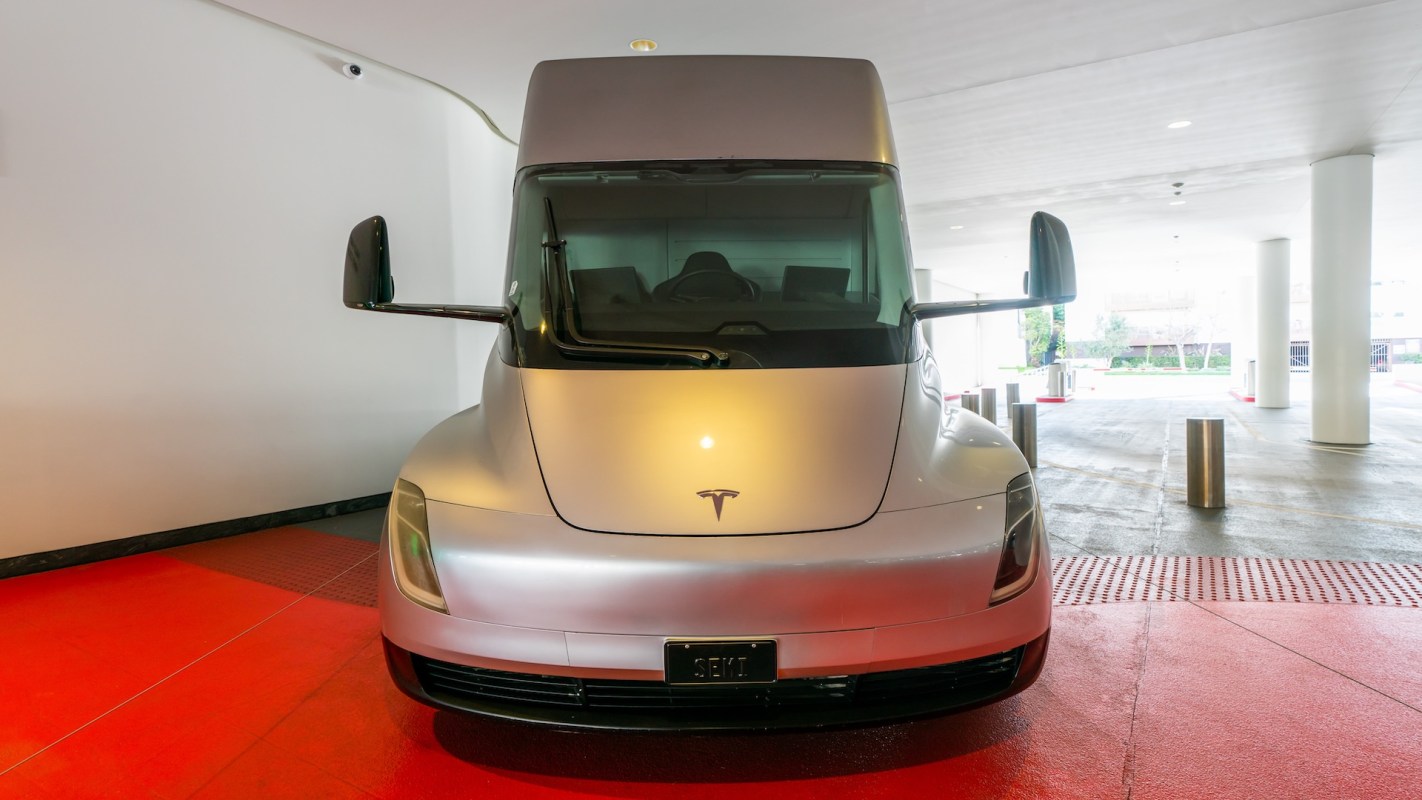
Tesla says the long-delayed Semi is finally moving into high-volume production, backed by a new Nevada factory designed to build up to 50,000 electric trucks per year.
If that production ramp takes hold, it could help lower operating costs for freight customers while putting more diesel-free trucks on major shipping routes.
Here's what to know
On Sept. 25, Tesla said deliveries "start now" for the Semi and introduced what it described as its first factory built specifically for the Class 8 truck.
As Electrek reported, the Sparks, Nevada, facility covers 1.8 million square feet and is set up to produce every Semi variant on one line, including Standard Range, Long Range, and a European spec version.
The company says the truck went through a four-year redesign "for true volume," and one of the most significant updates is the move from 2170 cells to Tesla's own 4680 cells.
In the final Semi specs Tesla released in February, it estimated energy use at 1.7 kilowatt-hours per mile and listed the Standard Range model at 325 miles of range and the Long Range version at 500 miles at 82,000 pounds.
TCD Picks » Quince Spotlight
💡These best-sellers from Quince deliver affordable, sustainable luxury for all




Tesla also said its Semi fleet has exceeded 98% uptime in 2026 and can regain up to 60% of its range in 30 minutes on a Megacharger.
More background
The Semi is one of Tesla's most delayed products. It was unveiled in 2017 with production targeted for 2019, and the first hand-built PepsiCo units did not arrive until late 2022, Electrek reported.
Tesla says the truck is headed to fleets including PepsiCo, US Foods, DHL, ABF, WattEV, Einride, and IMC Logistics.
The ZET SCALE alliance chose Tesla to supply 2,500 electric trucks, a deal that could nearly double the number of electric Class 8 trucks on U.S. roads.
Pricing is another major part of the pitch. Tesla has been quoting roughly $290,000 for the 500-mile version and around $260,000 for the Standard Range model, which would still put it well below the average electric Class 8 truck.
At the same time, Tesla's map of Megacharger sites shows major gaps across the Mountain West and Plains, which could limit long-haul flexibility until more sites are built.
What's being done?
Tesla says the core strategy is scale combined with vertical integration. Instead of depending as heavily on outside suppliers, the company says it builds the batteries, drive axles, cooling modules, high-voltage distribution systems, and seats in-house.
Tesla also says the Semi replaces hydraulic steering hardware with electric steering, and that automated pre-trip checks can generate electronic logs for drivers.
In the company's words, "Vertical integration is the only real way to bring cost down."
Where can I learn more?
These stories offer more context on Tesla's Semi rollout and the broader push to scale electric transportation.
• Tesla's Nevada truck push gained urgency as Semi deliveries widened to major fleets beyond PepsiCo.
• At Redwood Materials, JB Straubel argues battery recycling must scale as EV production accelerates.
• Tesla is pushing LFP battery production in America to broaden cheaper EV supply.

Get TCD's free newsletters for easy tips, smart advice, and a chance to earn $5,000 toward home upgrades. To see more stories like this one, change your Google preferences here.






