


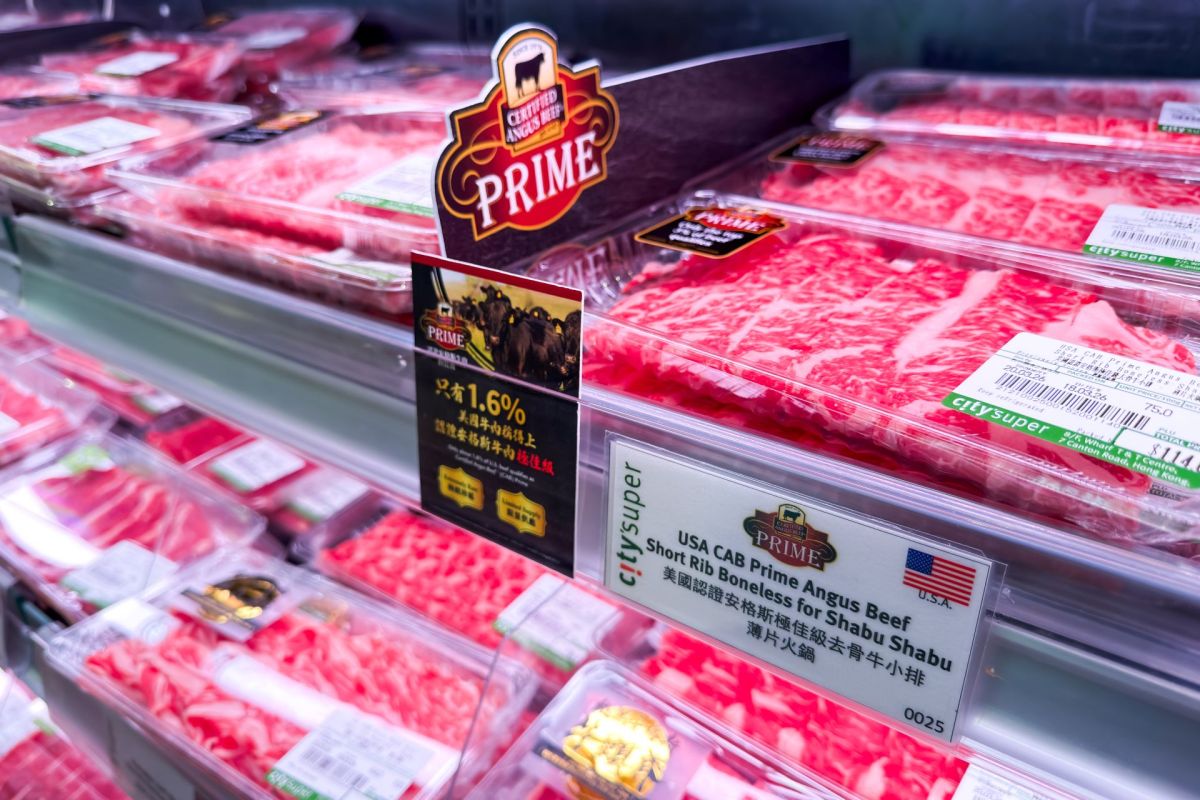
Consumers could be facing higher grocery bills and more unpredictable meat prices as China's beef market heats up while cattle numbers fall in several major producing countries.
Smaller herds are colliding with drought, costly feed, labor problems, and trade restrictions, adding to pressure across the global meat market.
Here's what to know
In a wider look at global meat markets, Al Jazeera reported that Brazil, the United States, and China — the three biggest beef producers — are all reducing their cattle herds at the same time.
China's herd was estimated at 94 million head in January 2026, down from 105 million in January 2024. In the United States, USDA data showed 86.2 million cattle and calves on farms on January 1, 2026, including 27.6 million beef cows. The U.S. Department of Agriculture estimated Brazil's 2026 herd in March at 177.4 million cattle, about 8% below the 192.5 million recorded in 2024.
Beef prices in China have jumped as weaker domestic production coincides with tighter beef supply available for import.
More background
U.S. cattle producers are being squeezed on several fronts. Sampad Nandy of S&P Global reported that drought has affected 60% of cattle-rearing areas, shrinking grazing land and raising feed costs, while breeder groups in Texas, Oklahoma, and Kansas said that ICE raids were disrupting an industry that depends heavily on immigrant workers.
TCD Picks » Quince Spotlight
💡These best-sellers from Quince deliver affordable, sustainable luxury for all




For Brazil, the challenges center on trade and herd rebuilding. An analysis by Augusto Neto at S&P Global found that limits from major buyers such as China and the European Union have weakened incentives for Brazilian beef manufacturers. The USDA also said Brazil is in a cattle reversion cycle, meaning rearers are keeping back more females for breeding and reducing slaughter as they rebuild herds.
European forecasts suggest a longer-term shift in what people may end up eating. Beef and pork output in the European Union are expected to keep declining through 2035, while poultry production is forecast to rise by 5%.
Feed costs are also forcing cutbacks in India. The All India Poultry Breeders' Association said it would reduce production by 25% after soya meal prices climbed by more than 40% in a single month.
"Cattle production is constrained by biological supply cycles," said Kenneth Foster, professor of agricultural economics at Purdue University.
What can be done?
One of the most immediate ways to manage rising meat prices may be flexibility. Swapping in lower-cost proteins such as chicken, beans, lentils, tofu, or other alternatives can help stretch grocery budgets while still keeping meals filling and nutritious.
Faster-growing proteins may help relieve some of the pressure. Poultry producers can respond more quickly to demand shifts because chickens reach market weight far sooner than cattle.
Stronger feed security, better drought planning, and more support for farmers dealing with climate and labor disruptions could help make food systems more resilient.
Where can I learn more?
These stories explore other pressures on agriculture and protein supply as meat markets tighten. They cover the environmental costs of livestock, worsening conditions for produce growers, farm data security, and climate-resilient crops in Ghana.
• The toll of pork and poultry farming is adding pressure across food systems.
• Fresh produce operators face a daunting operating landscape as costs and disruptions mount.
• Modern farms are testing a high-security tool to protect critical data from growing threats.
• In Ghana, farmers are rushing for special new crop varieties as weather extremes intensify.

Get TCD's free newsletters for easy tips, smart advice, and a chance to earn $5,000 toward home upgrades. To see more stories like this one, change your Google preferences here.






