


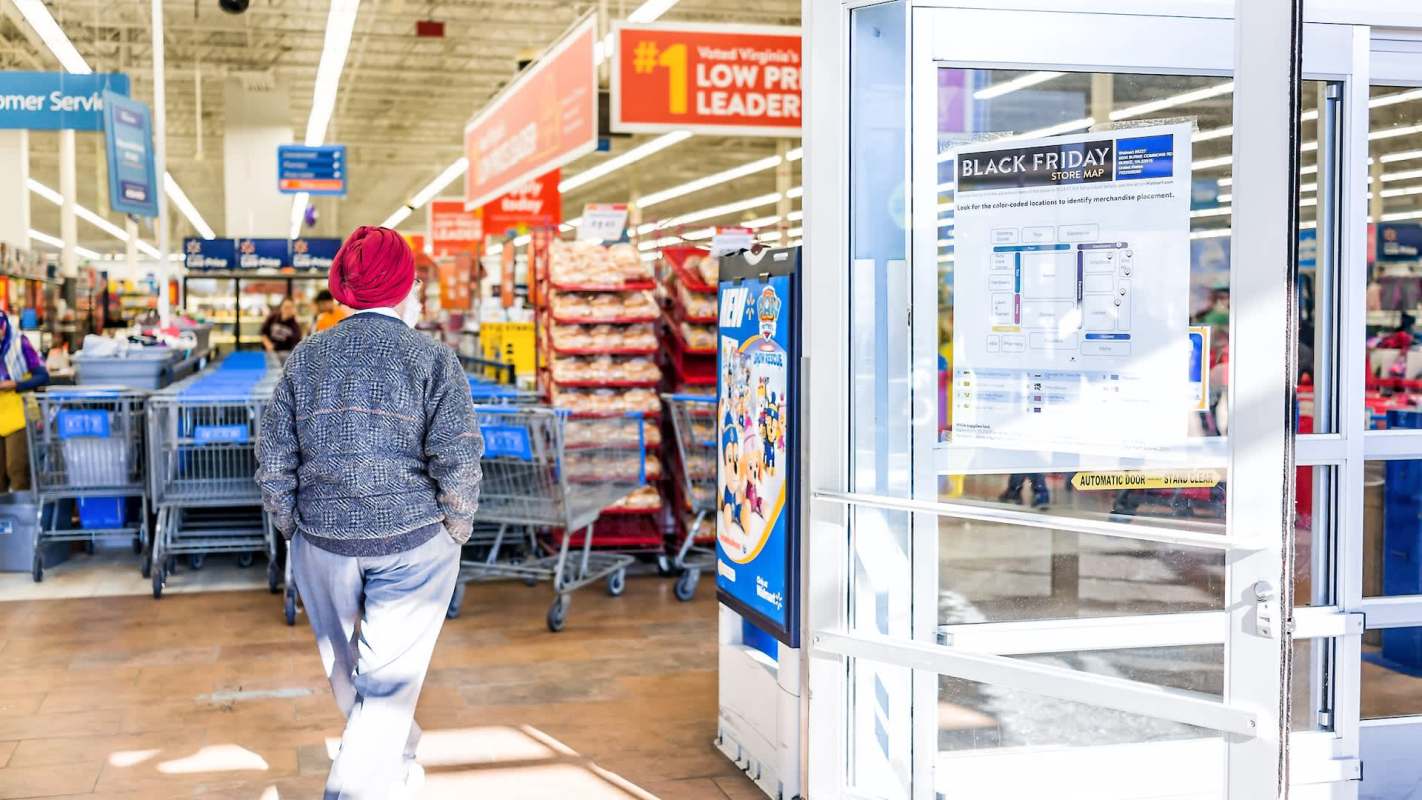
Walmart is tightening control over one increasingly common retail problem: AI-generated store signs.
As part of a policy update, the retailer instructed stores to stop putting up AI-created posters and to get signage through approved corporate channels instead.
Here's what to know
According to Business Insider, Walmart's revised guidance is explicit: "Stores should not display signing created by AI tools."
That direction points to a broader pattern in retail and restaurants, where managers have been using programs such as ChatGPT, Claude, and Gemini to make announcements and promotions without hiring a designer.
Online, those kinds of visuals are often described as "AI slop" — awkward, low-quality images that stand out, but not in a way businesses want.
For Walmart, the concern is not only how these signs look. When stores make materials quickly on their own, it can weaken the consistency large chains work for years to establish. A poster produced in seconds may save time, but it can also dilute the look, tone, and clarity customers expect from a national brand.
TCD Picks » Quince Spotlight
💡These best-sellers from Quince deliver affordable, sustainable luxury for all




The revised policy also says stores should rely on Walmart's official corporate catalog for signage, apart from limited exceptions.
More background
Rather than giving staff full discretion, businesses are increasingly establishing firm guidelines for AI content, a shift highlighted by Walmart's recent policy update. Companies are starting to decide where AI is actually useful and where it may create more problems than it solves.
Companies such as YouTube, LinkedIn, TikTok, and Meta have also updated guidance around AI-made material.
In Walmart's photo department guidance, stores are told to order signs through the official corporate catalog instead of improvising them with consumer AI tools.
There is still a limited carveout. Stores can still request help from the photo lab in cases of a "critical business need" when no approved alternative already exists.
Where can I learn more?
These stories look at how brands and shoppers are responding as AI-generated visuals move from the internet into everyday marketing.
• Some brands now prove ads aren't AI-made as consumers grow wary of synthetic marketing.
• At Walmart, an in-app AI agent is reportedly nudging shoppers to spend more.
• Across industries, backlash against AI is growing as people warn about jobs and resources.

Get TCD's free newsletters for easy tips, smart advice, and a chance to earn $5,000 toward home upgrades. To see more stories like this one, change your Google preferences here.






