


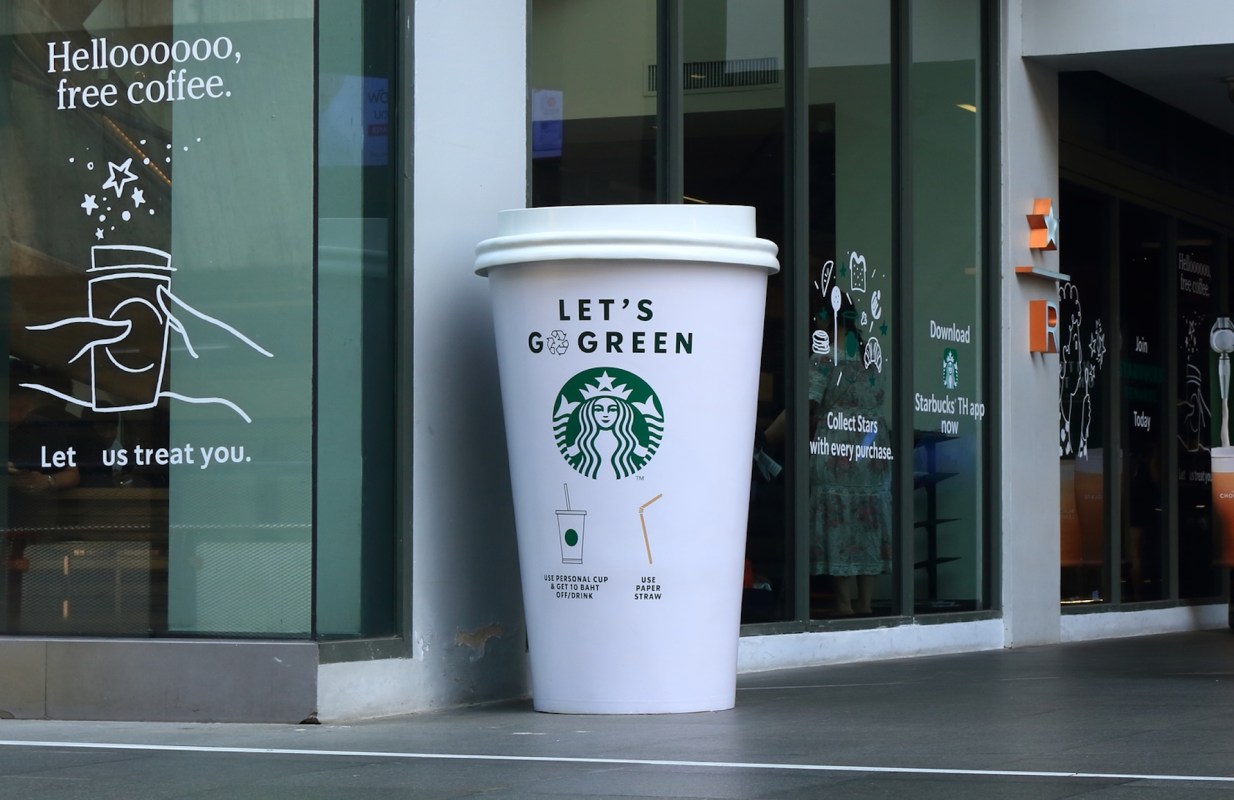
A nonprofit's tracking effort has put Starbucks in the spotlight over its in-store recycling bins, saying it could not verify that any of the plastic cups it followed were actually recycled.
Here's what to know
According to the New York Post, Beyond Plastics put 69 Bluetooth trackers in Starbucks store recycling bins.
Beyond Plastics said it could not confirm that any of the cups were recycled. Of the 47 trackers that later reported a location, three reached material recovery facilities, 10 last pinged at transfer stations, 11 ended up at incinerators, and 23 were traced to landfills.
"It's kind of stunning that they won't tell the public where this plastic is going after people dutifully make sure it's clean and put it in the special recycling bin," Judith Enck, Beyond Plastics' president and a former regional EPA administrator, said, per the Post.
Starbucks pushed back on the nonprofit's conclusions. "Studies that place electronic trackers inside cups do not reflect how recycling systems operate in practice," a company spokesperson told the Post, noting the cups are recyclable by design and carry How2Recycle's "widely accepted for recycling" designation.
In February, Starbucks and Waste Management said the chain's cold cups — made from polypropylene, also known as No. 5 plastic — were "widely recyclable," with curbside acceptance available to over 60% of U.S. households.
TCD Picks » Quince Spotlight
💡These best-sellers from Quince deliver affordable, sustainable luxury for all




More background
If cups are burned or buried rather than reused or remade, they will fill landfills, increase pollution, and raise waste costs. According to the New York City Department of Sanitation, the Big Apple spends nearly $500 million each year exporting waste. The Post reported that one tracked cup ended up at a Peekskill waste facility that Beyond Plastics called Westchester County's largest source of air pollution.
Susan Keefe, Beyond Plastics' Southern California director, estimated Starbucks' daily plastic cup use at roughly 8 million based on public company data. She told the Post that, in her view, Starbucks' store bins are particularly misleading because they are labeled "landfill," "recycling," and "compost" even though much of the material is thrown away.
Environmental groups are calling the company's messaging deceptive — a classic concern when branding makes a product appear greener than its real-world impact.
What's being done?
Beyond Plastics and allied organizers called for several changes. The group wants Starbucks to remove in-store recycling visuals it says are misleading, stop making broad recyclability claims, switch from polypropylene to fiber-based cups, and better enforce its reusable ceramic mug policy for in-store customers.
The Post noted that advocates want lawmakers to pass the Packaging Reduction and Recycling Infrastructure Act, which would require companies to reduce plastic packaging and help cover municipal waste management costs instead of leaving taxpayers to absorb the burden.
Starbucks has pointed to broader packaging commitments. It pledged in 2020 that all customer packaging would be reusable, recyclable, or compostable by the end of the decade, and in 2024 it began allowing U.S. customers to present reusable cups for mobile and drive-through orders.
Where can I learn more?
These stories offer more context on Starbucks' cup recycling claims.
• At Starbucks, widely recyclable plastic cups still appear to miss actual recycling streams.
• Starbucks tested a reusable cup pilot as pressure grew over mounting single-use waste.
• For regulars, a sustainable Starbucks cup can cut costs while shrinking trash.

Get TCD's free newsletters for easy tips, smart advice, and a chance to earn $5,000 toward home upgrades. To see more stories like this one, change your Google preferences here.






