


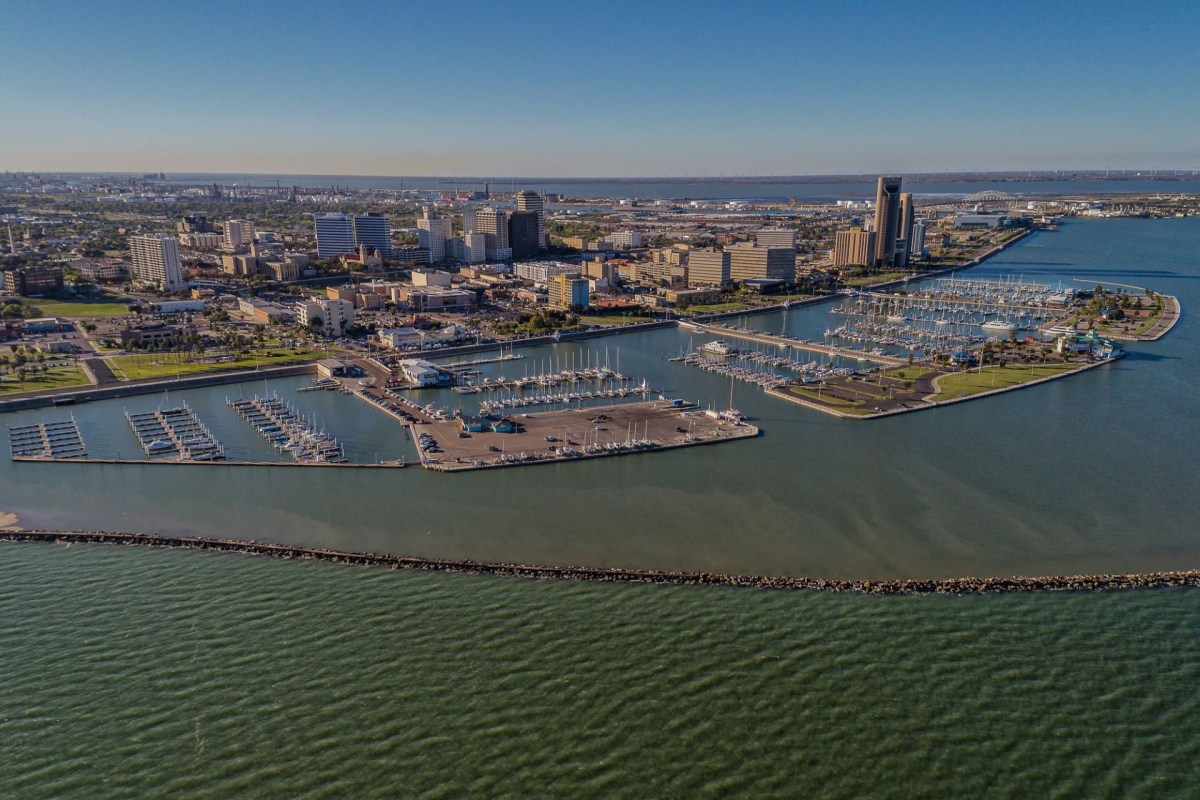
A proposed desalination plant on Texas' Gulf Coast has cleared a major milestone, putting Corpus Christi and the wider Coastal Bend on a clearer path to a new freshwater source as drought conditions and water demand intensify.
Here's what to know
According to Kris 6 News, the Harbor Island Desalination Facility completed the permitting process after the Texas Commission on Environmental Quality approved its offshore discharge permit.
Corpus Christi has lined up half of the plant's planned output. On Oct. 21, 2025, the Corpus Christi City Council approved, in a 5-3 vote, a $2.7 million payment to the Nueces River Authority to reserve 50 million gallons per day from the planned facility, which is designed to produce up to 100 million gallons daily.
Port of Corpus Christi Chief Executive Officer Kent Britton said, "The Port of Corpus Christi initiated the process to secure permits for a proposed desalination facility on Harbor Island almost a decade ago, recognizing the increasingly critical need to establish a reliable, drought-resilient water supply for the region that would be significantly larger than otherwise contemplated."
As for the local impacts, Britton added, "Through that process, we have engaged with the communities we serve and have addressed reasonable concerns for our local bay system by moving the plant intake and discharge offshore."
More background
Desalination converts saltwater into freshwater, and coastal communities often weigh it as one option when traditional water sources are under strain. In this case, the Harbor Island facility is being positioned as a backup for a region looking for a more dependable supply.
TCD Picks » Quince Spotlight
💡These best-sellers from Quince deliver affordable, sustainable luxury for all




The new offshore discharge permit replaces the Port's earlier approach. Under a resolution approved by the Port Commission in May 2025, the Port plans to relinquish the smaller nearshore discharge permit it received in late 2022.
Gabe Guerra, chairman of the Port of Corpus Christi Commission, said the Port is serving as a landlord in the project, while private companies are expected to develop, build, and operate the facility on leased land.
What's being done?
With state regulators having completed the permitting stage, the proposed plant is likely to advance under the Nueces River Authority and its private partner, IDE Technologies.
City leaders have set aside 50 million gallons per day from the planned facility.
Project supporters also pointed to design changes to ease local concerns. Shifting both the intake and discharge offshore was presented as a way to reduce worries about effects on the bay system.
"This final step in permitting a desalination facility on Harbor Island is pivotal for our region's search for a long-term solution to water supply challenges, and we look forward to our lessee, the Nueces River Authority (NRA), and their private partner, IDE Technologies, continuing to progress the project to help bring water security to the Coastal Bend and Texas," Guerra said.
Where can I learn more?
For more background on desalination, these stories dig into the technologies behind new freshwater supplies. They examine how seawater treatment works, what it costs, and how researchers are trying to improve it.
• Coastal communities increasingly rely on turning saltwater into freshwater when reservoirs and rivers fall short.
• At Australian National University, engineers are pursuing a paradigm shift in desalination to cut costs.
• In Qatar, engineers built a modular desalination system that also generates electricity.
• Scientists exploring evaporation found a cost-effective way to reduce desalination's briny waste.

Get TCD's free newsletters for easy tips, smart advice, and a chance to earn $5,000 toward home upgrades. To see more stories like this one, change your Google preferences here.






