


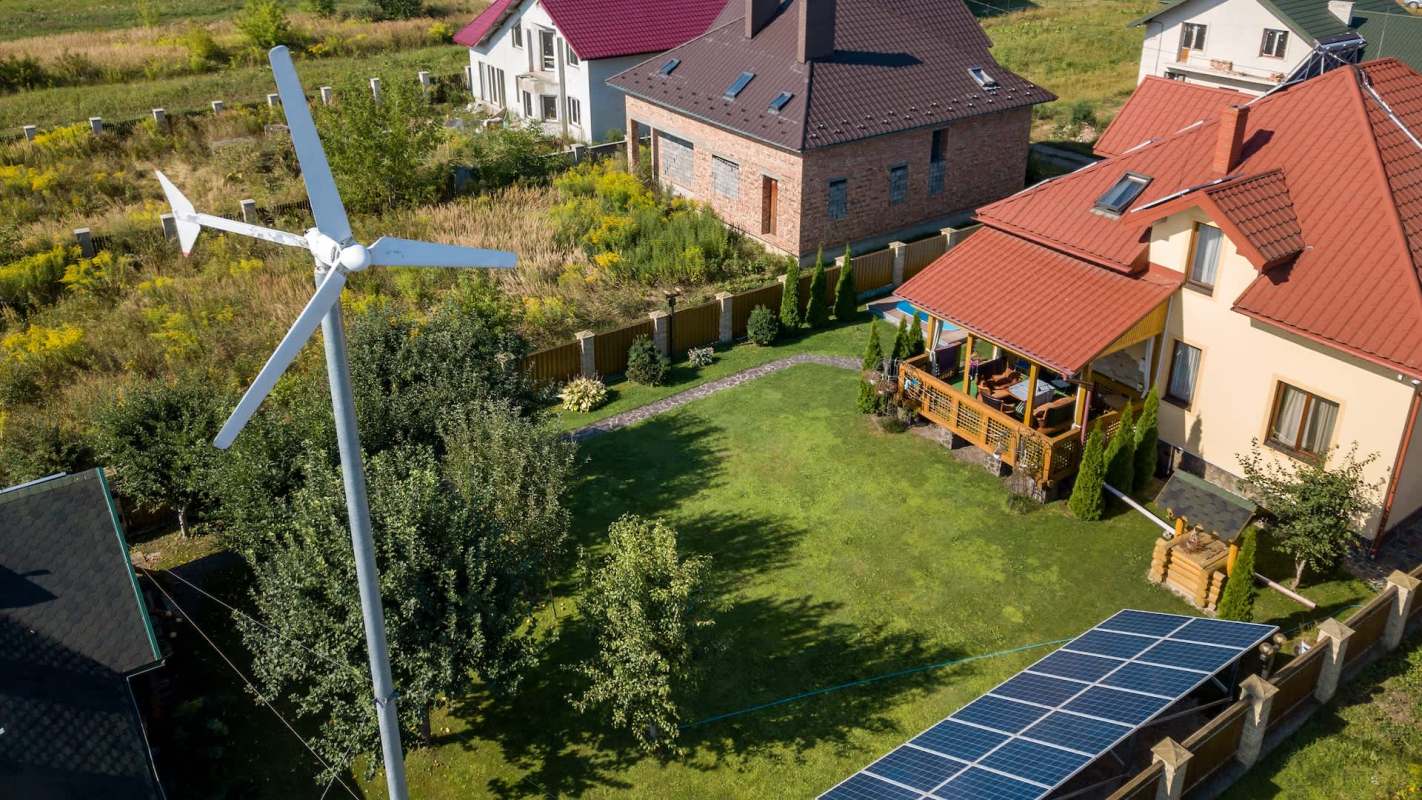
A hilltop home that feels windy all the time might sound like the perfect place for a backyard turbine. But a discussion among UK preparedness-minded homeowners suggested that when the goal is affordable backup power, solar often wins by a wide margin.
Here's what to know
In a Reddit thread, the OP said: "Most of the time it's annoying, but I'm fortunate/unfortunate enough to live on a hill which means it's pretty much always windy. Has anyone built their own wind turbine in their garden? If so how viable is it to charge batteries / power appliances in a power cut?"
One user said, "5kWp of solar panels (about 10 panels/20m2 ) in summer will generate 25kWh per day and in winter will normally generate at least 2.5 kWh per day in the UK. This scales linearly, so double the panels produce double the output."
Another user said, "It's not worth it in the uk. I know someone who had one in a perfect spot. And it still made less power than his small solar setup. And that was in Scotland famous for no sun and loads of wind."
One user suggested, "Panels on the roof and barn work even in winter."
For homeowners focused on resilience and lower monthly bills, going solar is one of the best ways to save on home energy costs. Services such as EnergySage let you get free solar installation estimates and compare quotes before committing.
Additionally, a couple of users warned about noise.
One said, "Wind also has moving parts, so requires maintenance and is more likely to produce noise."
Save $10,000 on solar panels without even sharing your phone number Want to go solar but not sure who to trust? EnergySage has your back with free and transparent quotes from fully vetted providers that can help you save as much as $10k on installation. To get started, just answer a few questions about your home — no phone number required. Within a day or two, EnergySage will email you the best local options for your needs, and their expert advisers can help you compare quotes and pick a winner. |

Another added, "They make a racket."
What can be done?
For most homeowners, the simpler path is to start by comparing rooftop solar costs and evaluating what kind of battery backup would cover essentials such as lights, refrigeration, device charging, or medical equipment during an outage.
With EnergySage's help, the average person can save up to $10,000 on solar purchases and installations. EnergySage's solar map shows the average cost of a home solar panel system by state, along with details on solar panel incentives for each state; together, these resources can help homeowners get the best price for rooftop solar panels and access available incentives.
Adding battery storage to a solar setup is one of the best ways to protect your home during outages, save on energy costs, and go off-grid. It can also help households keep more of the power they generate instead of relying entirely on the grid. Homeowners can explore EnergySage for information about home battery storage options, including competitive installation estimates.
More From EnergySage
💡Go deep on the latest news and trends shaping the residential solar landscape

Where can I learn more?
If you're weighing backyard wind against solar and storage, these stories offer a little more context. They cover home-scale turbines, solar installation costs, renewable-energy pricing, cheaper storage, and Europe's wider clean-power shift.
• Estonia's Freen is pitching small wind turbines for homes and neighborhood microgrids.
• EnergySage's COO is unpacking the mystery of solar costs for budget-conscious homeowners.
• By 2030, wind, solar, and storage could supply a third of global power.
• Across Europe, wind and solar are driving a historic shift in electricity generation.

Get TCD's free newsletters for easy tips, smart advice, and a chance to earn $5,000 toward home upgrades. To see more stories like this one, change your Google preferences here.






