


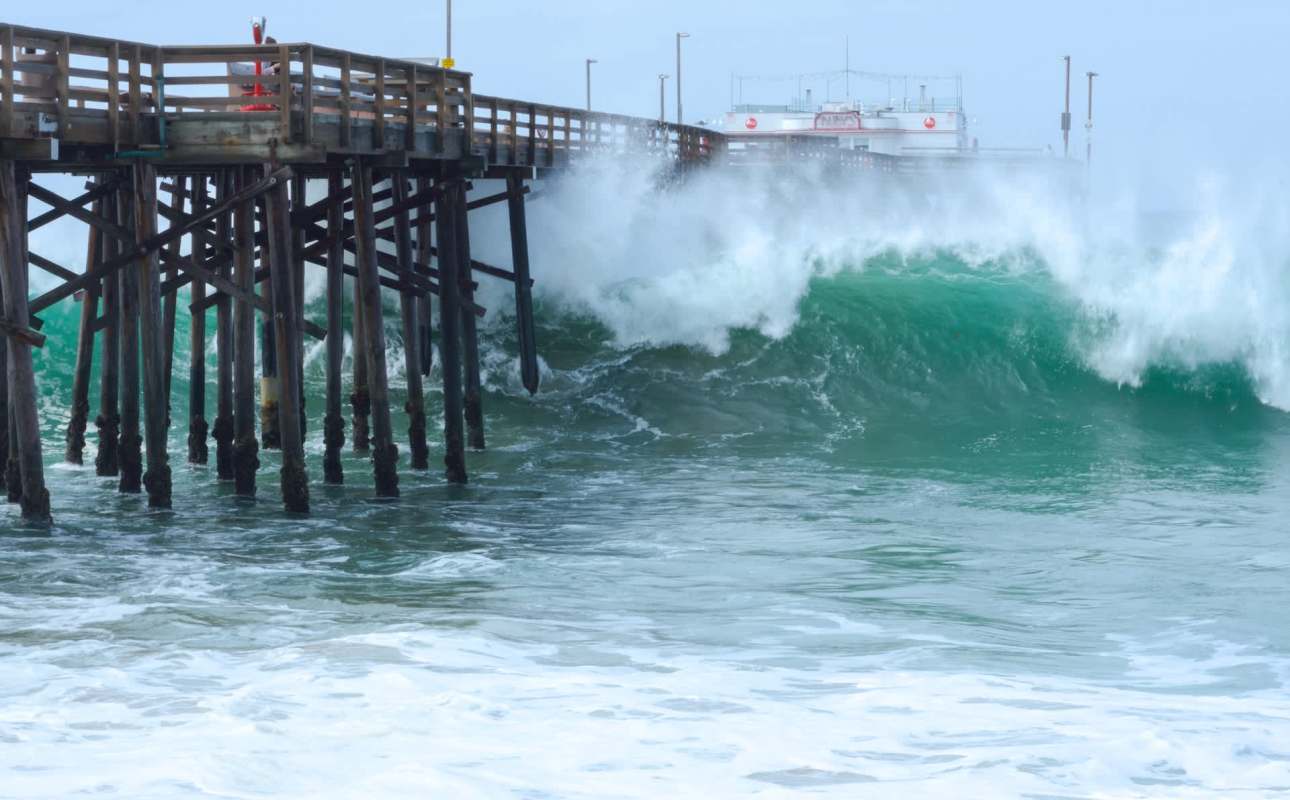
California's coast could see an unwelcome rise in water levels as a massive Pacific Ocean phenomenon known as a Kelvin wave pushes north. Scientists say the event may temporarily lift sea levels by as much as a foot in some areas.
That extra height could make high tides, storm surge, and coastal flooding even more dangerous for communities already vulnerable to erosion and severe weather.
Here's what to know
Rather than a wave that crashes onto shore, a Kelvin wave is a huge band of warm water that can stretch for thousands of miles along the equator. According to The Daily Express, concern about the current one comes as an especially strong El Niño reshapes ocean conditions across the Pacific.
Describing what happens when the water runs into land, NASA's Jet Propulsion Laboratory ocean-circulation researcher Severine Fournier said, "You can follow them along ... we see the higher sea levels along the equator, and when the wave reaches the coast of South America, it cannot continue to go eastward. So it goes north and south."
After reaching the northern tip of South America in August, the Kelvin wave continues north along the United States' west coast. As warm water builds up near the shoreline, California could experience about a foot of sea-level rise.
NOAA's Southwest Fisheries Science Center research scientist Nate Mantua said, "When the wind stops blowing or weakens, the force that's holding that pile of water in place goes away, so that water surges or sloshes back towards California."
TCD Picks » Quince Spotlight
💡These best-sellers from Quince deliver affordable, sustainable luxury for all




When tides are already high, an extra foot of water can push flooding farther inland, worsen beach erosion, and put roads, homes, and businesses at greater risk.
Because sea levels are already roughly 8 inches higher than they were a century ago, events like this can add to climate-driven sea-level rise.
As Mantua put it, "We can predict a lot of the impacts, but not all."
What can be done?
Paying close attention to local flood advisories, tide forecasts, and evacuation notices can help residents avoid dangerous travel and protect property before water levels peak.
Better emergency planning, stronger building standards, and efforts to curb the pollution driving climate instability can all help reduce the toll of rising seas and more powerful weather extremes.
Southwest Fisheries Science Center oceanographer Mike Jacox explained, "It's a wave unlike the ones you're used to at the beach. They don't crash, you can't really see them come by. This winter, we're supposed to have some really high tides around Thanksgiving and Christmas. If you also have more storms, then you have storm surge. It's just like you're raising the floor on all that stuff that happens."
Where can I learn more?
These stories look at other Pacific and California factors that can worsen coastal flooding and ocean-driven weather risks.
• El Niño can ramp up Pacific hurricanes near California and Mexico even as Atlantic storms ease.
• The Pacific now holds a marine heat wave that spans 13.5% of Earth and disturbs weather worldwide.

Get TCD's free newsletters for easy tips, smart advice, and a chance to earn $5,000 toward home upgrades. To see more stories like this one, change your Google preferences here.






