


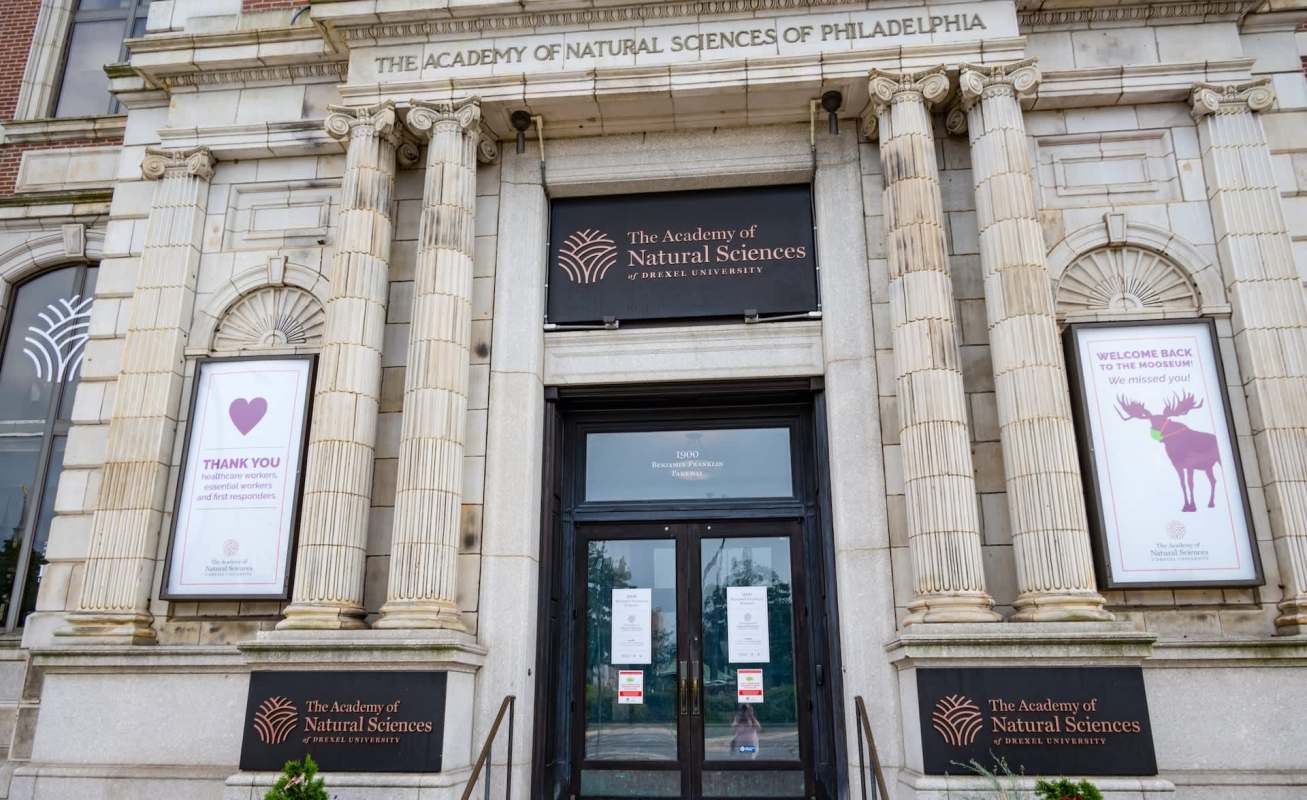
A Philadelphia City Council proposal may significantly limit the next chapter for the Academy of Natural Sciences building after Drexel University officially closed the long-standing museum for good on Sunday.
If approved, the measure would bar housing and commercial redevelopment at one of Philadelphia's best-known cultural sites, making any conversion to apartments, offices, or retail much harder.
Here's what to know
Councilmember Jeffery Young Jr. has introduced land-use legislation affecting the Benjamin Franklin Parkway property in his district, The Philadelphia Inquirer reported.
The proposal would allow institutional uses such as hospitals and libraries, as well as government functions, cultural exhibits, and "community-supported" farms, while disallowing residential and commercial development.
Young said the legislation is meant to align the code with the site's long-standing role.
"It's always been a cultural and civic use, so [my bill] would match the land use with the actual zoning to allow only cultural and civic type uses," Young said, per the Inquirer. "But it wouldn't prevent the academy from closing."
TCD Picks » Quince Spotlight
💡These best-sellers from Quince deliver affordable, sustainable luxury for all




Unlike neighboring museums on the Parkway, the property is currently zoned to permit multifamily housing. If Young's bill becomes law, an owner hoping to pursue another kind of use would likely have to seek a variance from the city board that hears those cases — a process that can be expensive, slow, and uncertain.
The measure would also require any would-be developer to meet with community groups before appearing at a zoning board hearing, creating another stage of public review over the site's future.
More background
The fight over the building follows Drexel's September announcement that it would shut the museum on Sept. 27, a move the Inquirer said was tied to weaker attendance after the COVID-19 pandemic and financial troubles at the university.
The Academy of Natural Sciences was founded in 1812 and is considered the oldest institution of its kind in the United States, while the museum that opened in 1828 is the nation's oldest natural history research museum. The collection includes 19 million biological specimens — from bones and carcasses to plants.
Leaders from Drexel and the academy have said no final decision has been made about the building's future. Hundreds also attended a protest on the Parkway. Deputy Mayor Patricia Wellenbach was installed as the academy's temporary leader while serving as a senior adviser on loan from the city.
What's being done?
Young's legislation is aimed at narrowing the options for private redevelopment. Instead of immediately rezoning the parcel to mirror nearby institutions such as the Philadelphia Museum of Art or the Barnes Foundation, he chose to pursue a zoning overlay that would apply specifically within his district. He said a broader zoning change is still under consideration.
"We are looking to do that, but the issue is that the planning commission doesn't work for me and so they're not on my time," Young said. "Ultimately, we had to do what we could do from our office's standpoint."
The bill must still clear the Committee on Rules, pass the full city council, and then reach Mayor Cherelle L. Parker's desk. Land-use measures tied to a district councilmember's wishes often have a strong path forward in Philadelphia because of councilmanic prerogative.
If enacted, the restrictions would take effect immediately.
"This academy has been there for over 200 years," Young said during the council's meeting. "It's dedicated to civic and cultural education, to science. If we take that away, how will our kids learn?"
Where can I learn more?
Similar debates elsewhere have turned on whether historic institutions and public lands should remain protected from redevelopment.
• In Florida, lawmakers barred commercial development in state parks after a preservation push.
• In Alaska, federal officials protected vast areas of land from future development.
• In Coupeville, Washington, rising sea levels threaten historic buildings and costly preservation decisions.

Get TCD's free newsletters for easy tips, smart advice, and a chance to earn $5,000 toward home upgrades. To see more stories like this one, change your Google preferences here.






