


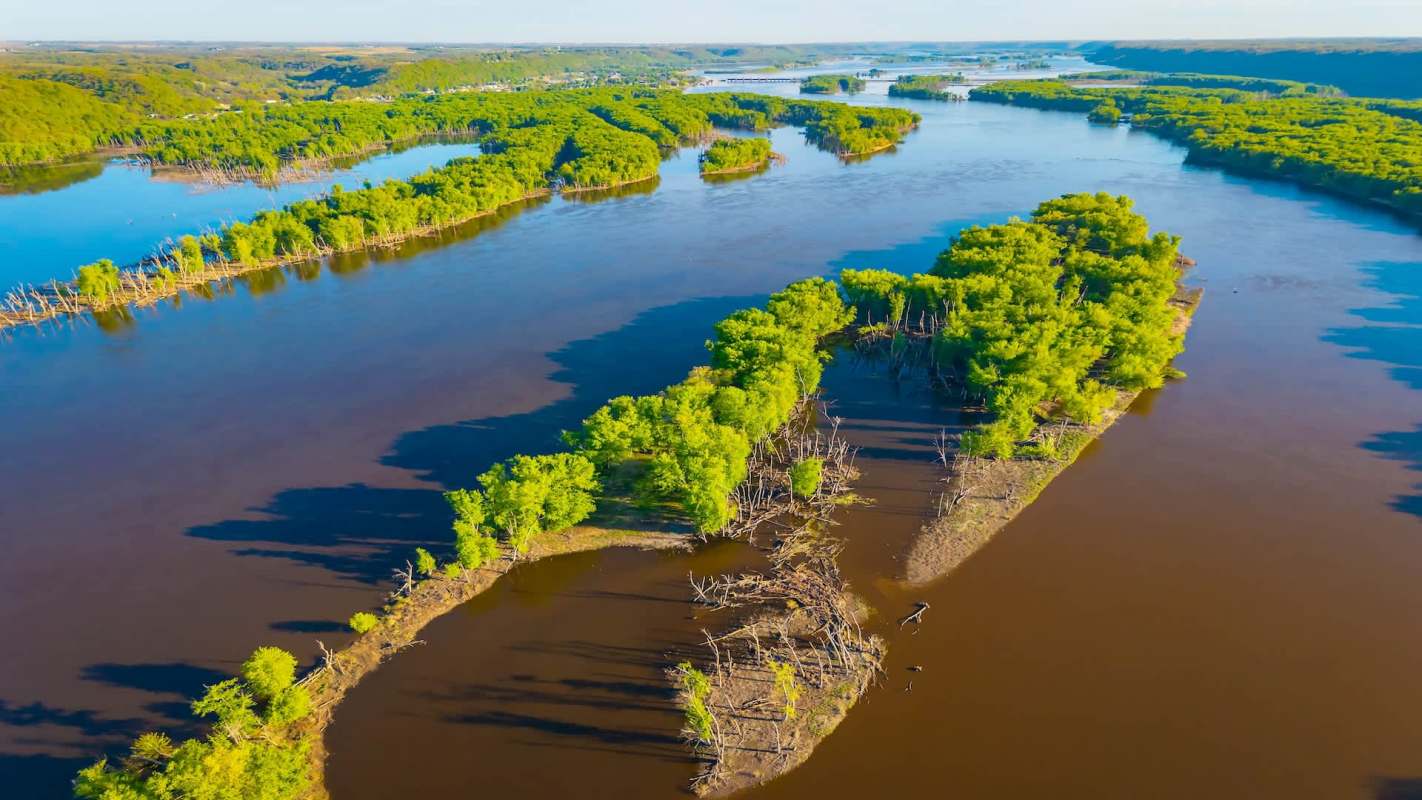
Near Guttenberg, Iowa, erosion and sediment buildup are causing islands to vanish and backwaters to fill in along the Mississippi River.
KCRG reported that a $40 million restoration project intends to repair that damage while protecting the ecosystem.
Here's what to know
According to KCRG, the habitat rehabilitation and enhancement effort underway near Guttenberg in the Mississippi River's Lower Pool 10 will likely restore and protect more than 1,000 acres. This should occur along a three-mile stretch by 2030.
The Guttenberg work is part of the U.S. Army Corps of Engineers St. Paul District's Upper Mississippi River Restoration Program, which is in its 40th year of habitat restoration. Program manager John Henderson said currents and floods have gradually worn away the islands over time, exposing river backwaters.
"You'll see there's a lot of trees that are dead and shorelines that have eroded. As that's happened, all of that sediment also tends to find its way into and fill these backwaters," said Henderson.
As island erosion exposes backwater, the floodplain forest habitat for all kinds of wildlife also disappears. Restoring this habitat can strengthen the local ecosystem and make life better for everything and everyone who lives nearby.
TCD Picks » Quince Spotlight
💡These best-sellers from Quince deliver affordable, sustainable luxury for all




What's being done?
To rebuild islands and reinforce shorelines, contractor Legacy Corporation is using specialized equipment to bring skid loaders, bulldozers, and other construction vehicles into the middle of the river.
The sand being used on the project came from dredging on the bottom of the Mississippi to preserve room for barges. "We're able to beneficially reuse that on these islands to help bolster the habitats, use that sand and really get the most bang for our taxpayer buck," Henderson said.
He said the work near Guttenberg is just one part of the larger efforts of the Upper Mississippi River Restoration Program.
"This is just one project in a long line of successes. 62 projects, 120,000 acres. This program has proven that it is successful. We can make a change in these environments and we look forward to all the different projects we have coming up," he said to KCRG.
Although the program isn't allowed to incorporate recreational benefits into its plans, Henderson said the projects usually help the public too, stating, "Whether it be fishing, hunting, boating, kayaking, birding, really everyone and everything benefits from these projects."
Where can I learn more?
Other restoration projects show how damaged rivers and shorelines can recover.
• In U.S. river systems, removing restrictive dams from rivers is improving trout habitat.
• In South London, river restoration transformed the Wandle into a cleaner habitat for wildlife.
• In South Bay, California, a massive tidal marsh restoration is reviving barren shoreline habitat.

Get TCD's free newsletters for easy tips, smart advice, and a chance to earn $5,000 toward home upgrades. To see more stories like this one, change your Google preferences here.







