


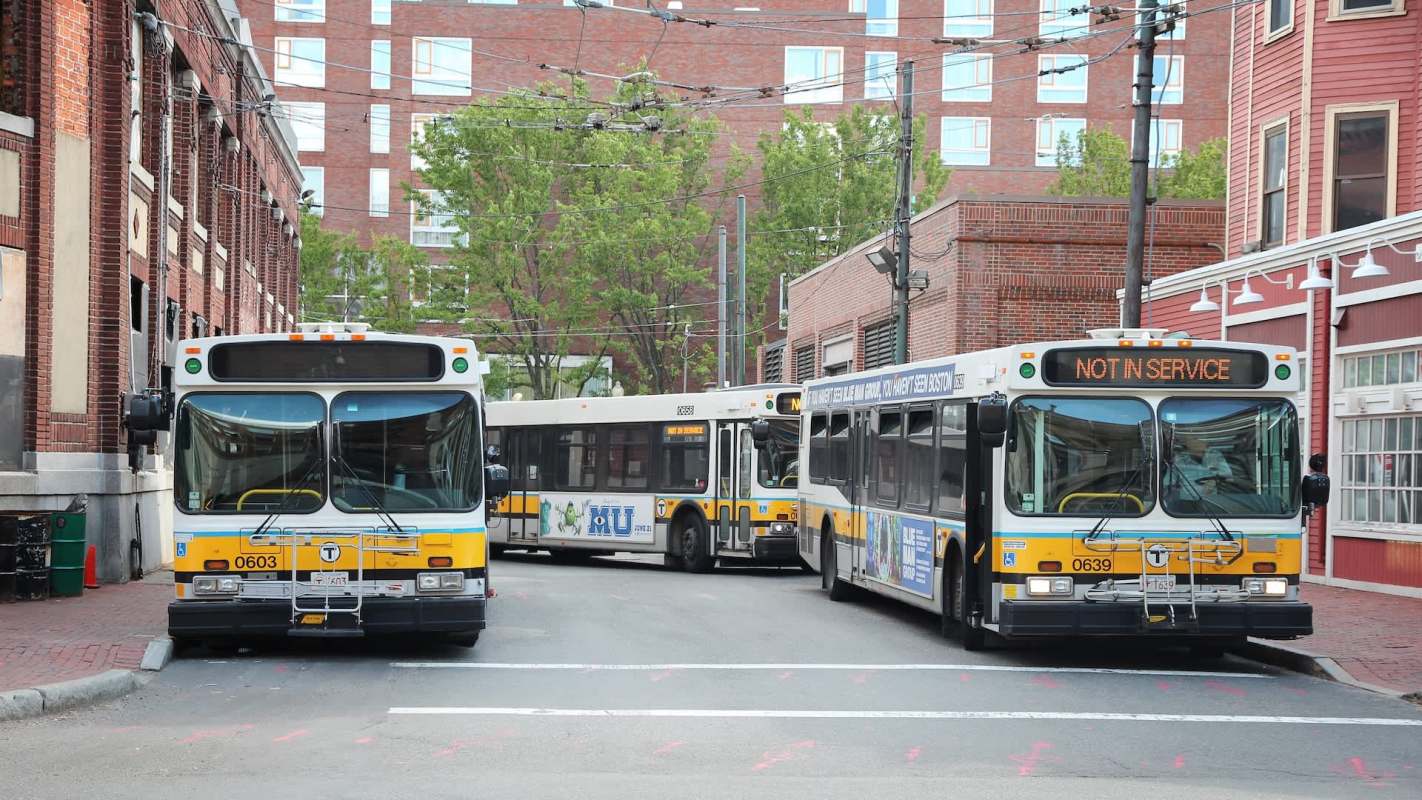
Boston's slowest MBTA bus route is moving at barely more than a brisk walking pace, and a new report suggests the problem is getting worse.
Transit Matters found that the Silver Line SL4 averaged just 6.09 miles per hour in October 2025, highlighting how unreliable bus service can eat away at riders' time, income, and day-to-day stability.
Here's what to know
In its third annual review of MBTA bus performance, Transit Matters — a Massachusetts transportation advocacy nonprofit — ranked the SL4 between South Station and Nubian Station as the system's slowest route. Boston.com reported that the group relied on publicly available October 2025 data to compare year-over-year bus performance across Boston.
The report indicates the problem extends well beyond one line. Boston's 10 slowest routes averaged 6.42 mph, down from 6.83 mph in October 2023.
After the SL4, the next-slowest routes were the 1, 93, 47, and CT3, followed by the 92, 66, SL5, 19, and 10.
One area for improvement was bunching on the worst-performing routes, which eased somewhat. Transit Matters reported an average bunching rate of 13.9% for the 10 routes with the highest bunching, nearly two percentage points lower than in October 2024.
TCD Picks » Quince Spotlight
💡These best-sellers from Quince deliver affordable, sustainable luxury for all




The report said slow service has consequences beyond inconvenience.
"Traffic-slowed and blocked buses impact the daily lives of riders by introducing uncertainty into their schedules and costing them time with loved ones," the report said.
More background
Many of the hardest-hit routes serve communities that already face transportation barriers.
Seven of the 10 slowest routes serve Roxbury, where median household income is around $46,000 and about 39% of residents lack access to a car.
When buses run slowly, riders can arrive late to work, school, medical appointments, or child care pickups. For households without cars, there may be no easy alternative.
Transit Matters also said many of the slowest and most bunched routes run through Black and brown communities and lower-income neighborhoods.
What's being done?
The findings arrive as Boston plans to expand bus-priority measures, including additional bus lanes, more transit signal priority, and bus-mounted enforcement cameras for vehicles stopped in those lanes. Those steps are meant to help buses move through traffic more reliably.
Even so, Transit Matters said several bus-infrastructure projects have slowed, which could blunt those gains if the delays continue.
Possible fixes listed in the report include continuing work on the Hyde Park Avenue and Blue Hill Avenue projects and restoring bus lanes on N. Washington Street and Boylston Street after they were removed.
The 32 route had the highest bunching rate at 17.1%, the 116 moved up to No. 2, and the 1 and 66 appeared on both the slowest and most bunched lists.
"Poor bus service is not just an issue of inefficiency; it is an issue of opportunity, mobility, and quality of life for these communities," the report said. "Inefficient service is felt every day by riders who may have to wait fifteen minutes longer in the extreme heat or cold."
Where can I learn more?
Boston's bus problems reflect challenges other cities are tackling in different ways. These stories look at bus fleet upgrades, fare policies, and street designs that can shape transit speed and reliability.
• In British Columbia, high-end buses and infrastructure upgrades are headed to growing communities.
• In Seoul, a new transport program is making daily commutes cheaper and greener.
• In major cities, improved public transportation is easing traffic while speeding trips for everyone.
• In Toronto, abandoning the century-old trolleybus system left buses less nimble in traffic.

Get TCD's free newsletters for easy tips, smart advice, and a chance to earn $5,000 toward home upgrades. To see more stories like this one, change your Google preferences here.






