


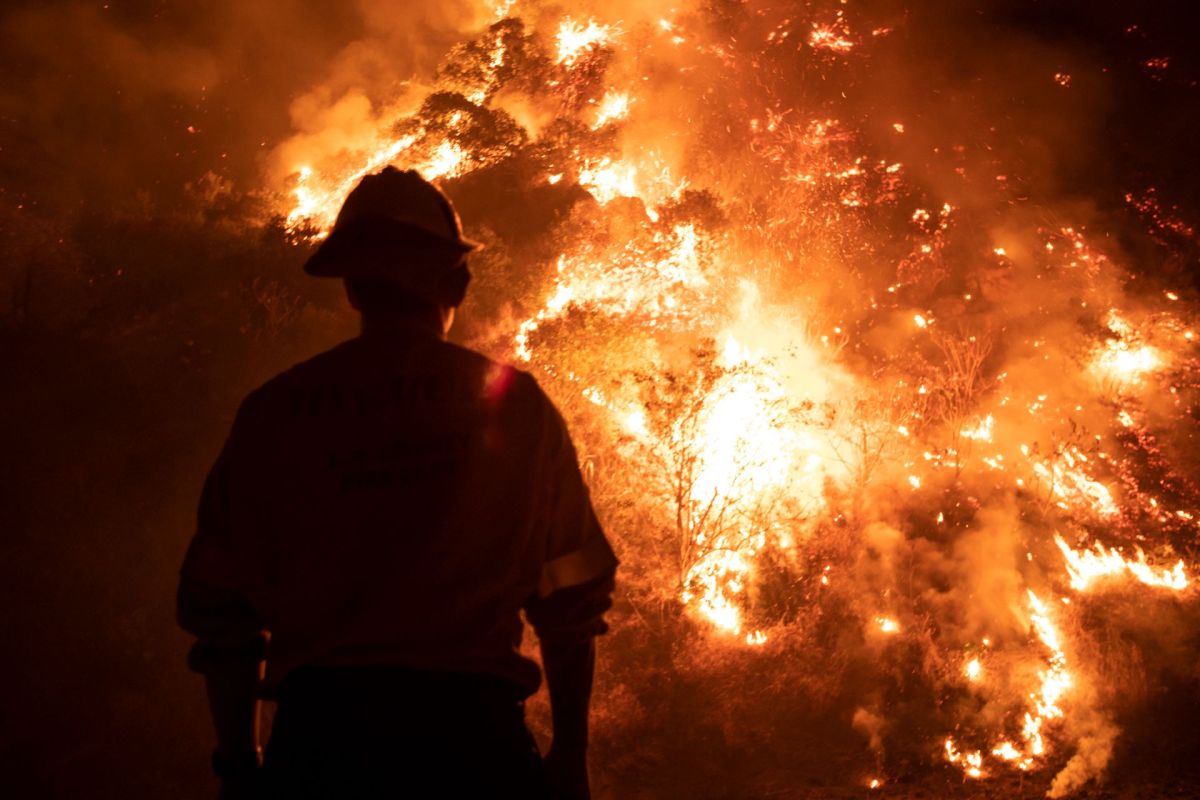
U.S. firefighters say they have been asked to do more with less during one of the most punishing wildfire seasons in years, with a federal shortage of workers raising concerns about safety on the fireline and for the communities that depend on them as disasters intensify.
Here's what to know
Nine current federal firefighters and several retired firefighters recently told the Guardian that long-running staffing gaps, particularly in seasoned leadership positions, are straining the workforce. They said that shortfall is colliding with pressure from federal officials to move quickly and attack fires aggressively.
Since April, some firefighters said they have been on assignments almost nonstop, a tempo that has left them exhausted. In some cases, that fatigue has led them to question whether certain deployments were too dangerous to accept.
This season has also brought an unusually high number of deadly close calls.
By mid-August, there had been 12 firefighter entrapments — incidents in which flames block escape routes or overrun safety zones — the highest total in two decades, according to Reuters. The Guardian also totaled 14 on-duty fatalities this year.
More background
Amid the record-breaking fire season, the U.S. remained at preparedness level 5, the highest alert level, for 48 straight days before dropping to level 4 on Sept. 4.
TCD Picks » Quince Spotlight
💡These best-sellers from Quince deliver affordable, sustainable luxury for all




In a letter to the leaders of the Interior and Agriculture departments, several U.S. senators warned that "teams have worked more fires than is safe, using temporary supervisory structures because fully qualified personnel are not available."
The Guardian noted that the account stands in contrast with recent congressional testimony from Tom Schultz, chief of the U.S. Forest Service.
"Our firefighting workforce is stronger than at any point in recent years," Schultz said in July. "We are fully staffed and equipped to respond aggressively to every unplanned ignition."
What can be done?
Some fire departments have been advocating for changes to work schedules and improved safety measures to mitigate strain and stress.
Virginia news outlet WWBT reported earlier this month that in Petersburg, where firefighters usually work 24 hours on and 48 hours off, "they are now asking for an extra day off to rest and recover."
There, the local fire chief is supporting a 24-hour-on, 72-hour-off schedule to help support firefighters' safety and well-being. The change would reportedly require the hiring of around two dozen additional firefighters, estimated to cost around $2 million each year.
A bill advanced in the Virginia legislature this year could also hold paid firefighters to 42 hours a week if it becomes law.

Get TCD's free newsletters for easy tips, smart advice, and a chance to earn $5,000 toward home upgrades. To see more stories like this one, change your Google preferences here.







