


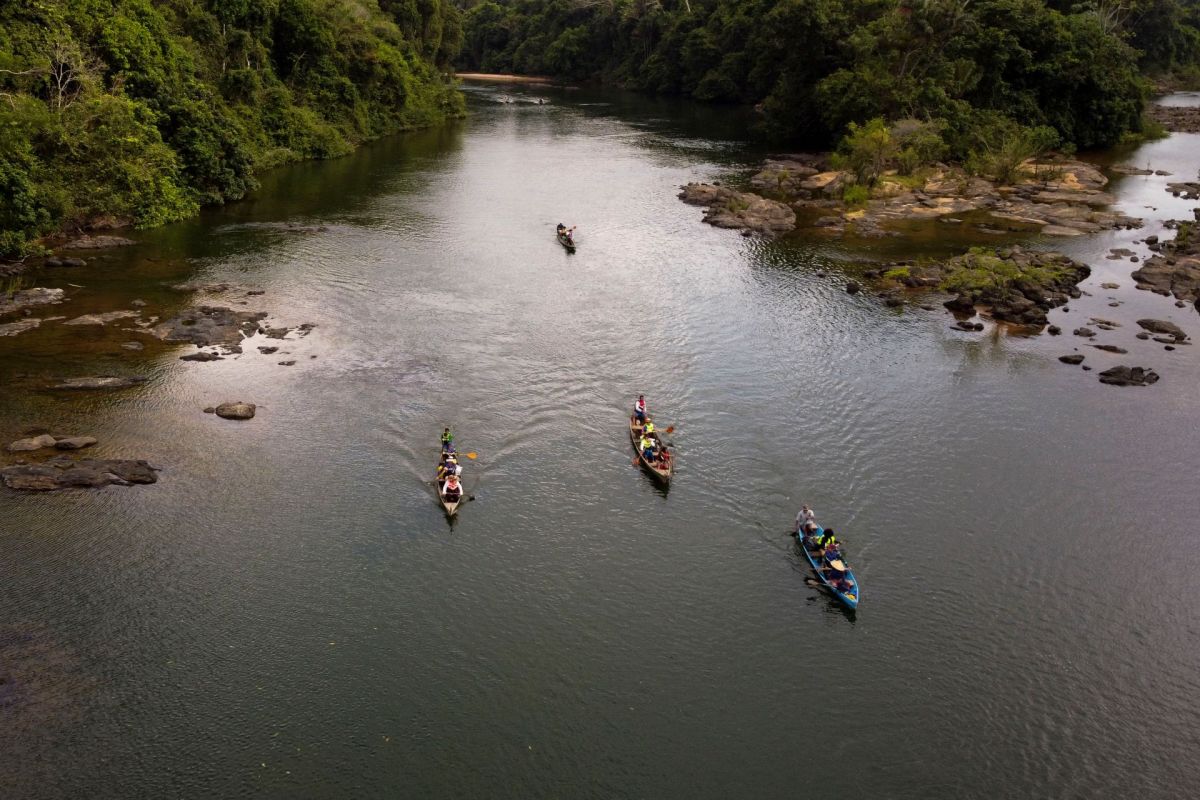
A proposal for what could become Brazil's largest open-pit gold mine continues to face staunch opposition, with Indigenous communities and advocates warning it could cause lasting damage in a fragile part of the Amazon.
Activists say the fight is not only about a mine site. It is also about the people who rely on the Volta Grande do Xingu region to live, work, and carry on cultural traditions.
Here's what to know
Actor Leonardo DiCaprio, posting on social media in collaboration with the Alliance for the Volta Grande do Xingu — a region of the Amazon — drew attention to opposition to Belo Sun's proposed mine.
According to the post, Belo Sun — a Canadian mining company — wants to build "Brazil's largest open-pit gold mine" in the region.
"Scientists and advocates are sounding the alarm that a project of this magnitude will cause irrevocable harm to the region's unique ecosystem and the dozens of communities that depend on it," the post's caption reads.
The post also emphasized that resistance to the project has been persistent.
TCD Picks » Quince Spotlight
💡These best-sellers from Quince deliver affordable, sustainable luxury for all




"For months, Indigenous Peoples have occupied government buildings and marched in the streets to demand that Belo Sun abandon its plans, allowing the Volta Grande do Xingu to remain alive and free from large-scale mining," it read.
In late March, Mongabay reported that more than 120 Indigenous protesters had been occupying a federal building in Brazil to demand that officials prevent the mining project from moving forward.
As of mid-September, federal prosecutors have asked the country's Supreme Court to suspend Belo Sun's license for the mine, according to Amazon Watch.
More background
Large open-pit mines can transform landscapes irreversibly and on a vast scale.
Even before extraction begins, such projects often require clearing land, moving massive amounts of earth, building access infrastructure, and managing runoff and waste — all of which can add pressure on forests, waterways, and nearby communities.
In a place as ecologically important as the Amazon, the impacts can stretch far and wide.
Damage to ecosystems can undermine biodiversity, weaken natural carbon storage, and make it harder to protect the climate and clean water systems that support a better future for everyone.
For the people living closest to a proposed project, though, the stakes are even more immediate and dire.
At stake are health, food systems, cultural survival, and the rights of residents to guide what happens on the land their people have inhabited — and protected — for generations.
DiCaprio's post directed followers to the Alliance for the Volta Grande do Xingu, encouraging people to learn more about the group and support its efforts.
Where can I learn more?
These articles look at gold mine disputes, local rainforest conservation, and policy fights shaping Brazil's environmental future:
• Across the Amazon, communities are delivering unprecedented conservation dividends by protecting forests they know intimately.
• In Brazil, worsening deforestation has spurred the government into action to protect the Amazon.
• Marina Silva, the former Environment Minister of Brazil, worked to make great strides in restoring protections across the Amazon.
• Brazilian lawmakers approved a controversial bill to pave a highway through the Amazon rainforest.
• In Idaho, opponents said a "toxic" gold mine project could threaten crucial waters.

Get TCD's free newsletters for easy tips, smart advice, and a chance to earn $5,000 toward home upgrades. To see more stories like this one, change your Google preferences here.






