


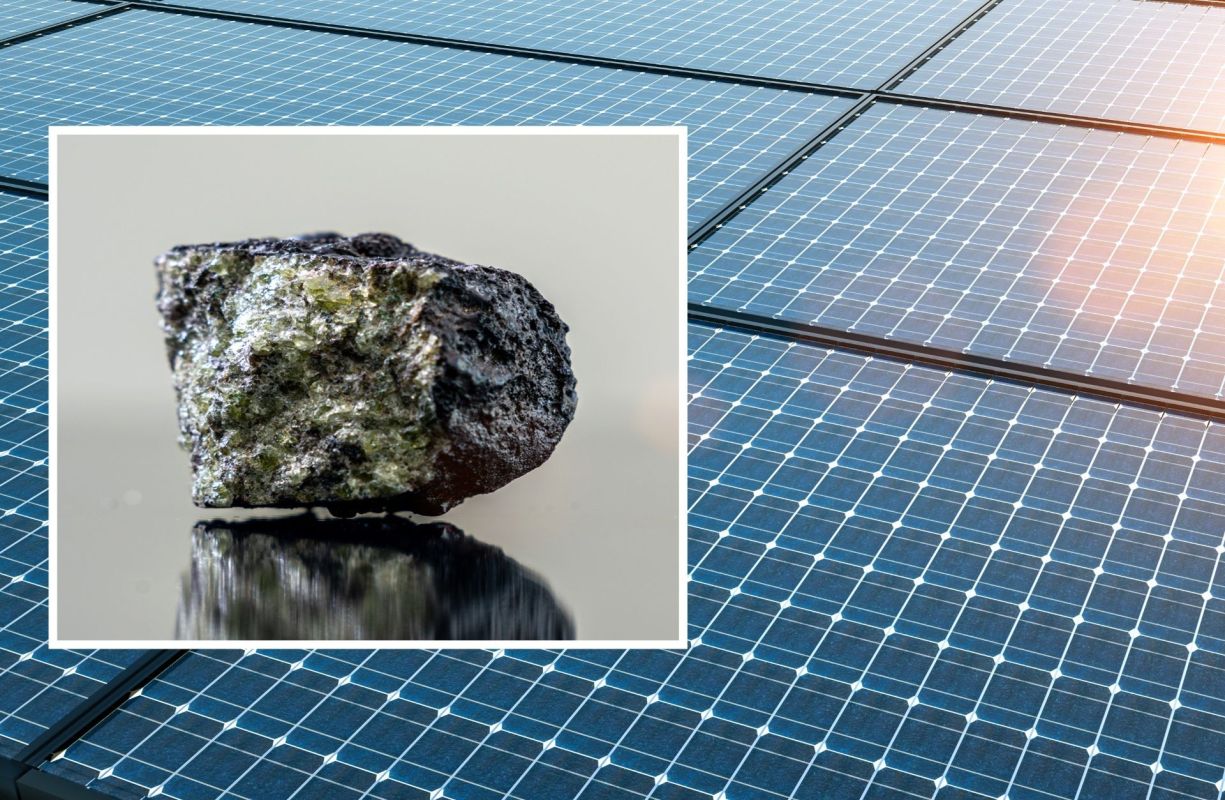
A new lead-free material with strong potential for solar cells has, to date, raised concerns about its durability. However, researchers have unveiled a breakthrough that shields the material from humidity and air, potentially overcoming a major hurdle.
Here's what to know
A material known as perovskite has been used in solar panels because of its strong photovoltaic properties. However, perovskite contains lead, so it has also raised public health and environmental concerns.
Scientists have since developed a new, nontoxic, lead-free form known as tin perovskite, according to a summary by the University of Wisconsin–Madison. However, the new material has lacked the durability needed for solar panels, which are exposed to the elements for years during their lifetimes.
"Tin perovskites are very promising materials for solar energy, but they are extremely sensitive to air and moisture," said Song Jin, a University of Wisconsin–Madison professor of chemistry and a corresponding author of the study, per Tech Xplore.
However, the new research strongly suggests that tin perovskite can be made more resilient and long-lasting.
The researchers revealed their findings in a study published in the journal Nature Materials. The work was a collaboration between the University of Wisconsin–Madison, the National Laboratory of the Rockies, and other institutions.
Even without tomorrow's technology, going solar is already one of the best ways for households to save money on home energy. If you're considering rooftop panels, you can check out EnergySage for free solar installation estimates and compare quotes.
More background
According to experts, perovskites are appealing because of their high solar conversion rates and simpler production methods. If the durability-related challenges can be overcome, perovskites could expand access to cleaner, cheaper electricity for residences, commercial buildings, and utility-scale projects.
Save $10,000 on solar panels without even sharing your phone number Want to go solar but not sure who to trust? EnergySage has your back with free and transparent quotes from fully vetted providers that can help you save as much as $10k on installation. To get started, just answer a few questions about your home — no phone number required. Within a day or two, EnergySage will email you the best local options for your needs, and their expert advisers can help you compare quotes and pick a winner. |

Eliminating lead would also ease a central health and environmental objection to some solar technologies.
What's being done?
Around the world, labs and solar startups have been working on two problems at once: boosting perovskite performance and durability, and figuring out how to manufacture the cells at commercial scale, Tech Xplore reported. Breakthroughs in durability could represent a real step toward the widespread adoption of the technology.
For homeowners looking to go solar, EnergySage can help you install the best available technology today. With EnergySage's help, the average person can save up to $10,000 on solar purchases and installations. And EnergySage's solar map shows the average cost of a home solar panel system state by state, along with details on solar panel incentives for each state, which can help homeowners get the best deal for rooftop solar panels.
Adding battery storage to a solar setup is one of the best ways to protect your home during outages, save money on energy, and go off-grid. It can also help you use more of the electricity your panels generate instead of sending it back to the grid at lower value. Homeowners can explore EnergySage for information about home battery storage options, including competitive installation estimates.
More From EnergySage
💡Go deep on the latest news and trends shaping the residential solar landscape


Where can I learn more?
This work is part of a broader push to make next-generation solar cells more efficient and durable. The articles here explore coated perovskites, record-setting designs, and other experimental materials that could reshape photovoltaics.
• Scientists have built coated perovskite-silicon solar cells that approach 31% efficiency with stability.
• In Singapore, engineers achieved certified world-record efficiency with a next-generation solar-cell design.
• In Japan, scientists advanced near-perfect organic solar material that could reshape lightweight panels.
• Researchers unveiled a selenium-based technique that could significantly improve solar-cell performance.
• A team explored alpha-phase indium selenide to push solar materials toward higher output.

Get TCD's free newsletters for easy tips, smart advice, and a chance to earn $5,000 toward home upgrades. To see more stories like this one, change your Google preferences here.






