


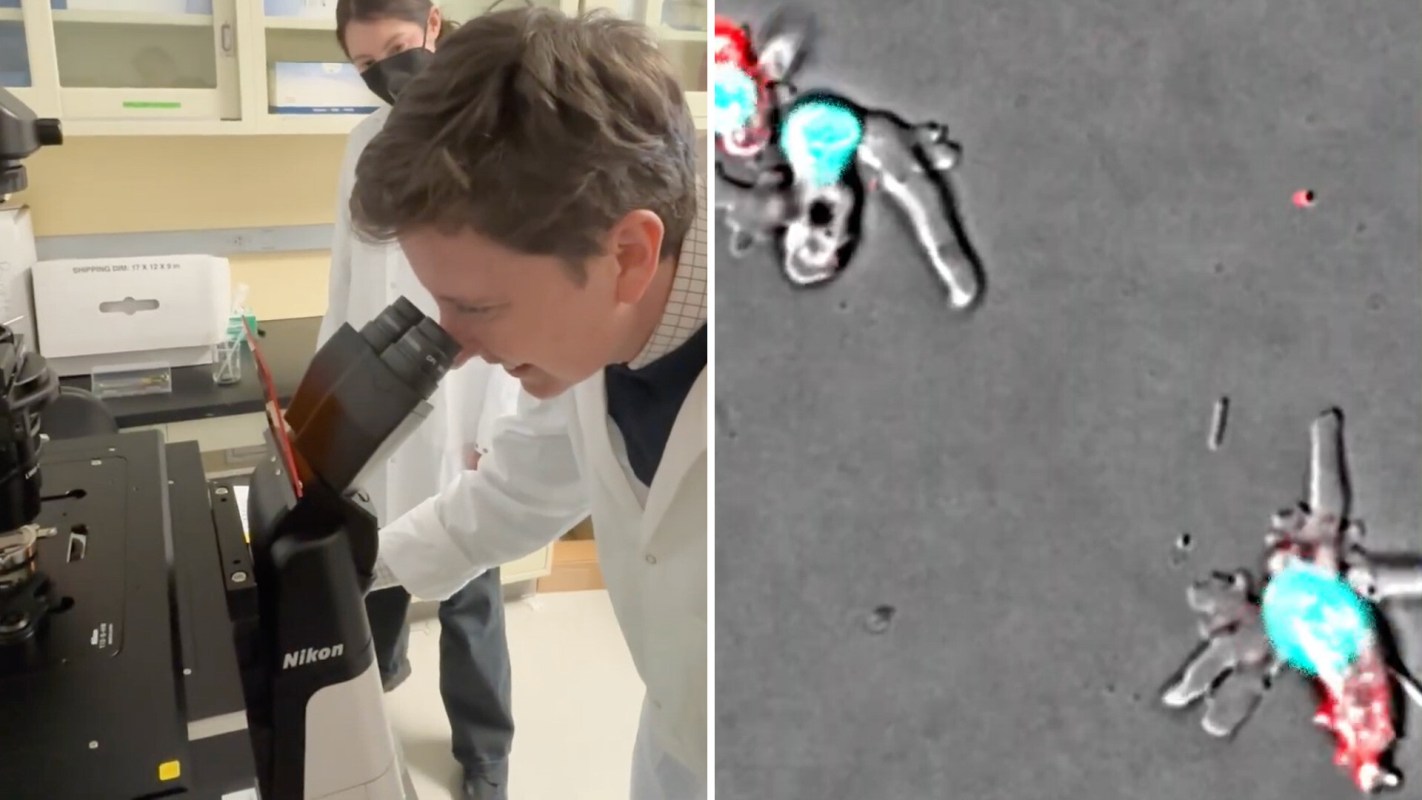
Scientists studying California geothermal waters have identified a "fire amoeba" that pushed past what had been treated as the temperature ceiling for complex life.
Here's what to know
The organism is a eukaryote, meaning its cells contain a nucleus and other membrane-bound parts, yet it can still grow in heat that researchers had assumed such life could not tolerate.
According to Gizmodo, a team of researchers from Syracuse University collected it from geothermal streams in Lassen Volcanic National Park and saw it reproduce at temperatures that reached 63 degrees Celsius, or 145.4 degrees Fahrenheit.
The organism was named Incendiamoeba cascadensis, or the "fire amoeba from the Cascades."
The study, published in the journal Cell, reported that the amoeba grew readily at 57 C and was still able to survive and reproduce when temperatures climbed beyond that point.
Prior research had led scientists to believe that eukaryotes hit a limit near 60 C, when their cell membranes become too unstable to support life.
TCD Picks » Quince Spotlight
💡These best-sellers from Quince deliver affordable, sustainable luxury for all




Angela Oliverio, a biologist and biochemist, said the discovery may not be unique.
"We suspect that other high-temperature eukaryotic organisms await discovery," Oliverio told Gizmodo.
The outlet also said the amoeba endured temperatures as high as 70 C, or 158 F, by shifting its form, building a protective outer layer, and recovering later.
More background
Heat-tolerant microbes are not new to science; some bacteria and other microorganisms are known to live in temperatures well above 200 F.
But those organisms are prokaryotes, a simpler cell type than eukaryotes. This discovery indicates that cells with the more elaborate eukaryotic design can handle more heat than expected.
From 2023 to 2025, the researchers collected material from geothermal streams in Lassen Volcanic National Park and found an unidentified amoeba that seemed to exceed what had been considered the upper limit for amoeba survival.
After establishing that, the team examined what might allow it to endure such conditions.
"When we compared gene expression of Incendiamoeba grown at 48 C [118 F] versus at 61 C [142 F], near the lower and upper limits of its growth range, we found several pathways that were upregulated at 61 C," Oliverio told Gizmodo.
The elevated pathways seem to involve preserving the cell under extreme heat, repairing DNA, and keeping proteins stable, which may explain how the amoeba endures temperatures that most eukaryotes cannot.
What's being done?
Researchers think the species may serve as a guide to finding additional heat-tolerant eukaryotes in geothermal habitats.
That could give researchers a better understanding of how life adapts to harsh conditions and how evolution arrives at similar survival strategies in very different organisms. In this case, the team found evidence of mechanisms resembling those used by some extremophile bacteria, suggesting convergent evolution.
Beryl Rappaport, a doctoral candidate in Oliverio's lab and a study author, said the research is continuing in several directions.
"We are searching for Incendiamoeba cascadensis in other geothermal environments to understand its broader distribution," Rappaport told Gizmodo. "Alongside this, we are studying additional close relatives of I. cascadensis to understand how high-temperature adaptation may have evolved and what sets it apart from closely related amoebae that cannot survive at such high temperatures."
Oliverio added, "Our hope is that this effort will inspire others to continue characterizing many of the unique microbial eukaryotic lineages that break the rules of biology."
Where can I learn more?
These stories explore similar questions about how life responds to heat, especially in water and other extreme environments.
• In warm lakes and rivers, heat-loving parasite Naegleria fowleri is appearing in more places.
• As waters warm, amoebae can shrug off chlorine and shelter other germs.
• Scientists studying thale cress are showing how heat-resistant plants survive punishing conditions.

Get TCD's free newsletters for easy tips, smart advice, and a chance to earn $5,000 toward home upgrades. To see more stories like this one, change your Google preferences here.






