


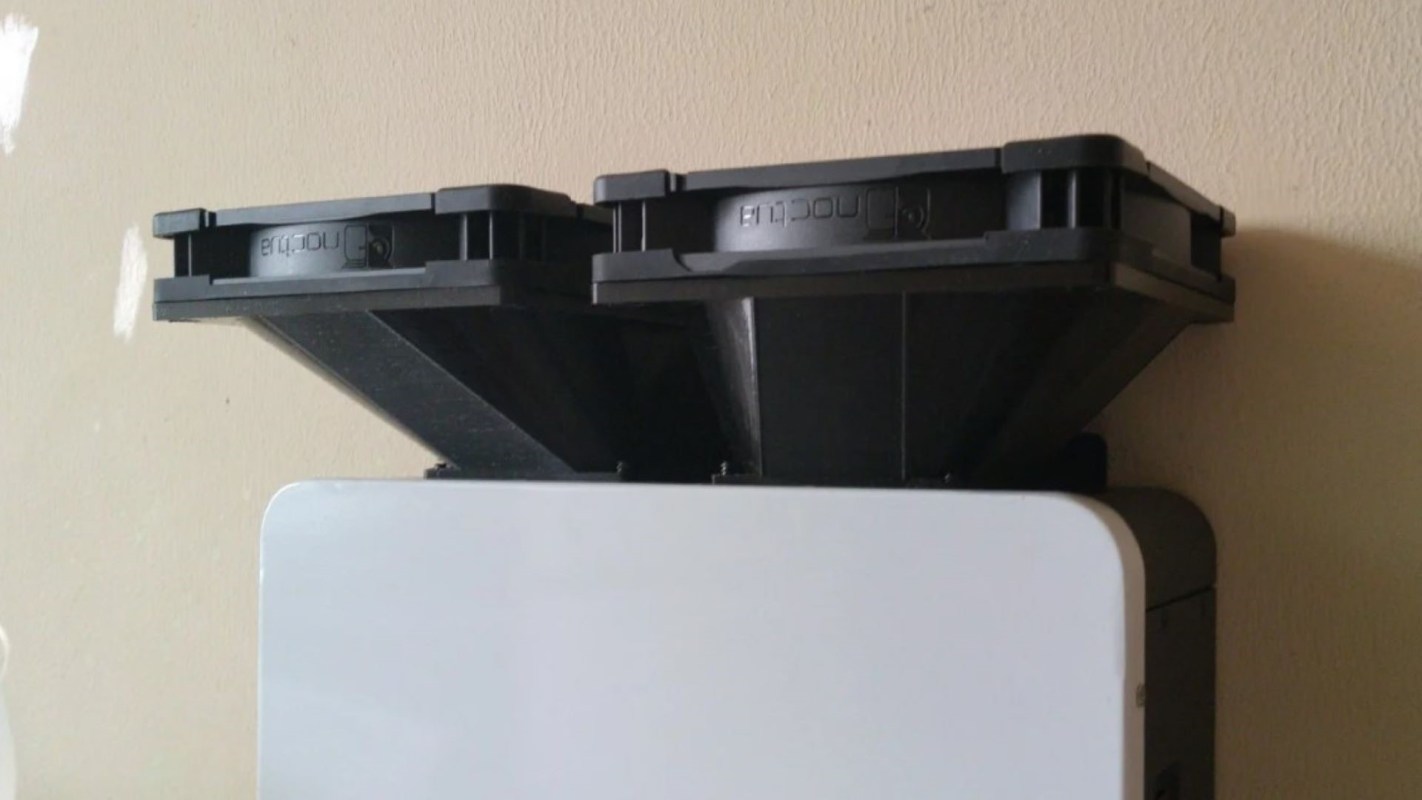
A home battery system can be a lifesaver during an outage, but one apartment dweller said a key trade-off was hard to ignore: An inverter mounted in the kitchen was so loud while charging that it was difficult to stay in the room for an extended period of time.
However, after upgrading the unit's fans, they said the sound had almost gone away.
Here's what to know
Posting on Reddit, the user explained that their inverter was in the kitchen. The unit's fans were tolerable only when the apartment was drawing from stored power.
During recharge periods, the sound was so deafening that the original poster had a hard time staying in the same room.
So, they swapped out 80-millimeter units for 140-millimeter Noctua fans.
"It's almost inaudible," the OP wrote.
Adding battery storage is one of the best ways to protect your home during outages, save money on energy, and even move closer to going off-grid. If you're weighing your options, exploring EnergySage can help you compare home battery storage choices and get competitive installation estimates. EnergySage has also teamed up with the electrification brand Qmerit to guarantee you get the best price on home battery storage solutions.
While the post did not include a cost breakdown, replacing loud cooling fans can be a cheaper fix than relocating an inverter or redesigning an indoor battery installation after the fact.
Save $10,000 on solar panels without even sharing your phone number Want to go solar but not sure who to trust? EnergySage has your back with free and transparent quotes from fully vetted providers in your area. To get started, just answer a few questions about your home — no phone number required. Within a day or two, EnergySage will email you the best options for your needs, and their expert advisers can help you compare quotes and pick a winner. Solar panels can save you more than $50k over their 25-year lifespan, and EnergySage can help you save as much as $10k on installation. Which begs the question — isn't that worth an email or two? |

A commenter said a pair of EG4 6500 inverters gave them the same problem once solar input rose to about 1,000 watts. At that point, they said, "It sounded like a jet taking off."
More background
Battery-and-inverter systems can make a home more resilient, but they also bring new considerations, including ventilation, heat, noise, and placement. Those factors may be even more important in apartments or small homes, where equipment may end up close to the kitchen, living spaces, or bedrooms.
Households are looking into backup power as grid reliability concerns and electricity costs continue to push consumers toward home energy storage. A well-designed system can keep essentials running during outages and help households get more value from solar panels or off-peak electricity.
Because the OP's inverter was in the kitchen, one commenter suggested putting a filter on the intake side to keep oil and grease from accumulating.
"You should get an anemometer and verify you're still moving at least as much air as before," the user suggested.
What can be done?
Planning for real-life use of a home-battery system means thinking about practical considerations such as where equipment will be located, how it will sound during various cycles, and whether the space has enough airflow.
Any DIY modification should be approached carefully. Check manufacturer guidance, consider warranty implications, verify airflow, and consult a qualified installer to prevent a small issue from turning into a safety problem.
For people who want backup power without the cost of a full-house installation, Pila offers plug-and-play batteries at a fraction of what whole-home backup systems cost, creating an accessible entry point for many households.
Where can I learn more?
These stories dig into the same kinds of practical home-energy issues raised by the noisy kitchen inverter, from fan noise and airflow to installation choices.
• A repairman showed homeowners how a reversible ceiling fan hack can cool rooms fast.
• In a one-window room, a loud shop fan kicked up dust.
• Home energy experts warned that the biggest EV charger mistakes can create expensive installation headaches.
• One homeowner cut summer costs by using an AC's dry mode all season.

Get TCD's free newsletters for easy tips, smart advice, and a chance to earn $5,000 toward home upgrades. To see more stories like this one, change your Google preferences here.






