


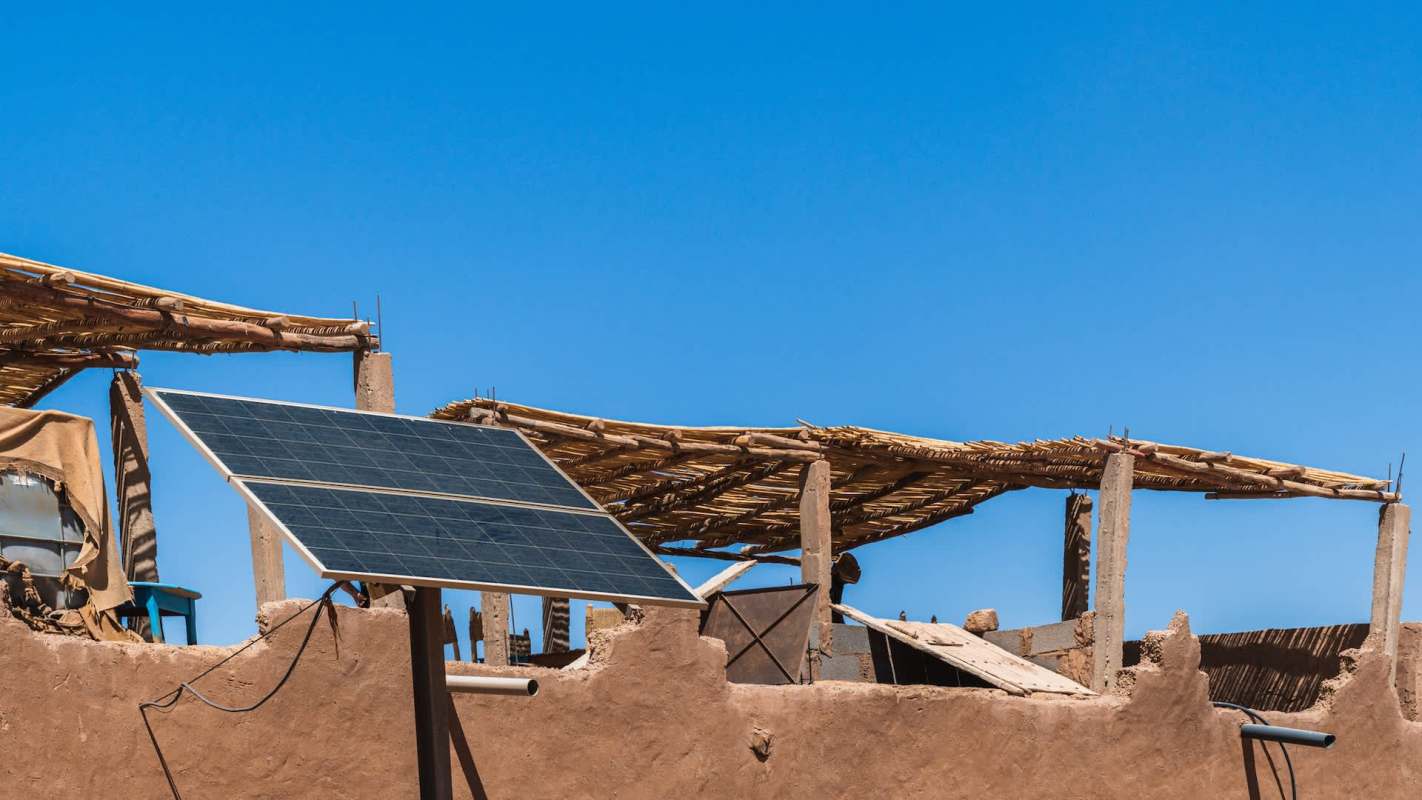
Skeptics have long pointed to high upfront costs and limited access to financing as reasons why they say solar will never succeed in lower-income countries.
However, new findings reported by Ember suggest that argument is quickly weakening. In many emerging markets, solar now takes less upfront capital to build than fossil-fuel power plants.
Here's what to know
As recently as a decade ago, delivering a megawatt-hour from a solar plant could require up to five times the initial spending of a comparable coal or gas facility. However, a new report from Ember and the Climate Vulnerable Forum and V20 Finance Ministers (CVF-V20) now says that disadvantage has largely disappeared across many CVF countries. The data, highlighted in a r/solarpower Reddit thread, now shows that standalone solar is competitive on upfront capital cost, with solar-plus-battery-storage expected to reach that point by around 2030.
What is true for emerging markets can be true for individual homeowners as well. Similar trends elsewhere in the world have made solar one of the best ways to save money on home energy. If you're considering making the switch, try EnergySage to get free solar installation estimates and compare quotes.
Meanwhile, access to financing for solar projects also has improved. In Morocco, solar financing held at 8.7% from 2015 to 2025 as gas climbed from 8.2% to 9.6%. In Vietnam, solar financing fell from 12% to 10%, moving below gas at about 11%, per Ember.
More background
High borrowing costs have historically been a major reason cleaner energy spread slowly even when the long-term savings were obvious.
The report focuses on the 74-country CVF-V20 bloc, where energy access remains a major barrier to growth. Roughly 500 million people across those countries lack electricity entirely, and another 500 million have grid service disrupted by frequent outages.
In addition to lower upfront costs for solar, changing battery prices are also reshaping policymakers' future energy plans. In 2019, off-grid solar-plus-battery systems "only made sense" for communities more than 250 miles (400 kilometers) from the nearest grid, Ember noted.
Save $10,000 on solar panels without even sharing your phone number Want to go solar but not sure who to trust? EnergySage has your back with free and transparent quotes from fully vetted providers that can help you save as much as $10k on installation. To get started, just answer a few questions about your home — no phone number required. Within a day or two, EnergySage will email you the best local options for your needs, and their expert advisers can help you compare quotes and pick a winner. |

Today, such decentralized energy systems are already cheaper than extending power lines to places just a few dozen miles away. This makes local power generation far more feasible.
The benefits of cheaper, more widely available solar power and battery storage would be felt throughout society.
Cheaper, more readily available electricity can lower operating costs for businesses while also supporting more reliable refrigeration for essentials like medicine and improving indoor air quality. At the national level, it can reduce economic exposure to the price volatility of fossil fuel imports.
What can be done?
As solar, batteries, and electric appliances become more affordable, developing countries may be able to move from biomass to electricity without first spending years building out fossil-fuel systems. That could expand access to lighting, cooling, and transportation for households while helping governments reduce import costs, strengthen energy security, and improve public health.
More From EnergySage
💡Go deep on the latest news and trends shaping the residential solar landscape

Even as energy prices soar around the world, with EnergySage's help, the average person can save up to $10,000 on solar purchases and installations.
Additionally, EnergySage's solar map shows the average cost of a home solar panel system on a state-by-state level, along with details on solar panel incentives for each state. Together, these resources can help homeowners get the best price for rooftop solar panels.
Adding battery storage to a solar setup is also one of the best ways to protect your home during outages, save money on energy, and go off grid. Homeowners who want to compare their options can explore EnergySage for information about home battery storage systems, including competitive installation estimates.
For emerging economies, energy economics have often been at odds with concerns over public health and the environment. However, as solar and batteries keep getting cheaper and access to capital expands, the lower-emissions option is increasingly the lower-cost one as well.
Where can I learn more?
The cost shifts highlighted in this report are playing out elsewhere, too. These stories explore plunging clean-energy prices, roadblocks to adoption in specific markets, and the pressures driving up costs for major projects.
• Globally, solar power and battery storage have each fallen in cost nearly 90%.
• By 2030, a third of the world's power could come from cheaper wind and solar.
• In Rajasthan, India, developers say the cost of land is complicating solar and wind expansion.
• In the Philippines, trustworthiness of providers has been a major obstacle to wider home solar adoption.
• In Germany, solar energy overtook coal and gas despite the country's limited sunshine.

Get TCD's free newsletters for easy tips, smart advice, and a chance to earn $5,000 toward home upgrades. To see more stories like this one, change your Google preferences here.






