


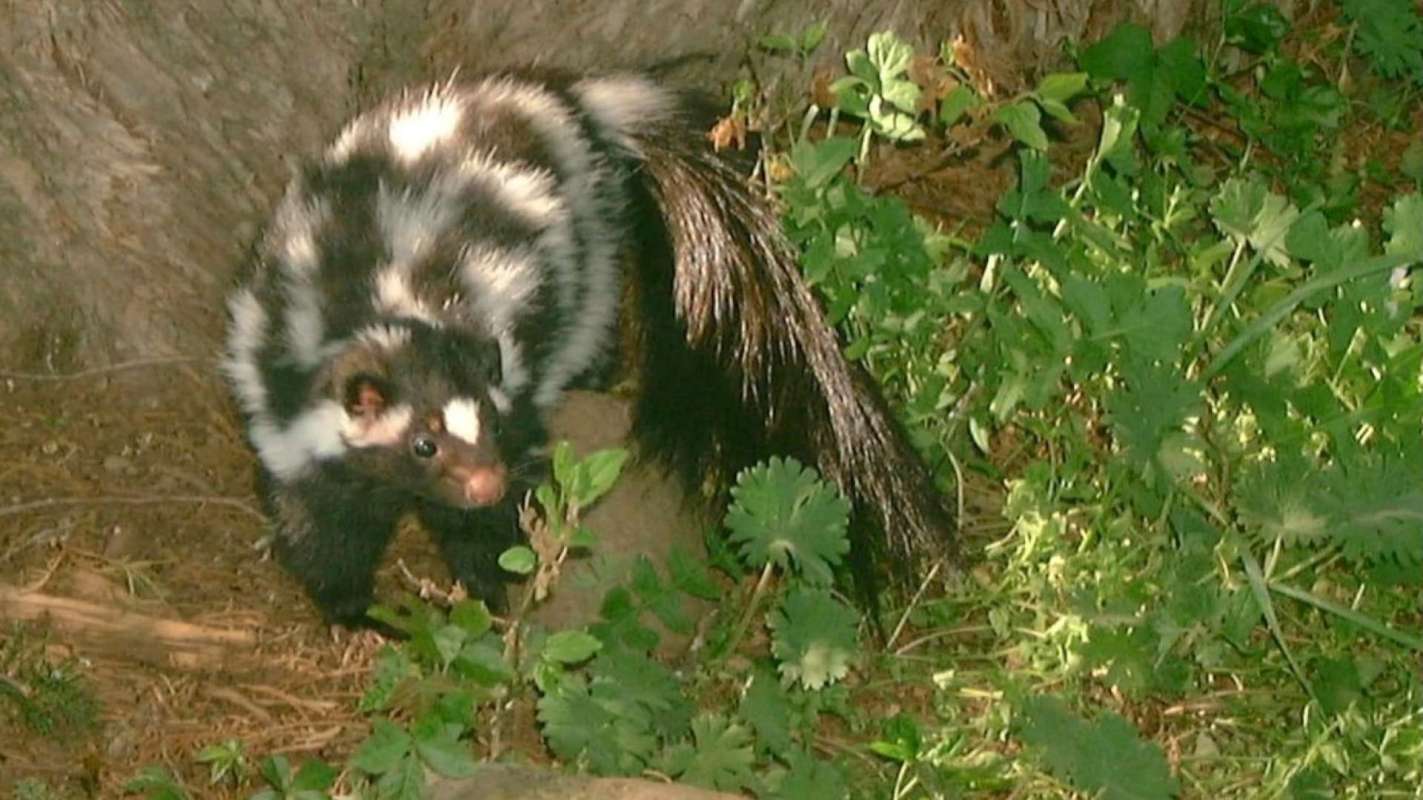
The plains spotted skunk — a black-and-white prairie species known for doing a handstand when threatened — is being evaluated for endangered species status as sightings become less common in parts of the Great Plains, according to KCUR.
Here's what to know
The species lives in prairie and forest habitat across 11 central U.S. states.
The U.S. Fish and Wildlife Service has launched a 12-month review to decide whether the plains spotted skunk should be listed under the Endangered Species Act, after researchers said it has become harder to detect in some parts of its range, particularly in the north.
Scientists still have major gaps in their understanding of the animal.
Danielle Brosend, an Oklahoma State University Ph.D. student who researches wildlife, told the outlet that the species has only drawn significant scientific attention over the past two decades, leaving population estimates uncertain.
"During the upcoming status review, the Service will fully evaluate potential threats to the species and review the best scientific and commercial information available," the agency said in a July 13 press release.
TCD Picks » Quince Spotlight
💡These best-sellers from Quince deliver affordable, sustainable luxury for all




"This review will determine whether listing the species under the Endangered Species Act is warranted, not warranted, or warranted but precluded."
Brosend also emphasized why the species is worth noticing in the first place.
"They're really cute," she said. "They're so small. Not many people know about them. Also, they do handstands, which is really neat for an animal that occurs in some people's backyards."
More background
The review was prompted by a July 2025 petition from prairie restoration group Grasslands Unlimited, which pointed to newer research from Nebraska, Kansas, and South Dakota that suggests the species has vanished from places where it was previously recorded.
Trevor Pellerite, executive director of Grasslands Unlimited, said the group sued after the agency missed its initial review deadline.
He added that an earlier petition filed in 2012 did not result in protections.
In 2023, the Fish and Wildlife Service concluded the species was not facing extinction based on the evidence available at that time, according to KCUR.
Fieldwork in 2022 and 2023, however, has heightened concern.
Christine Brodsky, a University of Missouri professor and urban ecologist, noted that researchers set up about 600 cameras across Kansas in 2022 and 2023 and did not detect any plains spotted skunks.
What's being done?
A federal review could bring more focus and resources to habitat protection, prairie restoration, and stronger monitoring efforts.
The Fish and Wildlife Service said the new petition included information concerning threats from "isolated extreme weather conditions, climate change, and the trends in land conversion from grasslands to large scale agriculture."
Researchers are still trying to better understand where the species continues to survive.
Brosend identified plains spotted skunks at about 30 sites in southeastern Oklahoma's Ouachita National Forest, indicating that intact habitat may still be helping the species persist.
"Everything that nature put on the prairie serves a function, whether we understand it or not," Pellerite observed.
Where can I learn more?
For more on wildlife protection and recovery efforts, these articles offer a wider look. They cover spotted skunk releases in California and conservation fights involving birds, bison, and mussels.
• In California, rescuers returned four rare spotted skunks to the wild, including an orphan.
• In Florida, a grassroots group warned that suburban sprawl threatens scrub jays and their shrinking habitat.
• In Yellowstone, bison returned from the brink after only a handful had once remained.
• At Dunkard Creek, conservationists spotted endangered mussels again for the first time in 15 years.

Get TCD's free newsletters for easy tips, smart advice, and a chance to earn $5,000 toward home upgrades. To see more stories like this one, change your Google preferences here.







