


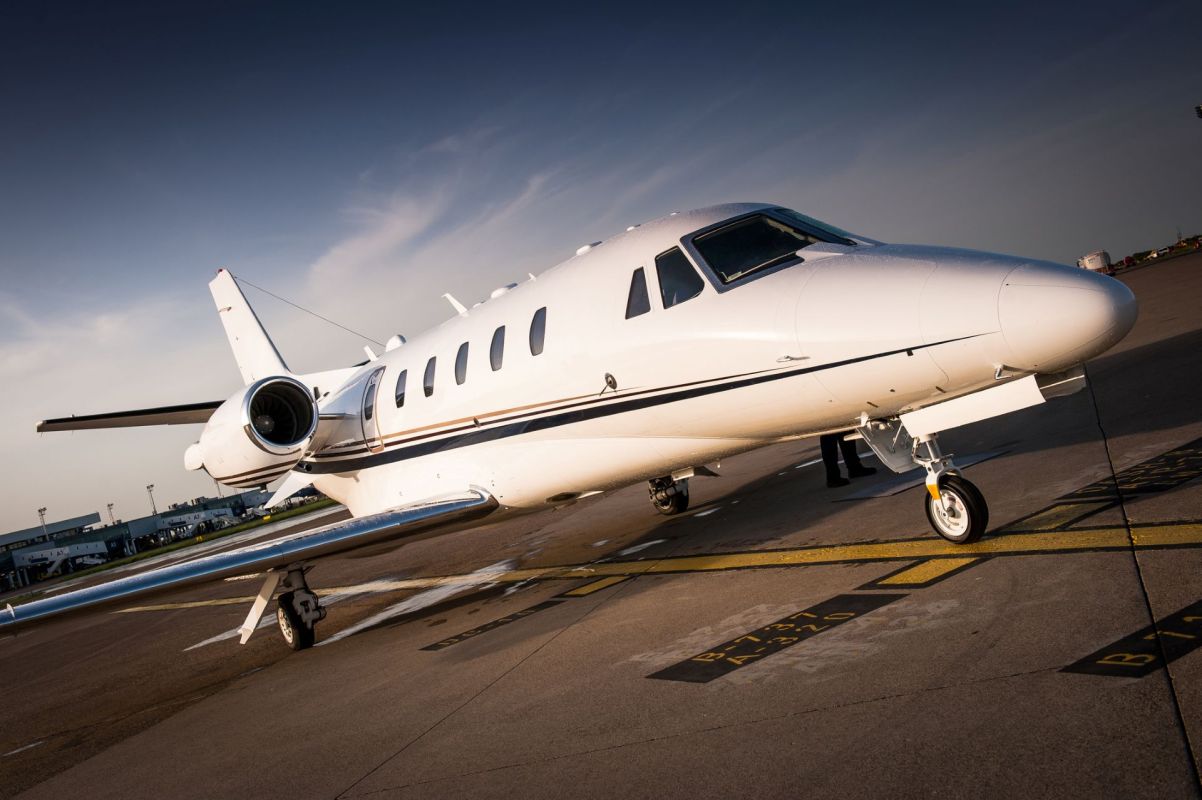
A new report argues that while only a tiny slice of the population enjoys the convenience of private jets, the public ends up covering the costs through subsidies, airport spending, and the growing fallout from climate pollution.
The findings come as luxury air travel continues to expand alongside extreme wealth, raising questions about who benefits from private aviation — and who ultimately pays for it.
Here's what to know
Common Dreams reported that the Institute for Policy Studies' new report, High Flyers 2026, found that private jets and charter services account for about 16% of Federal Aviation Administration-managed flight operations. The U.S. Department of Transportation estimates that noncommercial private jets make up 7% of airspace activity while providing less than 0.6% of the taxes flowing into the Airport and Airway Trust Fund.
The report says only about 256,000 people (roughly 0.003% of the population) fly on private jets, including ultrawealthy travelers who use charter services or fractional ownership. It also says fractional jet ownership rose 65% from 2019 to 2025.
Private jets produce about 10 to 14 times as much direct carbon per passenger as commercial air travel, even before accounting for the added warming effects of high-altitude pollution.
"The rest of us should not have to pay for the luxury excess of the private jet billionaire class. Our hard-earned tax dollars shouldn't subsidize their reckless air travel habits that further harm our warming planet," Institute for Policy Studies report co-author Chuck Collins said.
TCD Picks » Quince Spotlight
💡These best-sellers from Quince deliver affordable, sustainable luxury for all




More background
Private jet ownership is concentrated among the extremely wealthy. The report says the median owner has a net worth of $190 million, and there are 3,428 billionaires worldwide. It also attributes the sector's growth to rising demand from corporations that want executives to avoid the hassles of commercial air travel.
More than a third of Airport Infrastructure Grants awarded through 2026 went to airport projects that may primarily benefit private jets, totaling more than $1.13 billion.
The report also argues that so-called sustainable aviation fuels cannot be scaled quickly enough to address the climate crisis.
The National Business Aviation Association spent about $2 million on lobbying in 2025 in support of legislation that gives major tax breaks to private jet owners.
What's being done?
To track private aviation activity, the Institute for Policy Studies said it collaborated with a global network of more than 20,000 open-source trackers to build the Private Jet Emissions Tracker. The tool examines flights connected to particular locations and high-profile events, including the Super Bowl, the Kentucky Derby, and World Cup games.
To make private aviation more costly for its users, the report urges Congress to repeal accelerated bonus depreciation for jet purchases, increase taxes on private jet fuel, place a luxury tax on jet sales, and remove a private-jet tax-avoidance provision from the pending ALERT Act.
One estimate found that a 10% luxury tax on used jets and 5% on new jets could have generated more than $3 billion in 2025 alone. The report says that money could instead support cleaner ground transportation.
Report co-author Omar Ocampo said the problem has worsened since 2023: "Since we first released our analysis on the costs of private jet travel to taxpayers and the planet in 2023, we've seen a shocking and irresponsible rise in the use of private jet travel. Unfortunately, the private jet lobby has worked hard to lower the tax obligations of the ultrawealthy. Meanwhile, the aviation industry pushes false solutions on the climate crisis. It's time to stop making taxpayers subsidize luxury private jet travel and use our resources to green other industries."
"At a time when most ordinary people are struggling to afford groceries, rent, and healthcare, our report exposes how the ultrarich and greedy corporations are private jet-setting at the expense of the rest of us, while trying to dodge accountability for fueling the climate crisis," Collins added.
Where can I learn more?
Private aviation's public costs show up in everything from tax policy to local airport fights. These stories cover tax breaks and loopholes, rising pollution, airport expansion, and fights over private-jet access.
• In the United States, private jet tax breaks helped fuel a boom among the ultrarich.
• Wealthy jet owners used loopholes to avoid taxation, leaving taxpayers to absorb more costs.
• Rising demand has driven soaring private jet flights, sending pollution sharply higher worldwide.
• At Portland International Airport, a proposed private jet hub sparked backlash over pollution.
• At Scotland's Prestwick Airport, officials faced criticism as private flights surged at a public facility.

Get TCD's free newsletters for easy tips, smart advice, and a chance to earn $5,000 toward home upgrades. To see more stories like this one, change your Google preferences here.






