


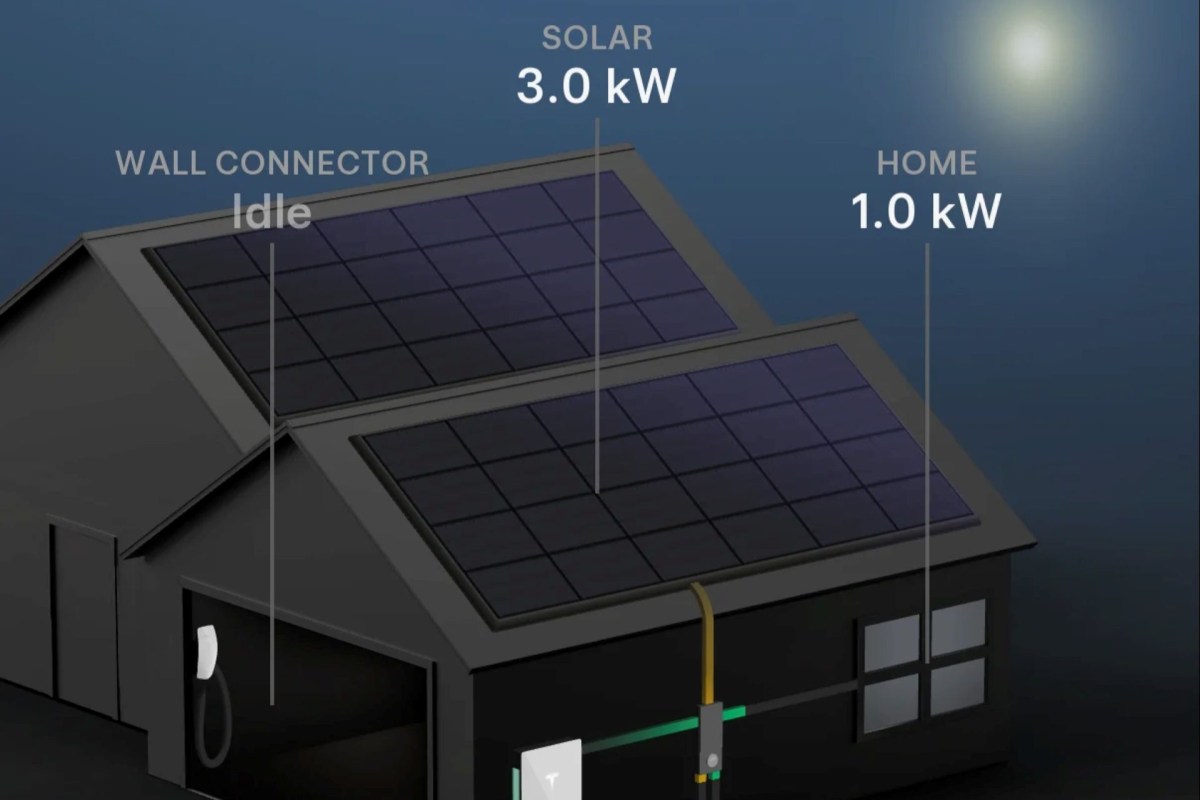
A California homeowner with solar and a Tesla Powerwall noticed something that seemed counterintuitive. During an expensive late-afternoon utility window, rooftop solar was being sent to the grid while the battery sat at 88% and powered the home.
For other solar-and-battery owners, the situation matters because a single app setting can affect both backup protection and utility-bill savings.
Here's what to know
The post focused on a rate-sensitive setup. The Reddit user said they were on SDG&E's TOU EV 5 plan under NEM 1.0, with weekday peak pricing set at $0.80/kw from 4-9 p.m. They had solar and had added a V3 Powerwall, and around 3:30 p.m., the system showed 3.0 kilowatts of solar production, 1.0 kilowatt of household use, and an 88% battery charge, while solar was exported and the house drew from stored power.
"Why is that? Shouldn't the solar be charging the battery to get it to 100% before peak, sending 1.0 kw to the house and then exporting the remainder?" the original poster asked.
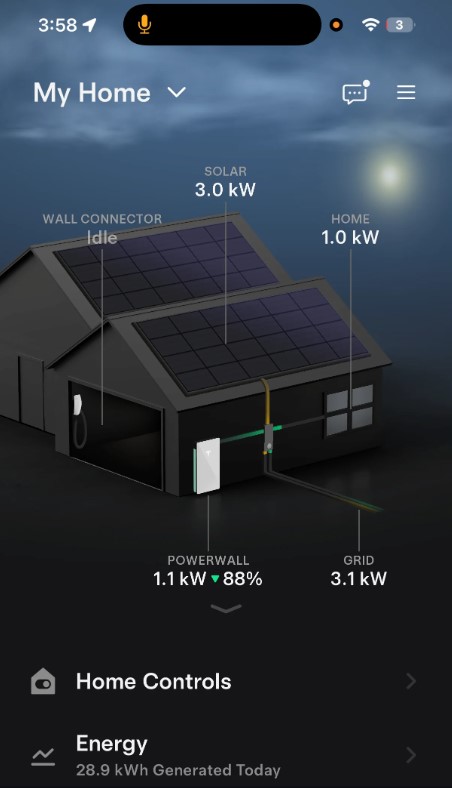
Replies suggested the behavior was likely tied to Tesla's "Savings" setting rather than "Self-Powered."
"In savings mode it will do weird things to make you the most credits, not necessarily pull the least power from the grid. Self powered will do that," one commenter wrote.
For homeowners still weighing whether battery storage makes sense, EnergySage can help you find information on home battery storage options, including competitive installation estimates. EnergySage has teamed up with the electrification brand Qmerit to guarantee you get the best price on home battery storage solutions.
Pila is another company offering strong backup options, and its plug-and-play batteries cost a fraction of a whole-home backup system.
Save $10,000 on solar panels without even sharing your phone number Want to go solar but not sure who to trust? EnergySage has your back with free and transparent quotes from fully vetted providers in your area. To get started, just answer a few questions about your home — no phone number required. Within a day or two, EnergySage will email you the best options for your needs, and their expert advisers can help you compare quotes and pick a winner. Solar panels can save you more than $50k over their 25-year lifespan, and EnergySage can help you save as much as $10k on installation. Which begs the question — isn't that worth an email or two? |

More background
In "Savings" mode, a battery may prioritize utility-rate arbitrage and export value over charging to 100% before peak or minimizing any grid interaction.
On this tariff, time-of-use rates swing widely. Using the numbers shared in the post, electricity during the 4-9 p.m. peak window costs about 67 cents more per kilowatt-hour than super off-peak pricing. If a battery helps shift 10 kilowatt-hours away from peak usage, that can represent roughly $8 in avoided peak purchases, compared to about $1.31 at the super off-peak rate.
Paired with solar, a battery can keep essentials running when the grid fails while also allowing homeowners to shift power use away from the most expensive billing windows.
What can be done?
A practical first step for Powerwall owners is to review both the operating mode and the backup reserve setting. Later in the discussion, the poster confirmed the system was in Savings mode with a 10% reserve.
Several Reddit replies said Self-Powered would likely make the system act more predictably: Solar serves the home first, the battery fills in when needed, and the grid is used only after the reserve level is reached.
"Switch to self-powered to prioritize battery instead of Tesla trying to handle it," one commenter said.
Battery size and price are not the only variables to compare. Software controls, tariff compatibility, and how much manual control you want over charging and discharging can also affect savings, especially in places with steep time-of-use rates.
"I really want to avoid using any power during peak which so far it has done successfully," the original poster said.
Where can I learn more?
For more context, these articles explore the same questions concerning batteries, solar exports, and rate-driven savings.
• Across the U.S., net metering rules can make a home battery harder to justify.
• In South Carolina, solar app exports clashed with a utility bill showing grid use.
• In Connecticut, home batteries gained an edge as rooftop solar incentives faced new caps.
• In Massachusetts, surplus solar and net metering left one homeowner expecting extra kilowatt-hours.

Get TCD's free newsletters for easy tips, smart advice, and a chance to earn $5,000 toward home upgrades. To see more stories like this one, change your Google preferences here.






