


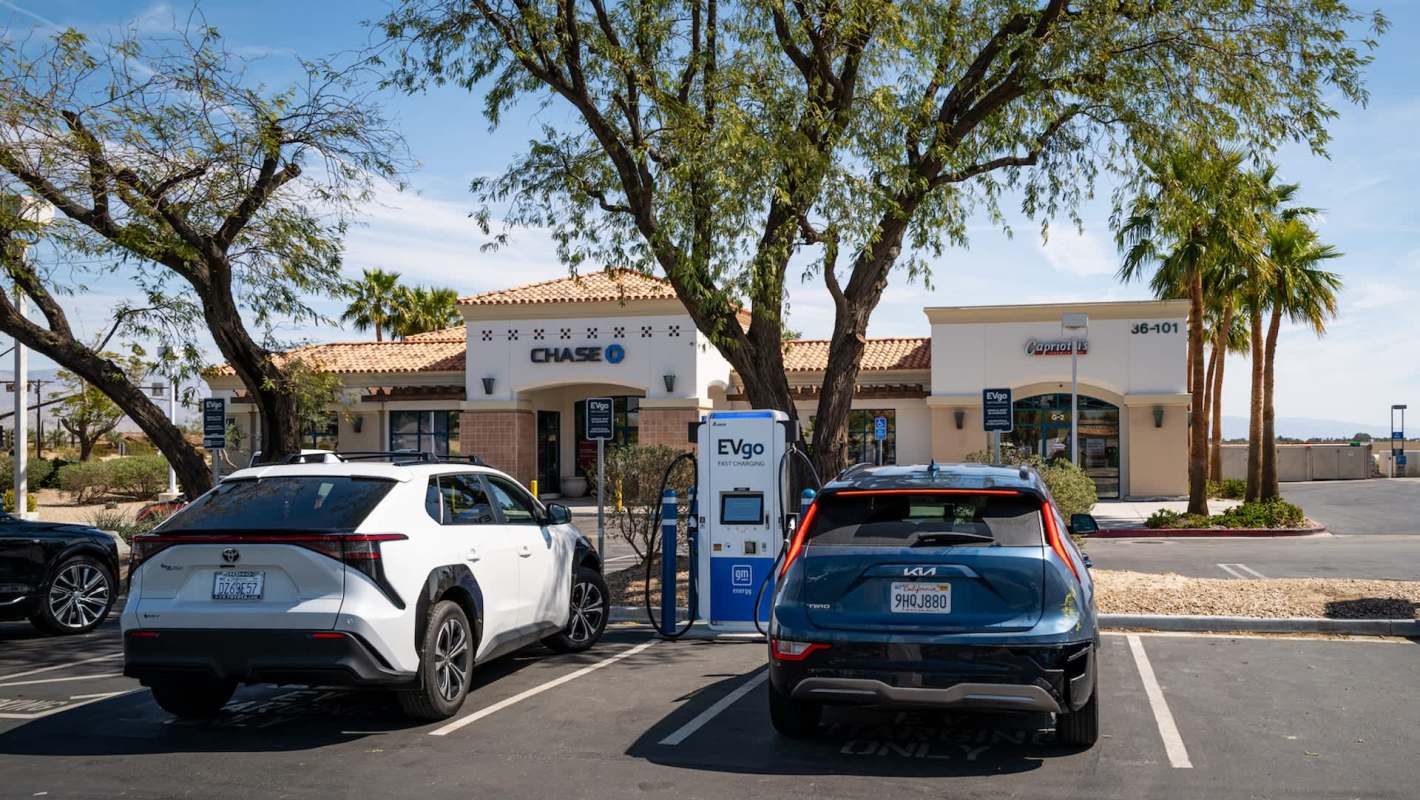
A California city's decision to scrap plans for 30 new public EV chargers is about more than one park project.
In Coachella, the move is exposing a bigger obstacle for one of the Coachella Valley's fastest-growing communities: whether the local power system can keep up with what the city wants to build next.
Here's what to know
According to KESQ, the city removed a proposal for 30 EV charging spots at Rancho Las Flores Park from a larger expansion project. Coachella Mayor Frank Figueroa said the shift came down to two factors: cost and constrained power access.
"I think, you know, that presentation earlier this week, it was a mixture of both costs and I think electricity, electrical access," he told the station. "And I know that we have low capacity."
Public charging is key to making cleaner transportation practical for more people. When chargers are available in community spaces, drivers without access to home charging, including renters and apartment residents, have more flexibility to consider an EV.
As EV adoption increases, the city is evaluating where it will need additional public chargers. But Figueroa said work cannot really advance until the electrical system can handle it.
TCD Picks » Quince Spotlight
💡These best-sellers from Quince deliver affordable, sustainable luxury for all




"We can't really proceed with that until we resolve our power access and ensuring that we have those substations and infrastructure there, then we can talk about EV charging," he told KESQ.
More background
The issue goes beyond transportation. Coachella's power constraints are tied to a broader question about what kinds of growth the city can support, from public infrastructure to new development.
According to the outlet, Coachella entered into an agreement with Stronghold Power Systems tied to a proposed technology campus and the development of its municipal electric utility.
In that proposal, data centers were expected to be major initial customers and help support the electrical buildout needed for the wider system.
After months of community opposition, Coachella ended its Stronghold agreement in June, per KESQ. The city approved a permanent ban on data centers, but the underlying need for more electrical infrastructure remains.
Communities want development that improves daily life without bringing in projects they see as harmful or resource-intensive. Weak grid capacity can delay cleaner transportation, limit local investment, and make it harder to build public services.
What's being done?
Before the city revisits broader charging plans, Figueroa said it first needs to shore up the local energy backbone.
"Economic development and growth in our city is going to be tied to the energy infrastructure, which we're working on," he explained to the station.
Substations and other grid upgrades will likely need to happen before any major charging expansion.
Figueroa also told KESQ that the city is engaging with the Imperial Irrigation District, or IID, through a joint powers authority. That indicates Coachella is still pursuing widespread utility and infrastructure solutions even after ending the Stronghold arrangement.
"We're working to move forward with IID," Figueroa said. "We have a joint powers authority. We're moving forward with that."
Where can I learn more?
Coachella's dilemma reflects the substantial challenge of adding EV chargers without outpacing local power systems. Introducing battery technology and vehicle-to-grid integration can help.
• In Santa Barbara, California, Electrify America opened its biggest public battery alongside 20 EV chargers.
• In Santa Ana, California, Rove built a community destination around fast charging, lounges, and amenities.
• Massachusetts launched a program that will pay EV owners for sending power back.

Get TCD's free newsletters for easy tips, smart advice, and a chance to earn $5,000 toward home upgrades. To see more stories like this one, change your Google preferences here.






