


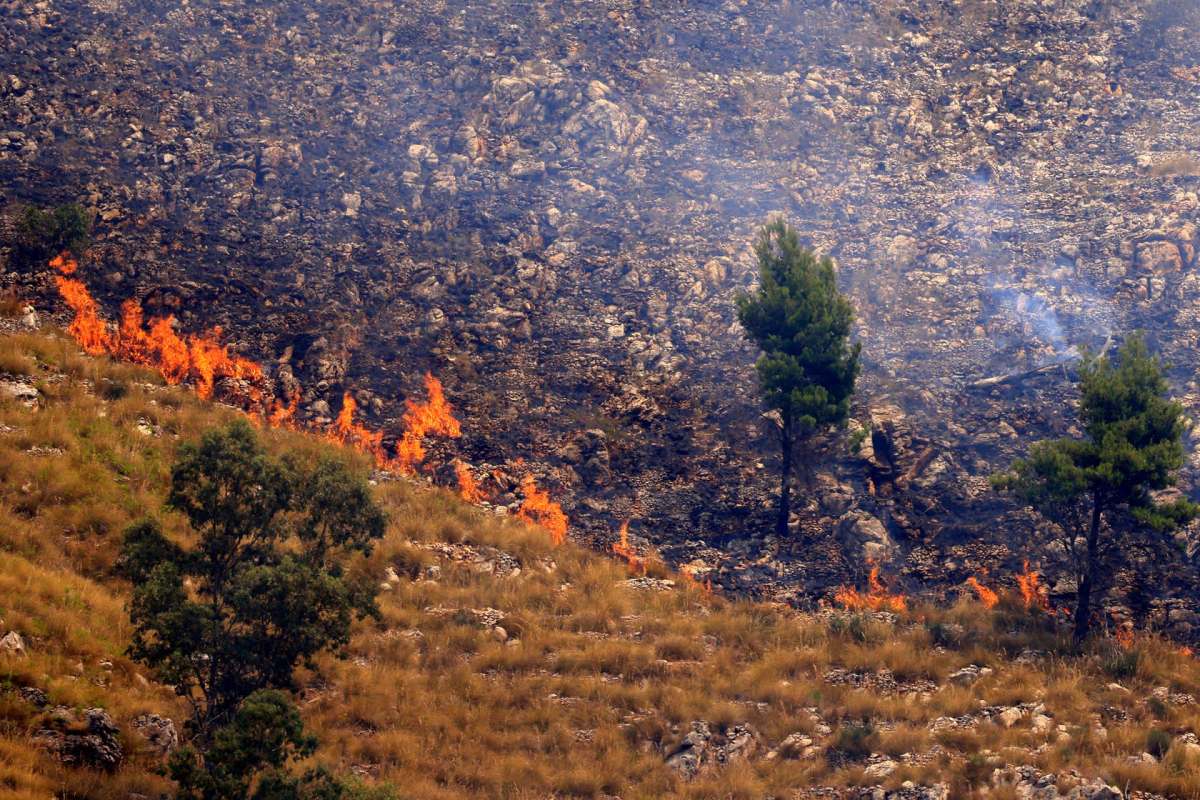
In one mountain town in Sicily, families long assumed their children would one day take over the land, the animals, and the customs tied to them. That expectation is now under strain as drought, extreme heat, and wildfires make farming harder to pass on.
Farmer Giorgia Caruso of Piana degli Albanesi spoke sorrowfully about what that means for her family: "I have two daughters I wished could take over our farming business one day, which is like our third child."
Here's what to know
According to Grist, Piana degli Albanesi is a 500-year-old Arbëreshë town in Sicily where wheat, sheep, cattle, and dairy production have long shaped both the economy and the community's identity. Intensifying drought and wildfires are making that agricultural life harder to sustain.
After a large wildfire killed more than 20 of Caruso's sheep and damaged part of her family's land, doubts about the town's farming future deepened. Similar questions are spreading among other residents as well.
Nearly half of Italy's wildfires occur in Sicily. In the six-year period cited in the report, fires reached Piana or surrounding areas four times, and more than 100 people were displaced in 2021.
The town had 6,293 residents in 2015 and 5,245 by 2024 — a decline of nearly 17%.
TCD Picks » Quince Spotlight
💡These best-sellers from Quince deliver affordable, sustainable luxury for all




For fourth-generation Arbëreshë farmer Giovanni Scalora, the threat is cultural as much as economic: "If we disappear, a part of Sicily's and Albania's and Europe's cultural history disappears."
More background
Sicily's climate pressures are part of a wider regional pattern: The Mediterranean is warming faster than the global average, while the island is dealing with prolonged drought, extreme heat, and increasingly destructive fire seasons.
Sicily hit 119.8 degrees Fahrenheit on Aug. 11, 2021, setting a European record.
Fires can destroy homes and force evacuations, while drought can shrink reservoirs, kill crops, and undermine water and power reliability.
When farms suffer losses, the damage also ripples through the local economy, reducing jobs, food production, and business for suppliers.
The pressure is especially acute in communities whose culture is rooted in the land.
University of Catania ecologist and professor Christian Mulder said, "Extreme droughts as well as sudden, temporary extreme rainfall are severely damaging agricultural fields."
He added that "climate [change] is aggravating the emptying of inner rural areas of the island and forcing emigration."
What's being done?
For some residents, the goal is adaptation rather than departure.
Scalora has turned to breeding cattle after struggling to find sheep that could better withstand Sicily's hotter, drier conditions. But that shift carries a cultural and economic tradeoff, because the town's famous ricotta has traditionally been made with sheep's milk.
Since taking office in 2022, Piana degli Albanesi mayor Rosario Petta has emphasized wildfire prevention, closer work with the local Civil Protection committee, and efforts to slow the town's population decline.
Petta said, "One thousand people who leave is an extra 1,000 people who will no longer speak Arbëresh, which can put at risk language and identity preservation."
Alongside those efforts, local leaders are promoting tourism and stronger ties with the Arbëreshë diaspora in the United States, Albania, and Kosovo. Regional and national officials, meanwhile, continue to debate who should lead climate adaptation and how it should be funded at the scale required.
Caruso sees a different future for her children: "We adults don't want to go away. But the new generation, the one of my daughters, I'm sure will not grow up here. I've told them, 'America awaits you.' I want a better life than this for them."
Where can I learn more?
Sicily is one example of a broader strain on farming communities, as drought and extreme weather upend life on the land. These stories look at farmers facing flash droughts, wildfires, crop losses, and food insecurity in the United States, Turkey, and Nigeria.
• Across the western United States, severe drought and wildfire are colliding into a punishing fire year.
• Farmers in every major growing region now face flash droughts hitting faster than many fields can endure.
• In Turkey, centuries-old farming traditions are fraying as climate stress deepens food insecurity.
• In Nigeria, extreme weather is threatening a staple crop and pushing prices higher.

Get TCD's free newsletters for easy tips, smart advice, and a chance to earn $5,000 toward home upgrades. To see more stories like this one, change your Google preferences here.






