


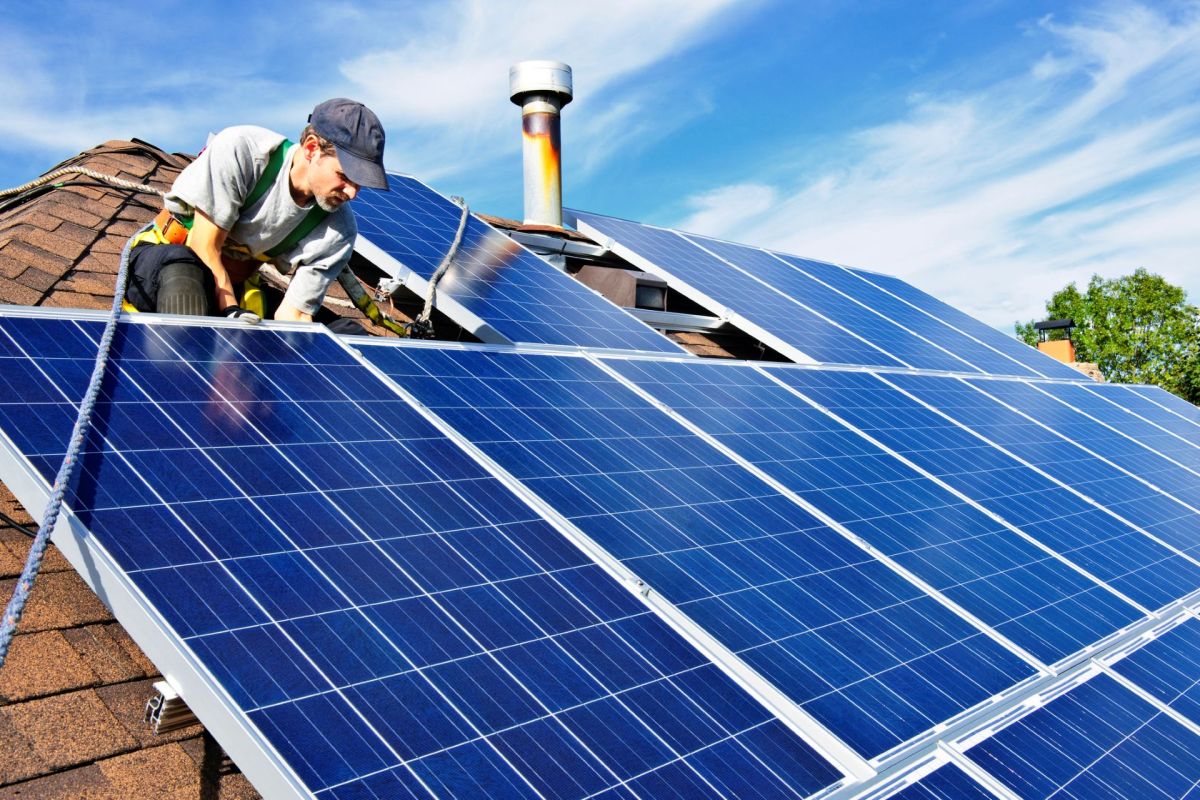
A Massachusetts homeowner's one-year DIY solar report offers the kind of real-world detail many shoppers rarely get. It shows how much electricity northwest-facing rooftop panels actually produce compared with front-facing arrays.
In this case, the answer was better than many people might expect, even with tree shade and winter snow.
Here's what to know
In a Reddit post, the homeowner described a central Massachusetts DIY grid-tied rooftop system with 27 panels divided across three arrays. Those sections faced southwest, southeast, and northwest, and after a year the setup averaged 305 kilowatt-hours of production per panel.
The back roof stood out in the results. On a per-panel basis, the northwest-facing array generated 82% as much power as the front arrays. The homeowner wrote: "I found this interesting, because while everybody says north-facing panels are bad, it's very hard to get real-world numbers on HOW bad."
Even with uneven site conditions, the gap between the highest- and lowest-producing panels was relatively small: the weakest panel still made 75% as much power as the strongest one. The homeowner said the home also had "significant partial shade from trees" affecting the front arrays at different times of year, while the back arrays stayed snow-covered for much of January and February.
More background
Going solar is one of the best ways to save money on home energy, especially for households trying to lock in lower electricity costs over time. If you're curious what a system might cost on your roof, EnergySage can help you get free installation estimates and compare quotes.
Roof direction, shade, and winter weather often shape whether homeowners think solar is worth the investment. Many houses don't have a perfect south-facing roof.
One commenter wrote, "This is very helpful. Thank you! … Now I am much more seriously considering putting an array on that back section of roof."
Save $10,000 on solar panels without even sharing your phone number Want to go solar but not sure who to trust? EnergySage has your back with free and transparent quotes from fully vetted providers that can help you save as much as $10k on installation. To get started, just answer a few questions about your home — no phone number required. Within a day or two, EnergySage will email you the best local options for your needs, and their expert advisers can help you compare quotes and pick a winner. |

What can be done?
For homeowners interested in solar, the first step is usually to get multiple quotes and check local incentives. That can make a major difference in upfront cost, long-term savings, and the quality of the system design.
That's where EnergySage can be especially useful. With EnergySage's help, the average person can save up to $10,000 on solar purchases and installations. Homeowners can also use EnergySage's solar map, which shows the average cost of a home solar panel system by state, along with details on solar panel incentives for each state. Together, those resources can help homeowners get the best price for rooftop solar panels and access available incentives.
Adding battery storage to a solar setup is one of the best ways to protect your home during outages, save on energy costs, and go off-grid. It can also help households keep critical appliances running when the grid goes down. Homeowners who want to compare options can explore EnergySage for information about home battery storage options, including competitive installation estimates.
The homeowner's conclusion was simple: "All in all, I am quite pleased with the performance of the system, and the amount of power it generates."
More From EnergySage
💡Go deep on the latest news and trends shaping the residential solar landscape

Where can I learn more?
For a broader look at rooftop solar in the real world, these stories cover savings, setup choices, and what homeowners can expect. They look at north-facing installations, homeowner results, solar basics, grid impacts, and upkeep.
• In Evanston, roofs face south, east, west, and north as neighbors pursue energy independence.
• In Australia, a homeowner said a 20kW solar setup made blackouts invisible and even earned credits.
• Across the grid, rooftop solar panels can lower household costs and ease electricity demand.

Get TCD's free newsletters for easy tips, smart advice, and a chance to earn $5,000 toward home upgrades. To see more stories like this one, change your Google preferences here.






