


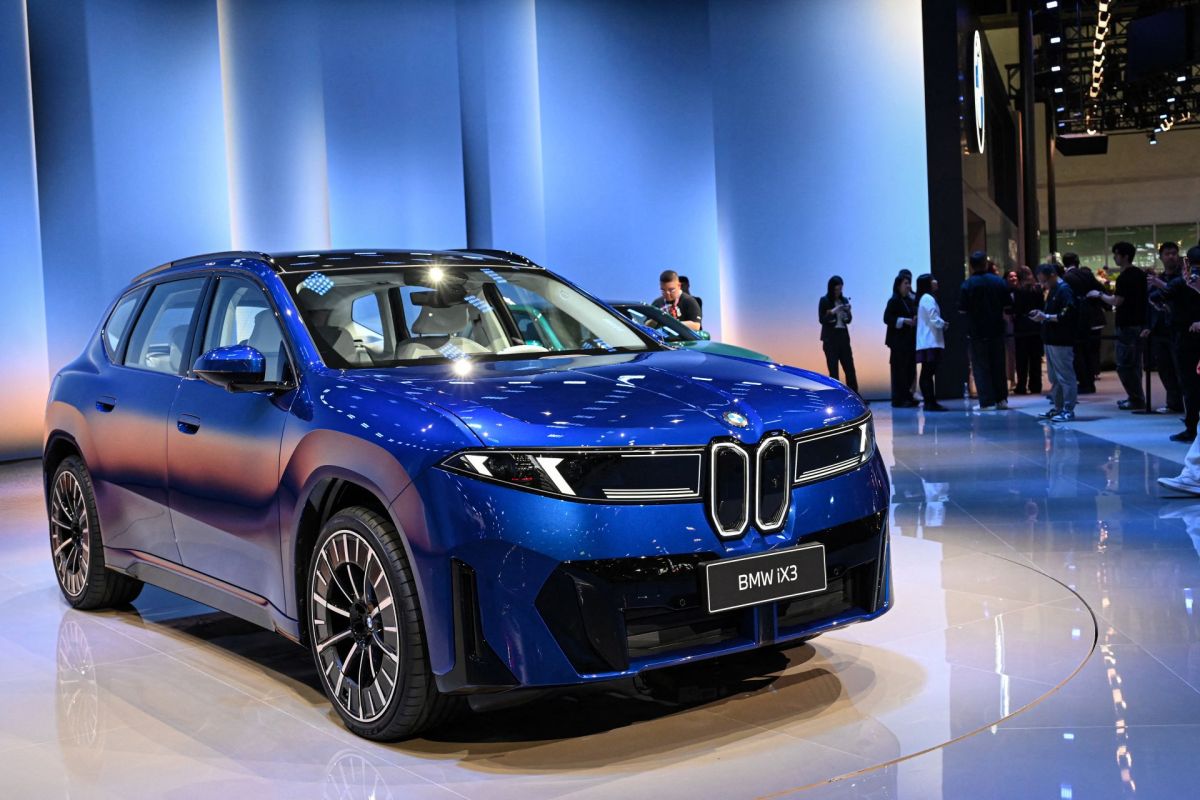
For EV buyers who care most about road-trip performance, BMW's new iX3 seems to have found a useful balance of a large battery paired with strong efficiency at highway speeds.
That combination paid off in a Norwegian motorway comparison, where it finished ahead of two prominent rivals in the premium electric SUV class.
Here's what to know
According to InsideEVs, the BMW iX3 used less electricity on a highway run north of Oslo than the Mercedes-Benz GLC Electric and Volvo EX60. Because it also had the largest usable battery in the group, it ended up with the longest calculated range.
Test conditions were closely matched. Kris Rifa, who led the comparison drive with a rotating group of drivers, tested the SUVs at a target speed of about 75 mph. Temperatures ranged from 57 to 63 degrees Fahrenheit, and each vehicle started at 90% charge in its most efficient mode.
The BMW led in efficiency at about 19.4 kWh/100 kilometers (3.2 miles per kWh). The Mercedes returned 20.3 kWh/100 km (3.06 miles per kWh) while the Volvo used 21.1 kWh/100 km (2.94 miles per kWh). By that measure, the BMW was about 4% more efficient than the Mercedes and 8% more efficient than the Volvo.
Battery size helped widen the gap. With 108.7 kWh of usable capacity, the iX3 reached a calculated 338 miles, compared with 279 miles for the GLC and 260 miles for the EX60 after Kris subtracted 3% for "heat and discharging losses."
TCD Picks » Quince Spotlight
💡These best-sellers from Quince deliver affordable, sustainable luxury for all




More background
Official range figures can look strong on paper, but long stretches of steady high-speed driving can reveal how efficiently a vehicle actually turns stored energy into miles.
One important detail: the EX60 in this comparison was the P10 model with a 91-kWh pack, not the higher-spec P12 with a 112-kWh battery. Even so, if the larger-battery Volvo delivered the same observed efficiency, its calculated range still would have finished 18 miles behind the BMW.
What can be done?
A vehicle that gets more miles per kilowatt-hour can reduce charging stops, lower electricity costs, and make road trips easier to manage.
Wheel choice can matter too. The Volvo was the only model in the test on 22-inch wheels, while the BMW and Mercedes were on more efficiency-friendly 20-inch wheels. That detail may not stand out in a showroom, but it can make a real difference in range.
Real-world tests show how vehicles perform under similar conditions and give shoppers a clearer picture of what to expect beyond brochure numbers.
Taken together, the Norway test points to the iX3 as the strongest road-trip choice of the three, though not necessarily the most comfortable.
Where can I learn more?
For more real-world perspective on EV range, efficiency, and long-distance driving, these stories cover Norway highway testing, winter battery performance, endurance records, and new fast-charging electric SUVs.
• In Norway, Kia's EV5 delivered nearly 260 miles before highway speeds cut range sharply.
• Winter testing showed the best-performing models kept more range when temperatures dropped.
• BYD entered Europe with a luxury EV that can recharge in under 10 minutes.

Get TCD's free newsletters for easy tips, smart advice, and a chance to earn $5,000 toward home upgrades. To see more stories like this one, change your Google preferences here.






