


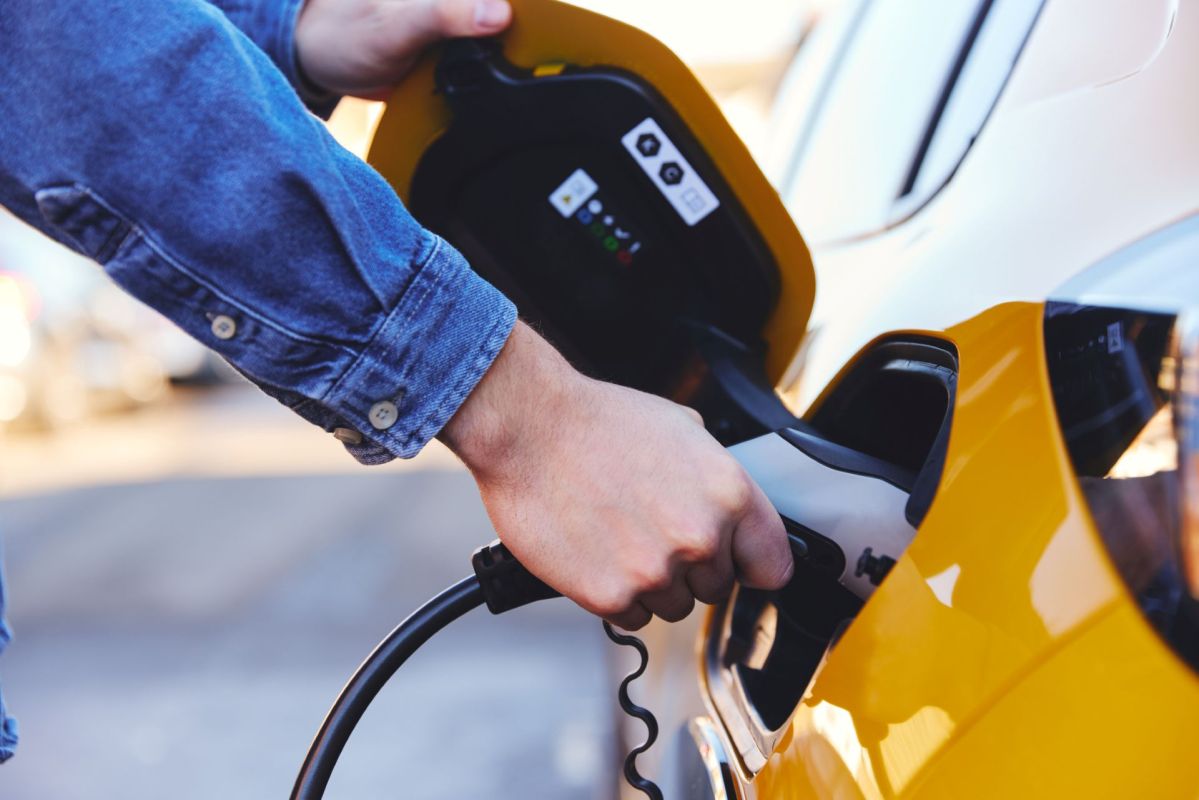
For many electric vehicle drivers, the 80% charge cap has started to feel almost untouchable. But one British creator is pushing back on that idea, arguing that one of the most repeated pieces of EV advice has less to do with battery damage and more to do with simple road-trip efficiency.
Here's what to know
In a YouTube video, Dave Takes It On (@davetakesiton) said the familiar 80% guideline is often applied too broadly. In his telling, unplugging around that point on a fast charger is mostly a time-saving habit for travel days, not proof that charging higher is automatically bad for a battery during normal use.
At highway service areas, people are often already spending 10 to 15 minutes on coffee, snacks, the restroom, stretching, or a meal. Dave's point was that many drivers still judge EV stops against a gas-car image of a quick five-minute fill-up and an immediate return to the road.
An EV can recover a meaningful amount of range during that same window. Dave pointed to Tesla's claim that a Model 3 can add roughly 170 miles in 15 minutes, using it as an example of how charging can fit into a normal stop instead of disrupting it.
He said going past 80% can still be the right move when the stop is already longer, such as lunch, or when you need extra distance because the next charger is farther away. The main idea is that a battery stays healthier by not spending days on end well above 80% charge or well below 20% charge.
Further, at fast-charging stations, the charging remains fast up until about 80% charge, at which point the vehicle and charger communicate and slow down the charge speed to help protect the health of the battery. So once you hit 80%, staying plugged in to a fast charger stops giving you as much value for your minute anyway.
TCD Picks » Quince Spotlight
💡These best-sellers from Quince deliver affordable, sustainable luxury for all




If you don't need the additional range, you may be better off waiting until you're back home to charge again, as that is typically cheaper per kilowatt-hour. But if you do need the range or you'd like to spend longer at the stop, there's no real harm to the battery in letting it continue to top you up, since you'll be driving again soon rather than leaving it at 100% for a long period of time.
More background
Battery longevity advice can feel intimidating, especially for newer owners trying to protect one of the most expensive parts of the vehicle. Commenters echoed Dave's view that strict charging rules do not always reflect how people actually travel.
One commenter wrote: "Basically, even in a 'mid age' EV, the range of my EV is longer than my bladder." Another described a 400-mile round trip with "one charge stop for 18mins on the way there, one charge stop for 18 mins on the way back."
For households that charge mostly at home, those savings can be even greater, especially compared with fluctuating gasoline and diesel prices.
There are environmental benefits as well. EVs produce no tailpipe pollution, which can help reduce heat-trapping gases and improve air quality in nearby communities.
What can be done?
If you only need enough charge to reach the next stop, ending a session around 80% can still be the fastest road-trip strategy.
Dave suggested letting the stop dictate the charge limit: if you're already stopped for a meal, waiting in a queue, or need more range for the next stretch, charging past 80% can be entirely reasonable. He also pointed out that battery chemistry matters. He said he typically sets his NMC battery to 90% or 95% on highway trips, while LFP packs can be more comfortable at 100%.
Commenters supported that more flexible approach. One wrote, "I have my car set to 100% whenever on a journey." Another said their household usually charges "just enough to get to our destination, mainly home or a hotel where we can charge when we are asleep."
As Dave put it in the video's caption, "Stop worrying about your EV battery charge limit. I am breaking down why the 80% rule is outdated and how to manage your car."
Where can I learn more?
If this has you rethinking the 80% rule, these stories offer more context on battery health, charging habits, and day-to-day EV ownership.
• Tesla drivers have seen supercharging's long-term battery effects look less alarming than many feared.
• Across the U.S., EV owners keep finding charging where you park matters more than range panic.
• New EV models continue pushing rapid charging abilities and longer ranges into the mainstream.

Get TCD's free newsletters for easy tips, smart advice, and a chance to earn $5,000 toward home upgrades. To see more stories like this one, change your Google preferences here.






