


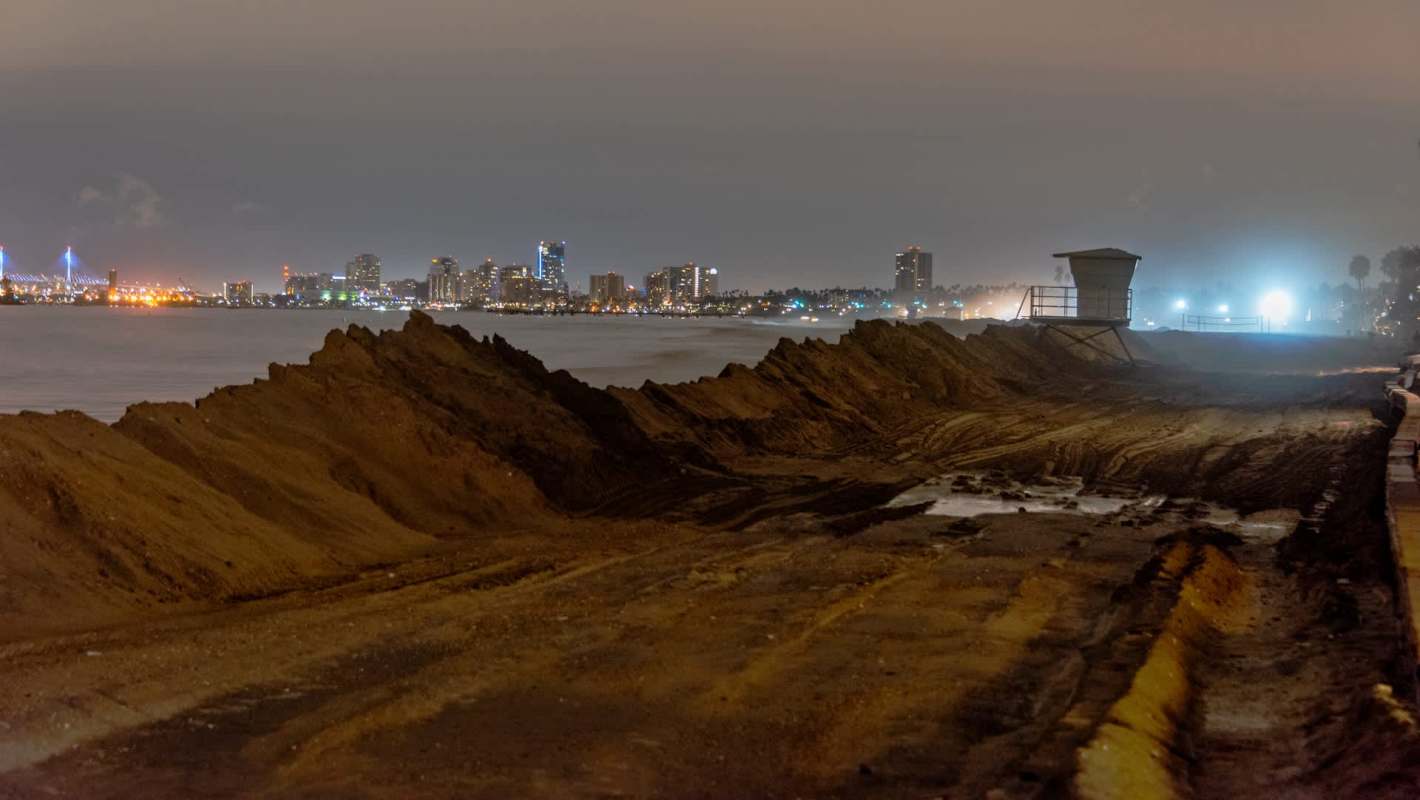
Powerful, hurricane-charged waves could hit Southern California again, threatening further damage to beachfront homes and the public boardwalk on Long Beach's storm-battered Peninsula, where crews have not finished repairs from Hurricane Marie.
The concern is Hurricane Polo in the eastern Pacific, which National Weather Service forecasters say could drive higher surf and tides into Southern California and again put beachfront homes and the public boardwalk at risk.
Here's what to know
According to Long Beach Post, the roughest conditions are expected around 9 a.m. as the swell reaches its peak, before easing later that evening. National Weather Service forecasters say Hurricane Polo could bring Long Beach tides to about 7 feet, along with waves in the 4- to 6-foot range.
The threat's severity will depend on the storm's path. As Long Beach Post reported, Devin Black, a meteorologist with the National Weather Service, said that in a "worst-case scenario," the swell could resemble the damaging surf produced by Hurricane Marie.
Long Beach Post reported that Marie flooded streets on the Peninsula, damaged parts of a wooden boardwalk, and forced evacuations at 19 coastline homes. Several key protective features still have not been fully restored.
The stretch between 62nd and 69th Place is especially vulnerable because swells can pass through an opening in Long Beach's breakwater and jetty and hit that shoreline.
TCD Picks » Quince Spotlight
💡These best-sellers from Quince deliver affordable, sustainable luxury for all




More background
That part of the coast is usually shielded by a reinforced sand berm that helps absorb wave energy before it reaches homes and public infrastructure, Long Beach Post reported. But officials say Marie removed so much sand between 62nd and 69th that there is no beachfront left there to rebuild the barrier.
The city's dealing with this threat as preparations begin for a supercharged El Niño, which can increase the odds of powerful waves, flooding, and coastal erosion.
Another strong swell could worsen existing damage before engineers and repair crews have time to help fix the area.
What's being done?
Work on the berm is continuing east and west of the most exposed section. That will not fully solve the problem where the sand has been heavily stripped away, but it could help limit damage in nearby parts of the Peninsula.
According to Long Beach Post, the city is working with the Conservation Corps to replace damaged sections of the boardwalk with plywood while engineers assess the wooden seawall. Waves left that structure exposed and battered, tearing holes in it and bending some of its hinges.
Long Beach Post reported that homeowners who already received sandbags after Hurricane Marie have been told to keep them in place into the winter.
City Manager Tom Modica summed up the challenge, saying the erosion has become so severe in one section that "we can't even get trucks down there to build out the berm."
Where can I learn more?
Long Beach isn't alone in dealing with storm damage, erosion, and flood risk. Stories from the U.S. and abroad show coastlines taking hits from powerful surf and rising water.
• In Bristol, Maine, a major storm ripped apart an iconic lighthouse, shocking residents.
• Across Australia, severe coastal conditions are collapsing shorelines and alarming communities.
• In South Florida, citywide flooding is getting worse as higher seas swamp neighborhoods.
• An EPA report warns coastal flood threats are accelerating across Southern U.S. cities.
• In Maui County, sea-level rise threatens coastal communities and tens of thousands of trees.

Get TCD's free newsletters for easy tips, smart advice, and a chance to earn $5,000 toward home upgrades. To see more stories like this one, change your Google preferences here.






