


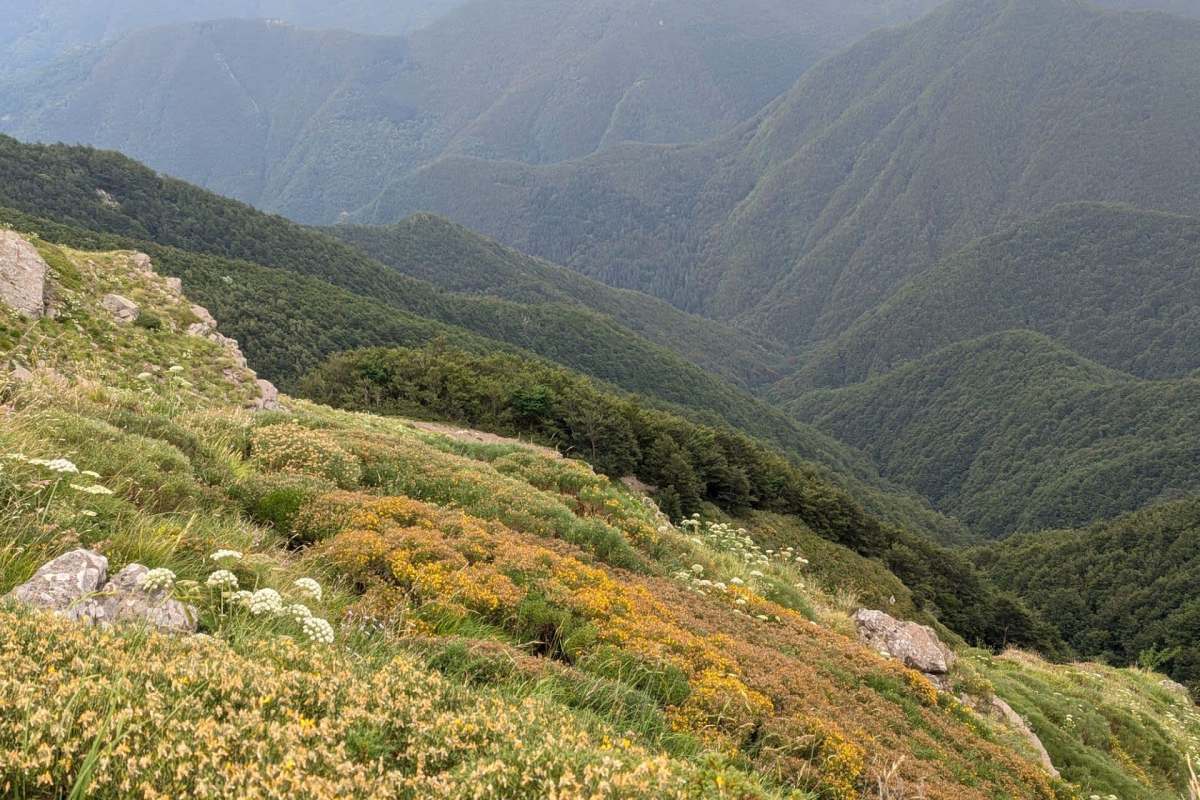
A study led by Stefano Tavani, a geoscientist at the University of Florence, found that the lower crust beneath the Apennines is pulling apart and sinking into the mantle in a process called delamination.
As Live Science reported, the team concluded that this deep "unzipping," and not subduction alone, is behind most of the region's seismic activity.
Running down the length of the Italian peninsula, the Apennines sit in a geologically crowded area between Africa and Eurasia. For roughly 50 million years, the African plate's northward motion has driven the ancient Tethys Ocean beneath the range.
Over that long span, the collision produced both compression and stretching. It also formed nearby basins, including the Tyrrhenian Sea, which emerged about 10 million years ago.
"We are experiencing the very, very late stage to the subduction, and the tectonics is driven by a different engine, which is this unzipping," Tavani told Live Science.
More background
The paper shows why the Apennines are so earthquake-prone. To reach their conclusion, the researchers used earthquake records, GPS measurements, satellite observations, and tectonic modeling.
TCD Picks » Quince Spotlight
💡These best-sellers from Quince deliver affordable, sustainable luxury for all




In the study's interpretation, the lower crust is peeling away and sinking. As that happens, stresses in the upper crust shift in ways that can both keep deforming the mountain chain and set off earthquakes.
Tavani said that similar processes may be occurring near the Hellenic trench south of Greece.
What can be done?
On the scientific side, the clearest next step is continued monitoring. Earthquake catalogs, satellite data, and GPS systems can help researchers track how the crust is moving.
That work can support risk planning, including building standards, hazard maps, and emergency preparedness. While tectonic movement is unstoppable, a better understanding of the process can reduce the human toll when shaking occurs.
Where can I learn more?
Similar forces are reshaping the ground in other parts of the world too.
• Along the Cascadia margin, parts of the coast could suddenly sink in a major quake.
• In Antarctica, AI systems revealed 500 hidden quakes, including tremors far from plate boundaries.
• In Germany, scientists are untangling earthquakes tied to geothermal energy deep underground.
• Scientists are probing climate change and drilling as possible influences on seismic risk.
• In Nevada's Devils Hole, an earthquake sent a nine-inch wave through rare pupfish habitat.

Get TCD's free newsletters for easy tips, smart advice, and a chance to earn $5,000 toward home upgrades. To see more stories like this one, change your Google preferences here.






