


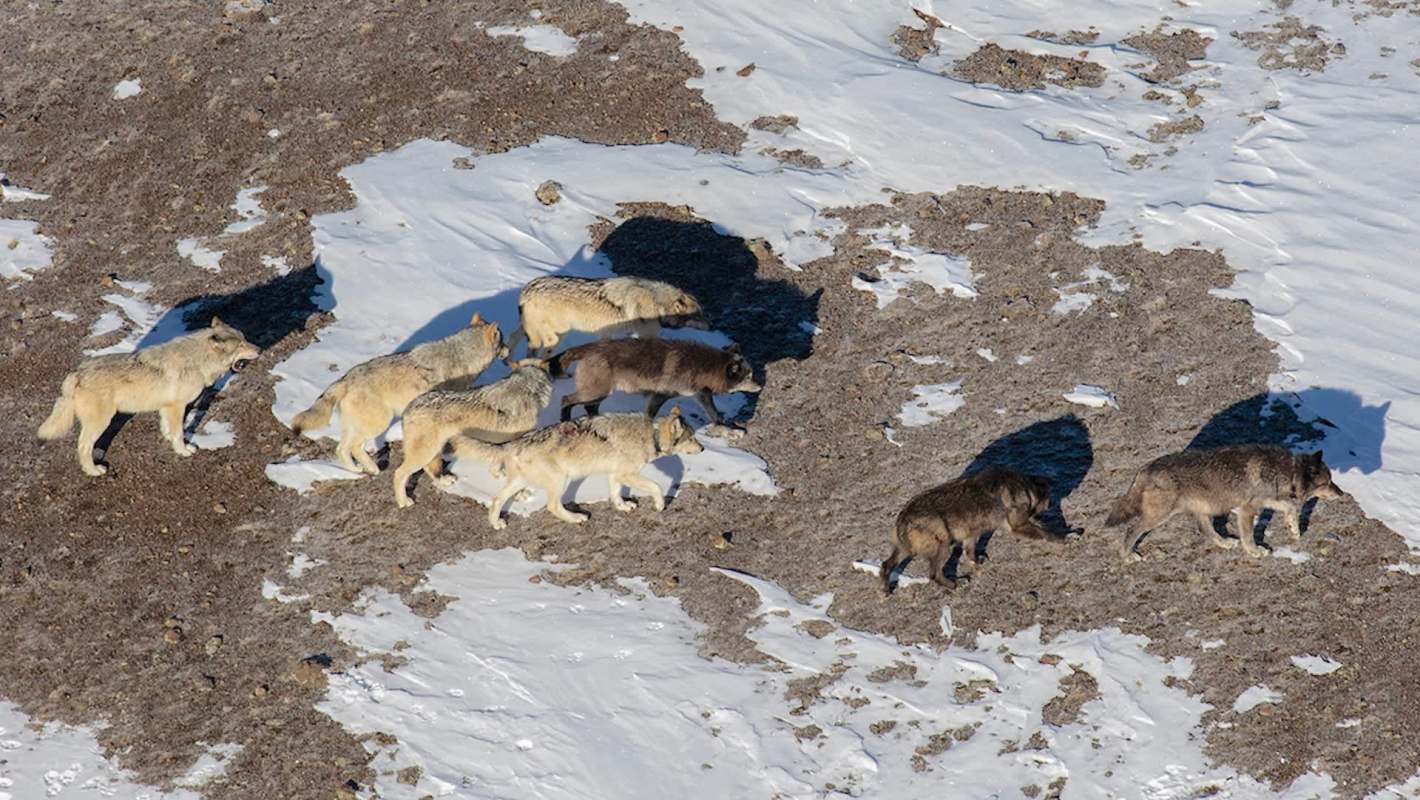
Yellowstone National Park's only intact wolf pack from the original reintroduction 30 years ago made it through the hunting season without losing any members, Wyoming officials said, easing concern among wolf watchers.
Here's what to know
WyoFile shared the news on its Instagram. Mollie's Pack is the only remaining pack since Yellowstone's 1995-96 wolf reintroduction. They take their name from late U.S. Fish and Wildlife Service director Mollie Beattie, who died of cancer during that landmark effort.
Because the wolves had moved out of Pelican Valley, their longtime Yellowstone home, and spent much of late 2025 and the first half of 2026 in Wyoming's wolf hunt area one — northwest of Cody — the pack was in danger of losing members.
However, according to Wyoming Game and Fish Department interim deputy director Dan Smith, the animals killed in the hunt did not belong to packs previously assigned to Yellowstone.
More background
As the National Park Service notes, "habitat loss, hunting, and government eradication programs" decimated wolf populations near Yellowstone by the mid-20th century.
However, Yellowstone's wolves have become central to the park's modern identity. Since their reintroduction three decades ago, they have helped restore natural predator-prey relationships and have become a powerful example of how species recovery can reshape an ecosystem.
TCD Picks » Quince Spotlight
💡These best-sellers from Quince deliver affordable, sustainable luxury for all




Wolves are a major draw for visitors, photographers, researchers, and wildlife watchers, and their presence supports the broader cultural and economic value of protected public lands.
An intact pack from that period is rare in wild populations, where dispersal, deaths, and shifting territories are constant realities.
What's being done?
The most immediate safeguard in this case was Wyoming's mortality cap.
"Wolf hunt areas one and two did close on Saturday, after reaching the mortality limit of four wolves," Smith told the Wyoming Game and Fish Commission, per WyoFile.
Where can I learn more?
For more on Yellowstone's wolves and why they matter beyond a single hunting season, start with these stories. They look at how wolves have reshaped the park, stirred scientific debate, and drawn intense attention from visitors.
• In Yellowstone, black wolves still reshape the park long after reintroduction.
• Willows saw a 1500% plant comeback after wolves returned.
• In Yellowstone, decades after wolves returned, aspen recovery still points to cascading ecological change.
• In the Yellowstone debate, analyses of the wolves' impacts have faced scrutiny.

Get TCD's free newsletters for easy tips, smart advice, and a chance to earn $5,000 toward home upgrades. To see more stories like this one, change your Google preferences here.







