


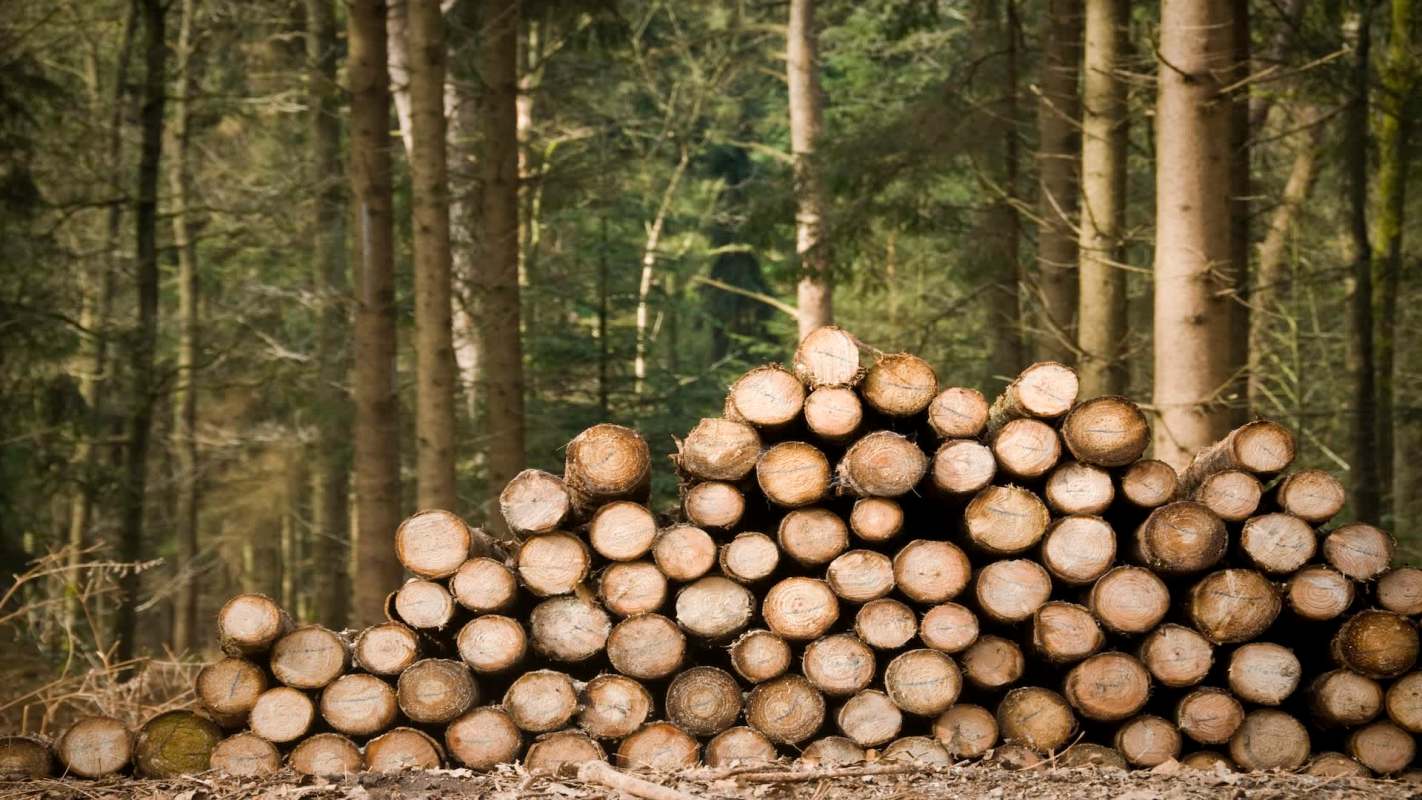
A more self-sufficient lifestyle does not always require acres of land. A Reddit discussion explored a much smaller-scale version of that idea: whether someone on less than half an acre could grow a renewable supply of firewood by rotating a few trees.
Here's what to know
The question came from a Zone 8a resident in the southeastern United States who was weighing coppicing as a way to keep some firewood in steady supply.
In a post on r/homestead on Reddit, the original poster wrote: "I'm stuck on a sad little .48 acre for the foreseeable future…is it possible to grow half a dozen trees just for firewood, if I harvest from them alternating years? What trees would work best for this in Zone 8a southeastern US? They don't have to be native as long as they are not aggressive spreaders — I'm already out there pulling up the mimosa seedlings non-stop."
Many replies steered away from producing fuel on-site and instead emphasized sourcing wood that is already being removed elsewhere. For a small property and a short growing cycle, commenters suggested that networking and salvage would likely be more productive.
One commenter said, "Part of the lifestyle is knowing how to procure — ChipDrop will drop off wood that needs to be cut/split."
Another added, "I've gotten about five full cords of logs this summer from a tree trimmer I know from a club. Don't know a tree trimmer? Call 'em! You're doing them a favor, giving them a spot to dump logs."
TCD Picks » Quince Spotlight
💡These best-sellers from Quince deliver affordable, sustainable luxury for all




The OP appeared receptive to the advice, replying, "Thank you for this! I will do some research in this direction."
More background
Commenters were not arguing that coppicing has no value. Their point was that it may not line up well with the specific goal of generating practical firewood quickly.
The issue is the size of the resulting wood. As one commenter explained, "Good firewood comes from a decent diameter of trunk. A standard chunk of firewood isn't a 3-5" triangle by accident." They added that coppiced growth can be more useful for fencing, basket-making, poles, and similar tasks than for the larger split pieces people usually burn regularly.
The discussion also surfaced several tree options alongside their drawbacks. Willow, poplar, mulberry, crape myrtle, red maple, and locust all came up, but so did concerns such as high water demand, messy fruit, aggressive suckering, thorns, and brittle branches.
Those tradeoffs look different when the goal is mostly a backyard fire pit instead of heating an entire house, since setting aside limited yard space for a long-term wood source may not be worth it.
What can be done?
For people with limited land, the most practical takeaway from the thread was to treat any on-site growing as secondary and rely mostly on wood already moving through local waste streams.
That can include asking tree services whether they need a place to dump logs, collecting downed wood others don't want, or using services such as ChipDrop to receive wood or wood chips.
Some faster-growing trees may still make sense for occasional outdoor burning, and, as one commenter on Reddit noted, willow may fit a fire pit better than home heating.
"You're thinking on the right track but with the wrong answers," one commenter wrote. "Save the coppicing for craft day."

Get TCD's free newsletters for easy tips, smart advice, and a chance to earn $5,000 toward home upgrades. To see more stories like this one, change your Google preferences here.






