


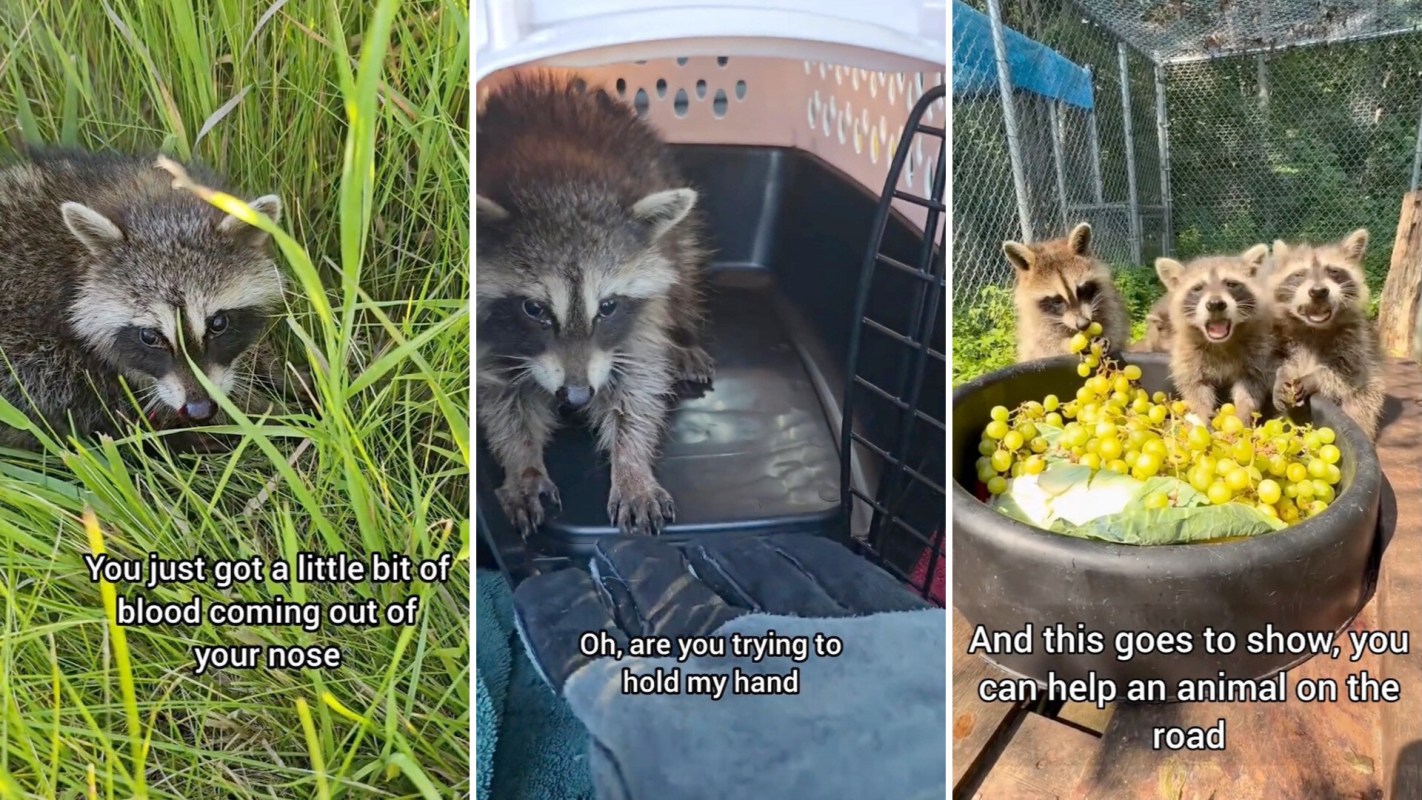
A long drive home turned into an impromptu rescue when the founder of rescue organization SaveAFox spotted a baby raccoon alive in the middle of a highway after initially thinking it was roadkill.
Here's what to know
According to a TikTok video posted by SaveAFox (@saveafox) of the rescue, Mikayla Raines stopped after spotting a baby raccoon in the road, and organization volunteers later helped get him to a different organization, Wild and Free. There, he could get "another shot at being a wild raccoon."
@saveafox Come along, as we rescue this adorable little baby that was sitting in the middle of the highway. 🦝 Just a reminder, stopping to see if they are okay only takes a few minutes for you but it can change their entire life! I had been driving for 8 hours and I just wanted to get home, but I am so glad I stopped to help. Trying to remind myself "What would Mikayla do?" and trying to follow through 🧡 Huge thank you to the volunteers here at Saveafox for finding placement snd getting this little cutie to Wild and Free, so he gets another shot at being a wild raccoon! 🧡 As always, everything we do costs money and it costs a LOT, so if you are able to make any donations it would be so appreciated! Head to our website Saveafox dot org, and donate or geab some merch too!
♬ Reflection on Peace - Adauto Assis
"Come along, as we rescue this adorable little baby that was sitting in the middle of the highway," the video's caption says. "Just a reminder, stopping to see if they are okay only takes a few minutes for you but it can change their entire life! I had been driving for 8 hours and I just wanted to get home, but I am so glad I stopped to help."
Once they stopped, the lack of equipment to safely hold the raccoon became an issue. To solve that, the rescuer detoured to a pet store, bought a carrier, assembled it there, and then eased the raccoon into it.
With blood visible on his nose and the animal seeming dazed, the raccoon was kept secure overnight. SaveAFox volunteers then helped get him to Wild and Free, where he has "made lots of raccoon friends" and will be released when he is older.
More background
Beyond the initial rescue, displaced wildlife can disrupt local ecosystems, especially when young animals don't survive or can't return to their habitats.
TCD Picks » Quince Spotlight
💡These best-sellers from Quince deliver affordable, sustainable luxury for all




Wildlife rehabilitation typically happens out of public view, but it plays an important role when human activity displaces baby animals or they lose their mothers. Community-based wildlife centers help preserve that balance while also reducing suffering for injured animals.
"Thanks for stopping. They're such awesome creatures," one commenter wrote.
What can be done?
If it is safe to pull over, people can assess the situation from a distance, contact a local wildlife rehabilitator, and use basic items such as a carrier or towel to help contain an animal until trained professionals can take over.
Safety, however, must come first. Wild animals can panic, and busy roads are dangerous for everyone involved, so people should avoid stepping into traffic or attempting medical care beyond removing an animal from immediate danger when possible.
For those who want to support the local networks that make rescues like this possible, community donations can make a meaningful difference.
Where can I learn more?
Quick action made the difference in these rescues too. They show swans, a mama bear and her cubs, and a fox facing traffic or other human-made hazards.
• Arc Wildlife Sanctuary volunteers rescued swans weaving in and out of highway traffic.
• Viewers watched a mama bear get her cubs across a road, fueling calls for wildlife overpasses.
• Police responded after Bingo the fox was entangled in plastic netting and suffering from mange.

Get TCD's free newsletters for easy tips, smart advice, and a chance to earn $5,000 toward home upgrades. To see more stories like this one, change your Google preferences here.







