


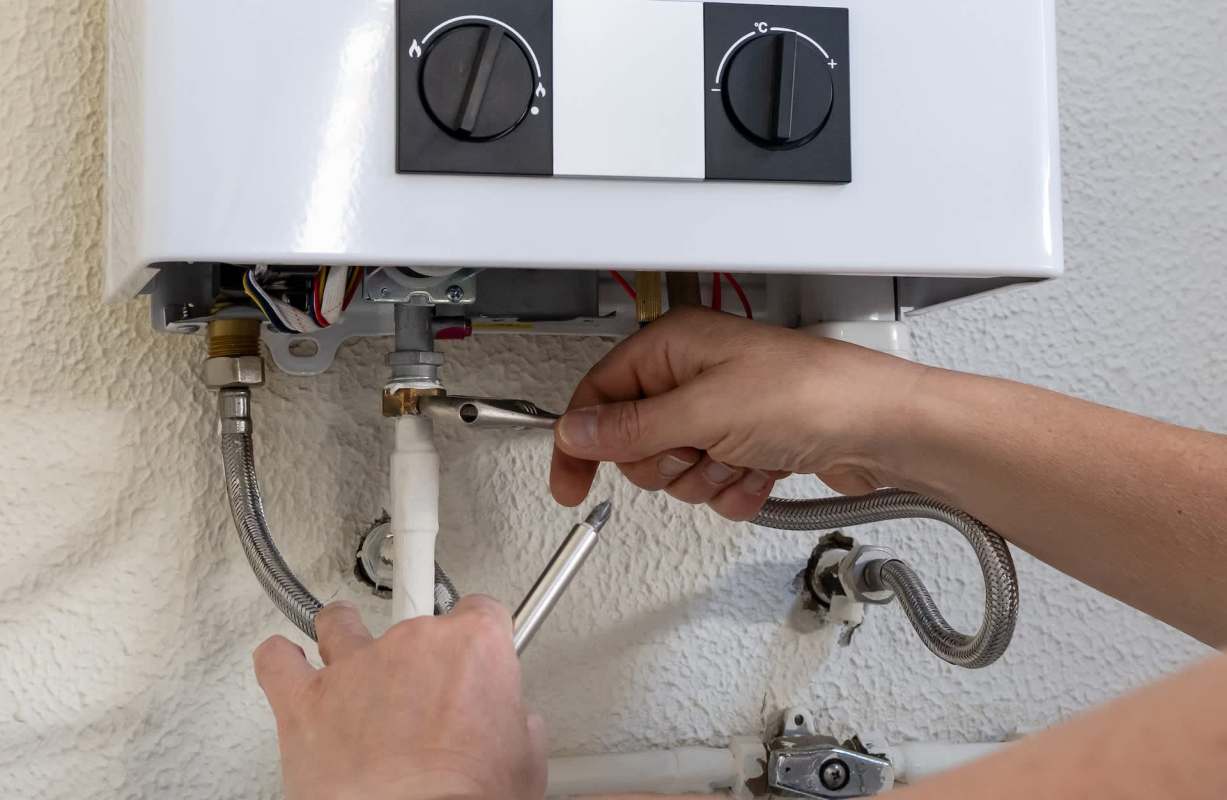
A South Florida homeowner trying to free up room in a cramped laundry area turned to the r/Plumbing subreddit with a practical question.
They wanted to know if a 6.8-gallon-per-minute tankless water heater could keep up with a two-bath house.
Here's what to know
"We want to reclaim space in our limited laundry room and go with an external tankless water heater," the original poster wrote. They then asked whether a plumber's recommended Rheem RTGH68DVLN3 could handle two full baths, kitchen and laundry fixtures, and a future half bath.
The homeowner said their research showed they needed 9 or 10 gpm. But tankless sizing is usually based on demand rather than fixtures.
Incoming water temperature matters too since a unit has to work harder when cold water needs a big temperature rise. Commenters agreed that the suggested heater sounded undersize.
"Go with a 199k BTU model. The one your plumber spec'd will do 3ish gpm in the winter and really isn't for a house with two full baths," one poster wrote.
For homeowners comparing options, another path may be worth considering, too. A heat pump water heater can slash water-heating energy use by 50% or more versus a standard electric resistance model, potentially saving hundreds of dollars a year on utility bills.
More background
An undersize tankless system can lead to low flow, temperature swings, and frustration during showers or laundry loads.
Crushed by your bills? See instant solar savings from vetted installers in just a few clicks With energy prices through the roof, there's never been a better time to go solar — and EasyHome can help you find the best prices from the best installers in your area. EasyHome takes the guesswork and headaches out of energy upgrades by showing you estimated savings from a network of vetted local partners. To get started, just enter your ZIP and share a few details about your home — seeing your estimate is really that easy. |

It can also mean paying for an upgrade that does not actually solve the problem it was supposed to fix.
Commenters raised the gas-service side of the decision as well. One warned that many homes have gas lines or meters that max out around 250,000 BTUs, meaning a high-capacity tankless unit may require more than a simple appliance swap.
Water quality was another point of emphasis. "The most important thing, however, is to accompany it with a water softener if the water in your area is naturally hard," one user said. "Otherwise scale buildup is the No. 1 killer for tankless water heaters and it's a matter of when and not if."
A water heater that saves space but needs frequent service, descaling, or replacement can wipe out the value of the upgrade.
What can be done?
Ask for a sizing calculation. That means looking at hot-water use, groundwater temperature, appliance load, and gas capacity.
It can also pay to get a second quote and ask installers which brands they can service. Parts availability, flushing requirements, and water quality can matter just as much as the name on the box.
Another option is to compare tankless options against smart heat pump models from companies such as Cala. Cala makes customizable smart heat pump water heaters that help homeowners decrease their energy bills by heating water when it's needed.
That can make them an appealing alternative for households focused on lowering operating costs. If you're gathering bids, ask contractors to compare lifetime energy use, rebates, and maintenance needs for tankless systems and Cala options.
Where can I learn more?
Homeowners frequently weigh tankless sizing, long-term costs, and other options.
• One learned showers go weak when a tankless unit can't keep pace with demand.
• For many households, tankless savings depend on fuel prices, usage patterns, and installation costs.
• Across many homes, heat pump water heaters cut electricity use while lowering annual bills.

Get TCD's free newsletters for easy tips, smart advice, and a chance to earn $5,000 toward home upgrades. To see more stories like this one, change your Google preferences here.






