


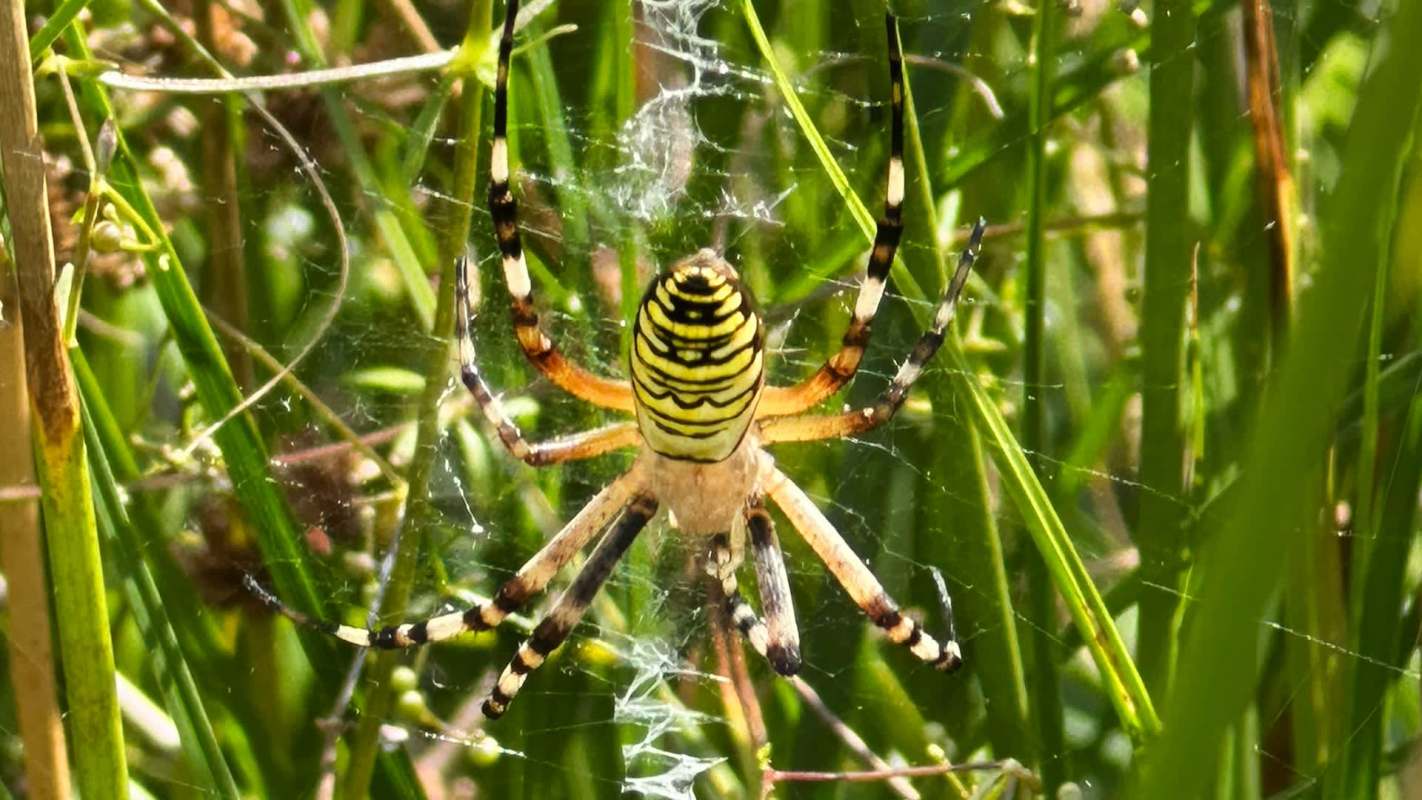
The changing climate is reaching Cheshire, United Kingdom, in a visible way. Chester Zoo said the county logged its first wasp spider, a bold yellow-and-black species whose arrival reflects shifts in where wildlife live.
Here's what to know
An expert from the British Arachnological Society confirmed the sighting, which Chester Zoo described as Cheshire's first documented record of the species. The spider was discovered during a biodiversity survey on Chester Zoo's 205-hectare estate, where staff monitor habitats including wet meadows, ponds, reedbeds, woodlands, orchards, hedgerows, and grasslands.
The find was made by Rosie Cooper, an estate biodiversity assistant at Chester Zoo, as she carried out a plant survey, according to a news release.
"I was looking out for plant species, and then I saw this big, stripy, brightly coloured spider," Cooper said. "I have what you might call a healthy respect for spiders, so my first thought was 'Woah!' But now I think it's really cool to have found her."
Ruby Merriman, estate biodiversity manager at Chester Zoo, said: "Wasp spiders are slowly moving north as their southern ranges in Europe warm too quickly for them to adapt. Some conservation organisations refer to animals driven to migrate by climate change as 'climate refugees' — which is a good term. They are moving because of human activity, and we need to make space for them."
More background
Scott Wilson, head of field programmes at Chester Zoo, added: "It's exciting to see new species like Wendy on-site, but her arrival is part of a broader, more worrying trend. Our conservationists work across the world, and we are witnessing the impacts of climate change in real time, from droughts in Chile to floods in Indonesia. It is a major threat to biodiversity."
TCD Picks » Quince Spotlight
💡These best-sellers from Quince deliver affordable, sustainable luxury for all




What's being done?
Because Chester Zoo and RECORD, Cheshire's environmental records center, systematically record species on the estate, they were able to document the spider's appearance. Such monitoring helps specialists follow range changes and build pictures of how ecosystems are responding to rising temperatures.
Other wildlife on the estate includes badgers, great crested newts, harvest mice, barn owls, dragonflies, moths, and butterflies.
Where can I learn more?
This sighting is part of a wider pattern of animals showing up in unexpected places.
• Giant Australian spiders are arriving in New Zealand after hitching rides with human transport.
• In Maryland forests, an invasive spider is multiplying quickly.
• In the U.S. Southwest, camel spiders scream in defense when disturbed.
• In the U.K., wild boar sightings are sparking debate over how the animals returned.

Get TCD's free newsletters for easy tips, smart advice, and a chance to earn $5,000 toward home upgrades. To see more stories like this one, change your Google preferences here.






