


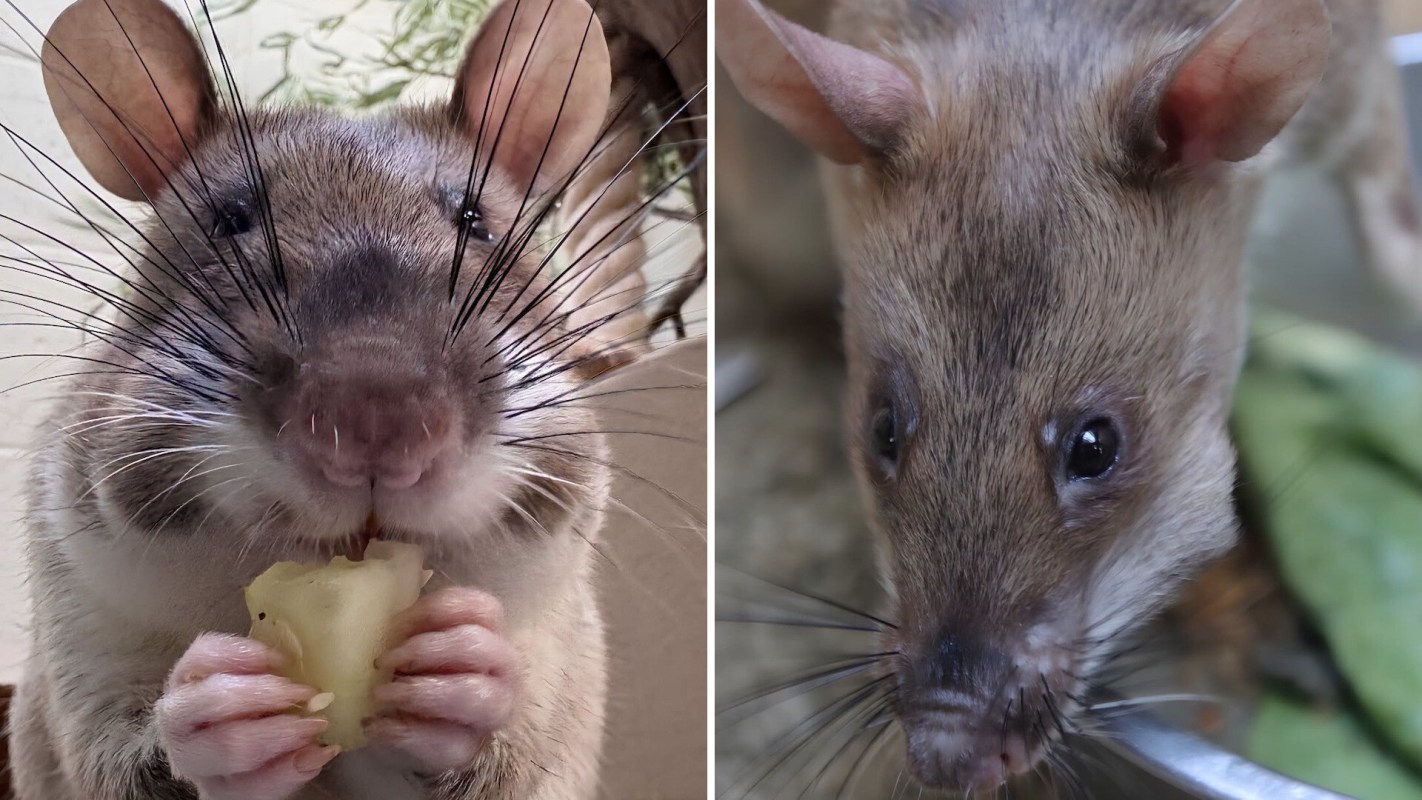
Three giant rats with life-saving talents have a new home in California.
Here's what to know
Three African giant pouched rats, commonly called "HeroRATs" for their remarkable scent-detection skills, have moved into Sacramento Zoo.
As the Sacramento Bee reported, the plan is to keep the animals on-site and later include them in educational programs for visitors.
After unveiling the new arrivals at a debut event, the zoo said future demonstrations will highlight how the rats move through tight spaces and use smell to locate specific items.
Training for the trio came from APOPO, a nonprofit based in Belgium that operates in Africa and Asia.
Using their noses, the rats have helped detect tuberculosis infections, locate landmines, and identify trafficked wildlife products such as elephant ivory, rhinoceros horns, African blackwood, and giraffe hides and hair.
TCD Picks » Quince Spotlight
💡These best-sellers from Quince deliver affordable, sustainable luxury for all




National Geographic described some of the traits that make the species well suited to this work: "They're calm, easier to train than some dogs, and able to work up to seven or eight years (they live eight to 10 years in captivity)."
More background
African giant pouched rats may not fit the usual image of a conservation hero, but their physical traits help explain why they stand out.
According to National Geographic, "their body alone is generally longer than a 13-inch MacBook Air, and their tail is equally as long, if not longer."
The publication added, "A giant pouched rat's sense of smell is so strong that they could conceivably detect half a drop of chlorine in a space the size of 20 Olympic-size swimming pools."
Detecting landmines can make areas safer for communities, while identifying tuberculosis and wildlife contraband can support public health and anti-trafficking efforts.
What's being done?
At the zoo's amphitheater, visitors can expect demonstrations of the rats' scent-based abilities.
Sacramento Zoo animal care supervisor Jonelle Mason said, "We're so excited to bring these heroes and their critically important conservation message to zoo guests."
Where can I learn more?
Other trained animals are helping with high-stakes conservation and public health work.
• In Tanzania, giant rats hunt down wildlife traffickers by sniffing out ivory and other illegal goods.
• Rats' sense of smell is helping speed up tuberculosis detection.
• Puppies trained to protect wildlife are supporting conservation efforts across Africa.
• In New Zealand, conservation dogs detect possums before the destructive pests cause damage.

Get TCD's free newsletters for easy tips, smart advice, and a chance to earn $5,000 toward home upgrades. To see more stories like this one, change your Google preferences here.






