


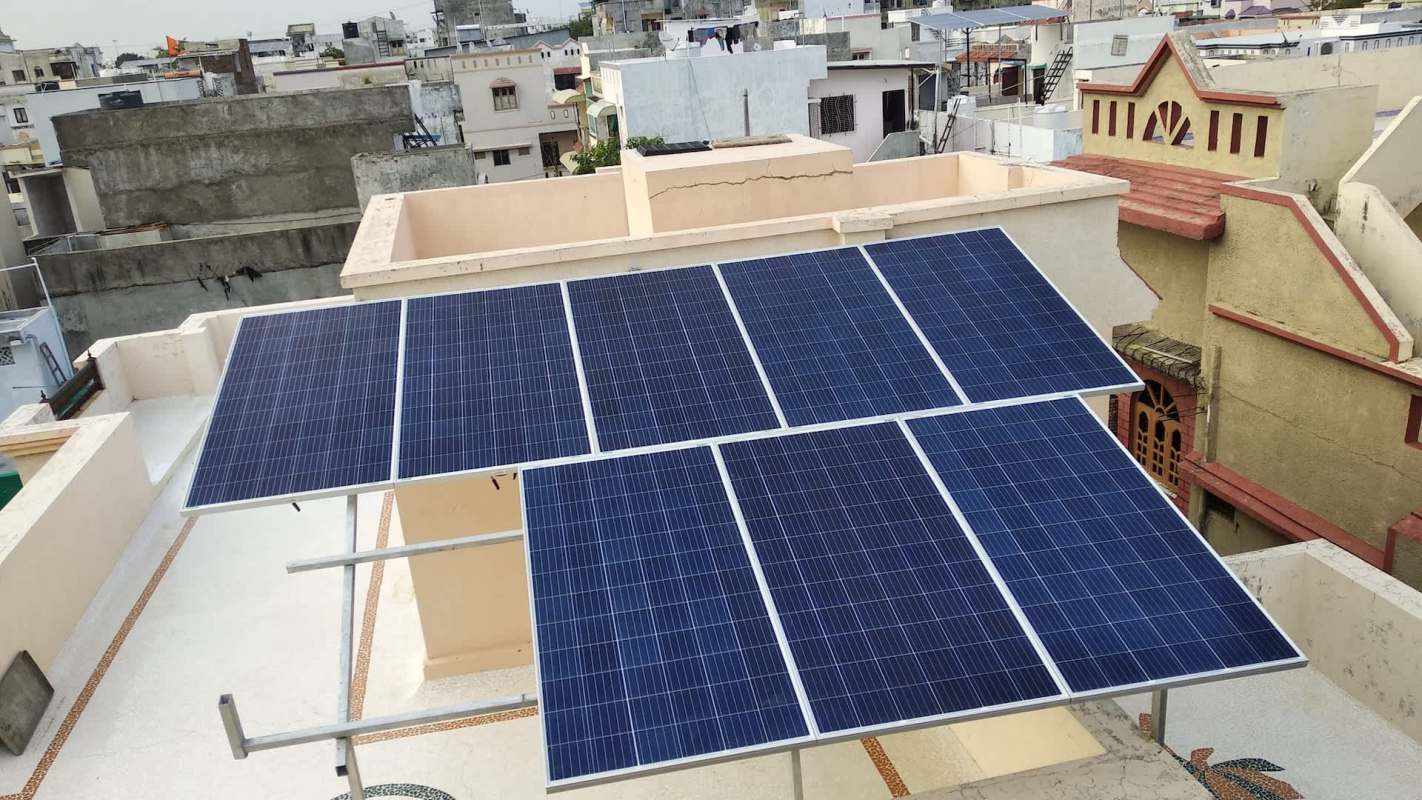
A homeowner in India installed a new 5-kilowatt solar system and expected it to make a serious dent in the household electric bill, but their monthly energy bills are still coming in high.
That frustrating gap sparked discussion about why strong solar output does not always translate into the lower bills homeowners expect.
Here's what to know
In a Reddit post, the user said net metering was already active, but the numbers still didn't seem to make sense. In the post, the homeowner said the home usually consumes around 750 to 800 kilowatt-hours each month, while the 5 kW hybrid setup, which does not yet have a battery, produces about 550 to 600 kWh. August generation came in at roughly 579 kWh.
The original poster wrote: "So I should only need around 200 kWh from the grid. But my bill is still ₹4,000 to ₹5,000 a month (about $45 to $60), which feels too high."
People in the comments said the issue could come down to when the household is using electricity, not just how much the panels make overall, especially since a 5 kW system is often not large enough to offset a full family's usage.
One commenter wrote: "If you have no battery then your consumption at night is not covered by your solar at all. So if you run AC's, lights and water heaters(geysers) it will all be charged from the grid. Then there's cloudy weather to consider. 5kw is what you get at peak sunlight hours. Not the whole day, and not when it's cloudy."
In many areas, net metering is used to credit a solar owner for production from their panels that goes beyond their usage so they can then "draw from" that overage at night, even without a battery, but each area's rules and plans may differ.
Several other replies said bills do not always fall in lockstep with solar production because utilities may still apply fixed fees and monthly surcharges.
Save $10,000 on solar panels without even sharing your phone number Want to go solar but not sure who to trust? EnergySage has your back with free and transparent quotes from fully vetted providers that can help you save as much as $10k on installation. To get started, just answer a few questions about your home — no phone number required. Within a day or two, EnergySage will email you the best local options for your needs, and their expert advisers can help you compare quotes and pick a winner. |

One Reddit user added that "most electric bills involve both fixed and variable costs," while others suggested confirming that the meter correctly records imported and exported electricity as separate figures.
Going solar is one of the best ways to save money on home energy, but the payoff depends on system design, pricing, and how your household uses electricity. Homeowners considering panels can try EnergySage to get free solar installation estimates and compare quotes.
More background
The 5 kW label refers to maximum output under strong sun, not a steady production level throughout the day. Cloud cover can reduce real-world generation.
Solar production and household demand also may not happen at the same time. A home can send power to the grid around midday and still need to buy a lot back later when larger appliances are running. Net metering can reduce that impact, but the savings still depend on local tariffs and billing rules.
More From EnergySage
💡Go deep on the latest news and trends shaping the residential solar landscape


Breaking the numbers down into total generation, self-consumption, exports, and imports can help homeowners spot billing issues, shift appliance use to better hours, and decide whether a battery would be worth the upfront cost.
What can be done?
One useful step is to match the inverter readout with the utility bill for the same dates and compare total generation, exported electricity, and imported electricity.
It may also help to see whether major loads such as water heaters, washing machines, or air conditioning units can be moved into sunny hours.
For people shopping for panels, EnergySage's solar map shows the average cost of a home solar panel system state by state, as well as details on solar panel incentives. Together, these resources can help homeowners get the best price for rooftop solar panels and access available incentives.
That comparison shopping can make a major difference. With EnergySage's help, the average person can save up to $10,000 on solar purchases and installations. For anyone still deciding whether solar pencils out, that kind of price transparency can make the economics much clearer.
Adding battery storage to a solar setup is one of the best ways to protect your home during outages, save money on energy, and go off-grid. It can also help households use more of their own solar power after sunset instead of buying it back from the grid. Homeowners can explore EnergySage for information about home battery storage options, including competitive installation estimates.
The homeowner opened the discussion by asking for advice: "I would really love any advice on how I can reduce my electricity bill."
One person commented: "Use as much of the solar power you can when the sun shines."
Where can I learn more?
These articles take a closer look at rooftop solar costs, household savings, and real-world system performance. They cover India's solar boom, why homeowners in other countries are racing to install panels, and what solar users are learning about bills, payback, and grid benefits.
• Across India, rooftop solar installations jumped 125% as PM Surya Ghar spurred household demand.
• In the Philippines, homeowners rushed to buy rooftop solar panels as soaring power bills changed the math.
• Homeowners on Reddit found that solar math gets complicated when production, payback, and bills diverge.

Get TCD's free newsletters for easy tips, smart advice, and a chance to earn $5,000 toward home upgrades. To see more stories like this one, change your Google preferences here.






