


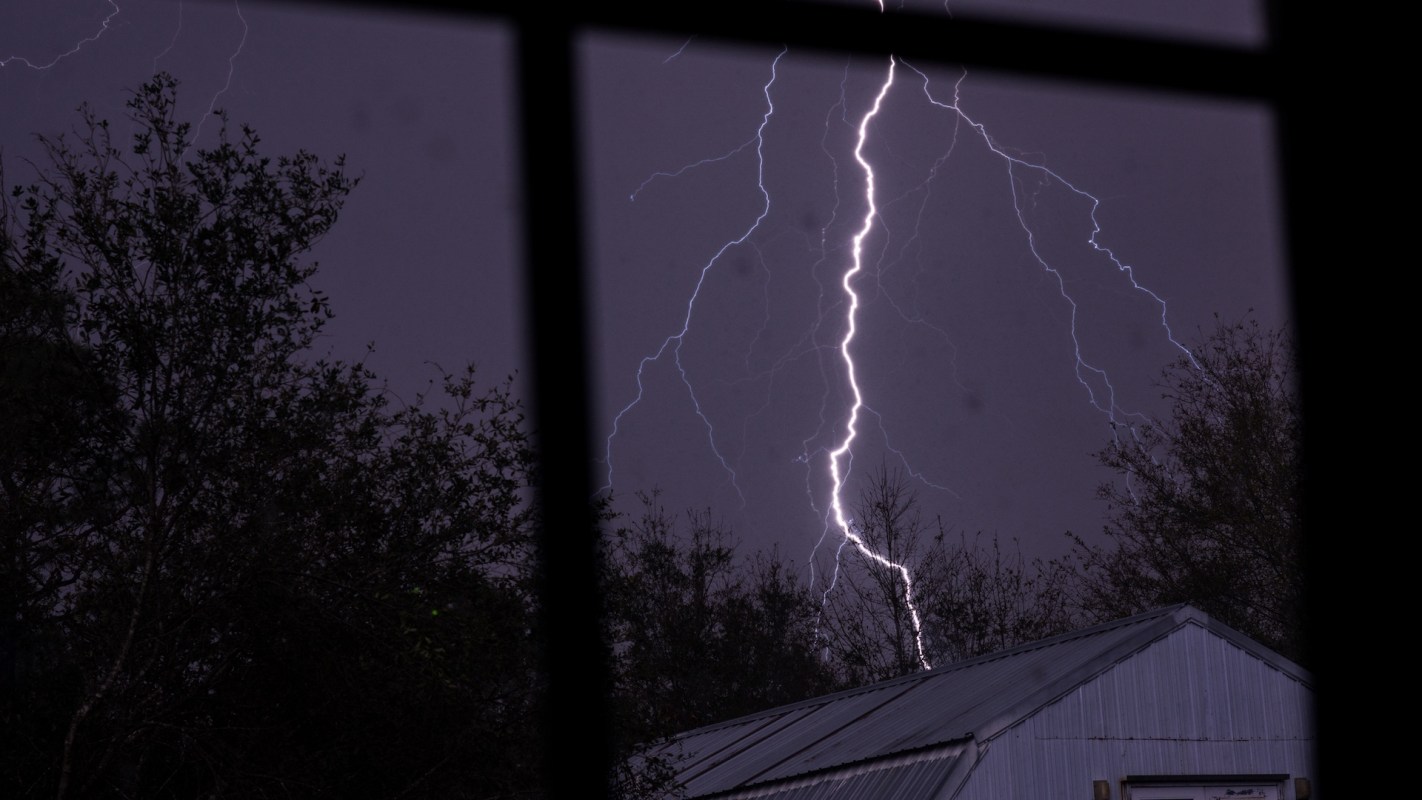
A homeowner's return from vacation took a concerning turn after a neighbor's house was struck by lightning and caught fire — and their own home began showing unusual electrical issues.
What initially seemed like a couple of dim lights quickly became a warning about the hidden damage a nearby lightning strike can leave behind — and the relatively affordable protection that may help homeowners avoid even bigger losses.
Here's what to know
In Reddit's r/AskElectricians community, the original poster described the electrical problems they experienced after their neighbor's house was struck by lightning.
"When we returned, we noticed several electrical issues that were not present before," the OP wrote.
The issues included a tripped breaker, two dim ceiling lights, and a loss of power to the outlet powering their modem.
The homeowner added that lights in other parts of the house were "occasionally becoming dim," another sign that the nearby strike may have caused wider electrical damage.
TCD Picks » Quince Spotlight
💡These best-sellers from Quince deliver affordable, sustainable luxury for all




Concerned but not wanting to waste money on an unnecessary inspection, the OP asked Reddit whether they should hire an electrician.
"Yes, you need an electrician," answered one commenter unequivocally. "Get a whole house surge protector installed too; they're pretty cheap (relatively speaking)."
Another commenter recounted damage from a lightning event near their own property, saying it knocked out networking equipment, air-conditioning parts, furnace components, a generator control board, and other equipment despite existing surge protection.
However, according to the commenter, their electrician's takeaway was that "without the surge protectors a lot worse could have happened."
More background
One commenter explained why a lightning strike that doesn't even directly hit a home could cause electrical problems.
"A nearby lightning strike produces a magnetic field that will induce surges on the surrounding electrical systems," they said.
Commenters said that electrical damage from a nearby lightning strike won't necessarily show up right away. Dimming lights, tripped breakers, damaged outlets, failing electronics, or damage to home appliances can all show up over time.
Another commenter who said they had worked in electrical testing said they would often measure insulation resistance after cases like this and that "usually we would find some damaged insulation."
What can be done?
Commenters generally agreed that the OP should bring in a qualified electrician to inspect the home's electrical system.
Another frequent recommendation was a whole-house surge protector to help protect the OP's home from future damage. Because a surge protector is installed at the main panel, commenters said, it can offer relatively low-cost protection against surges that might otherwise ruin electronics or appliance components.
Another suggestion was to call the utility company and ask it to review the home's lightning protection, grounding, and arrestors.
"It's worth a phone call," said one commenter regarding reaching out to the OP's utility company. "No charge where I worked."
Where can I learn more?
For more on home electrical problems and outage prep, these articles look at storm damage, wiring surprises, and backup power setups.
• A homeowner discovered an outlet was never wired correctly at all after years in the house.
• In Orlando, OUC billed a homeowner thousands after a neighbor's bamboo hit power lines.
• During scorching weather, one homeowner stayed cool because the electricity never went out.
• When a storm blacked out the street, one family didn't skip a beat with solar.
• Generac is rolling out home backup generator alternatives that pair batteries and solar for outages.

Get TCD's free newsletters for easy tips, smart advice, and a chance to earn $5,000 toward home upgrades. To see more stories like this one, change your Google preferences here.






