


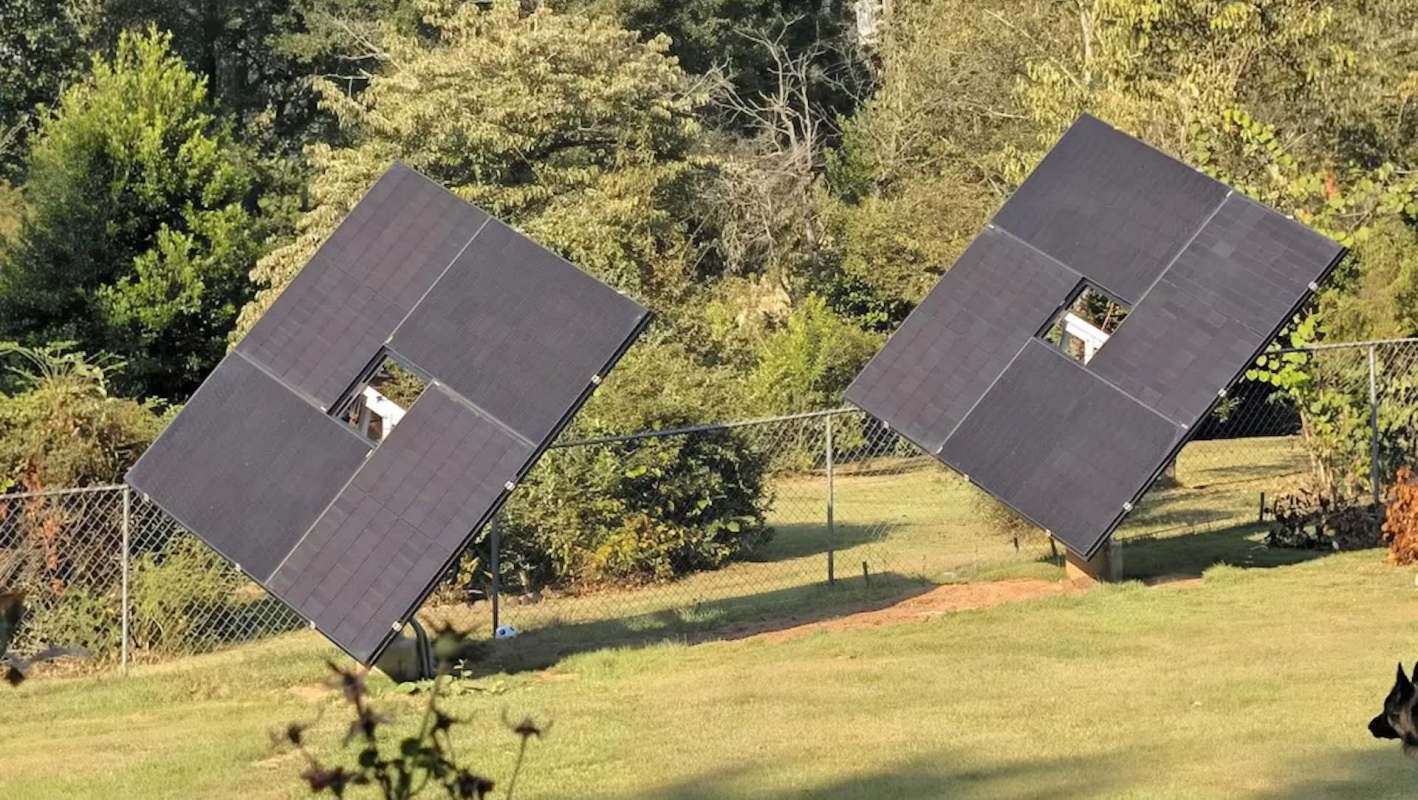
After sitting boxed up for two years, a DIYer finally installed a pair of dual-axis solar trackers.
Here's what to know
In a Reddit thread on r/diySolar, the original poster said getting the setup working required major rework. They tied both solar trackers to a single controller through an external H-bridge relay so the units would move together, built a custom welded steel tube frame to carry the panels, and upgraded to 660-pound actuators to support the added weight.
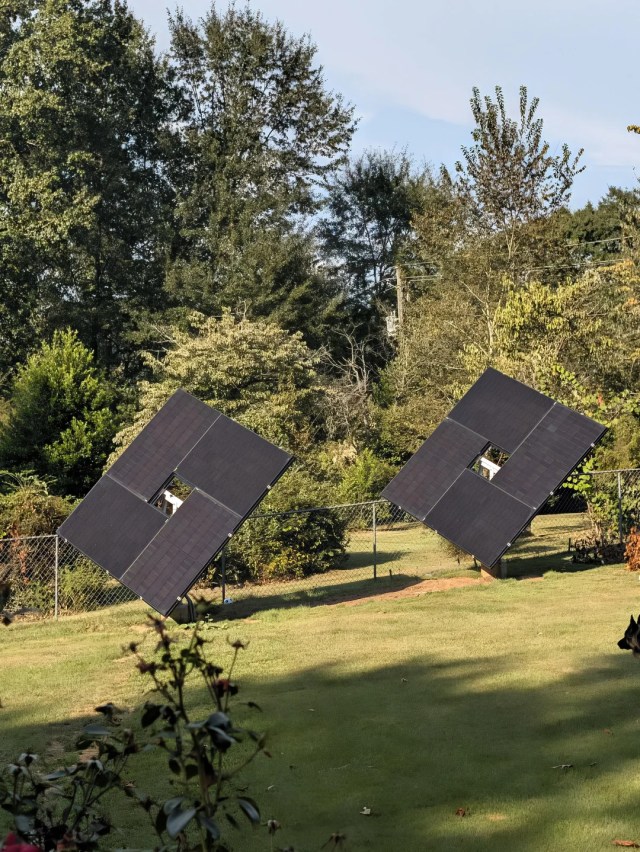
The OP shared an image of the final product, which looked more like modern garden art than solar panels.
The builder said the economic case is usually the biggest weakness of systems like this. With solar panels much cheaper than they used to be, they said it often makes more sense to install extra panels on a fixed mount than to spend more on tracking hardware.
For the builder, though, the project was less about maximizing financial return and more about having "functional yard art" that helps teach the neighborhood about solar power.
Along with a joke about leaving no element of the original system unaltered, one commenter said, "I like the 'flower' shape you've made using those panels."
"It's a bummer these aren't financially optimal 'cause they're cool as hell," another user added.
Going solar remains one of the best ways to save money on home energy, particularly when homeowners take time to compare their options. One easy place to start is EnergySage, which offers free solar installation estimates and lets shoppers compare quotes.
Save $10,000 on solar panels without even sharing your phone number Want to go solar but not sure who to trust? EnergySage has your back with free and transparent quotes from fully vetted providers that can help you save as much as $10k on installation. To get started, just answer a few questions about your home — no phone number required. Within a day or two, EnergySage will email you the best local options for your needs, and their expert advisers can help you compare quotes and pick a winner. |

More background
Dual-axis solar trackers are designed to follow the sun across the sky, which can increase electricity production from a limited number of panels.
But that added output comes with tradeoffs. These systems also introduce moving parts, controls, maintenance concerns, and installation complexity — all of which can add costs while standard solar panels are relatively inexpensive nowadays.
If a homeowner has enough roof or yard space, adding more fixed panels can often be simpler and cheaper than investing in motors and hardware meant to squeeze more output from the same array.
What can be done?
Estimating energy use, thinking about where panels would go, and comparing fixed-mount systems can help homeowners decide whether niche hardware is worth the extra cost. In many cases, simple rooftop or ground-mounted solar will deliver the strongest financial return.
More From EnergySage
💡Go deep on the latest news and trends shaping the residential solar landscape

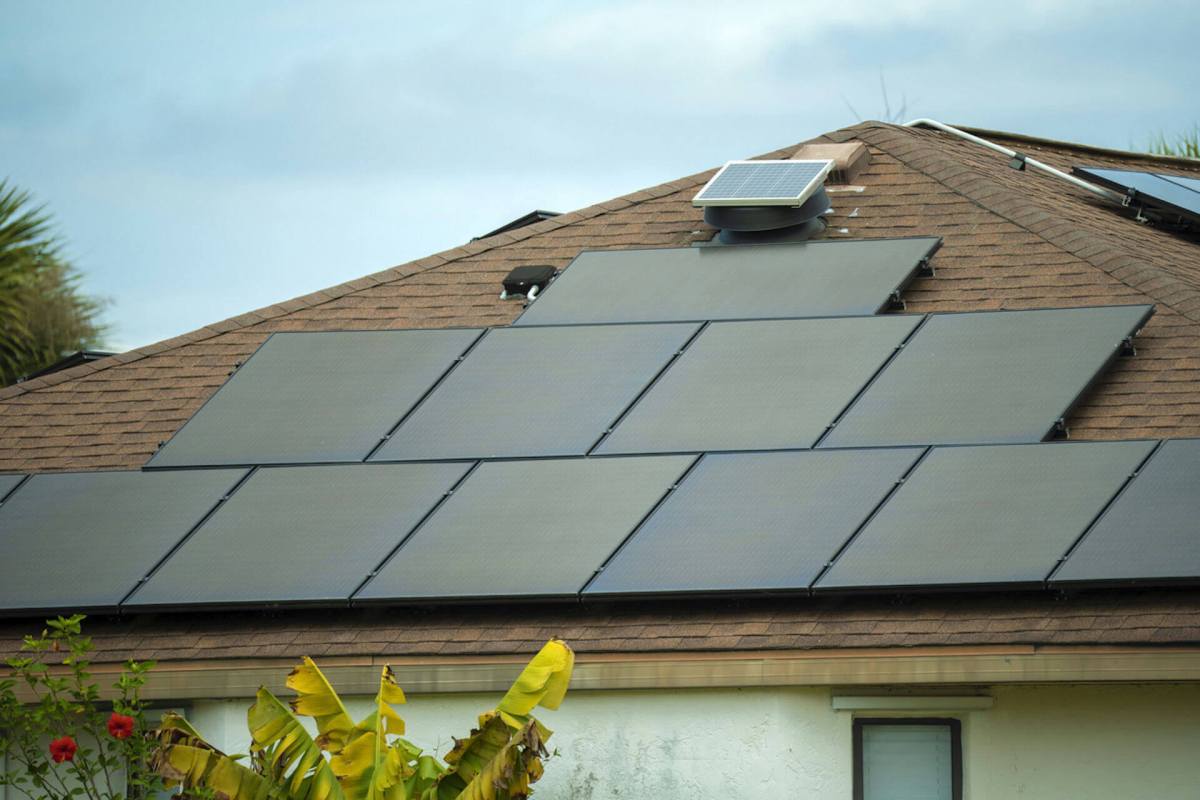

Tools can also make that homework easier. EnergySage's solar map shows the average cost of a home solar panel system by state, along with details on solar panel incentives for each state. Together, those resources can help homeowners get the best price for rooftop solar panels and access available incentives.
Adding battery storage to a solar setup is one of the best ways to protect your home during outages, save money on energy, and go off-grid. Homeowners can also explore EnergySage for information about home battery storage options, including competitive installation estimates.
Where can I learn more?
These stories explore the same kinds of tradeoffs homeowners face when comparing solar setups.
• For many homeowners, routine rooftop cleaning and repairs matter more than elaborate hardware.
• Homeowners on Reddit found the math on passive income tougher than solar sales pitches suggest.
• A solar expert said the persistent myth about modern panels still misleads first-time buyers.
• One homeowner's simple cleaning hack delivered a surprisingly sharp jump in solar output.
• For shoppers starting from scratch, home solar options and installation can quickly get complicated.

Get TCD's free newsletters for easy tips, smart advice, and a chance to earn $5,000 toward home upgrades. To see more stories like this one, change your Google preferences here.






