


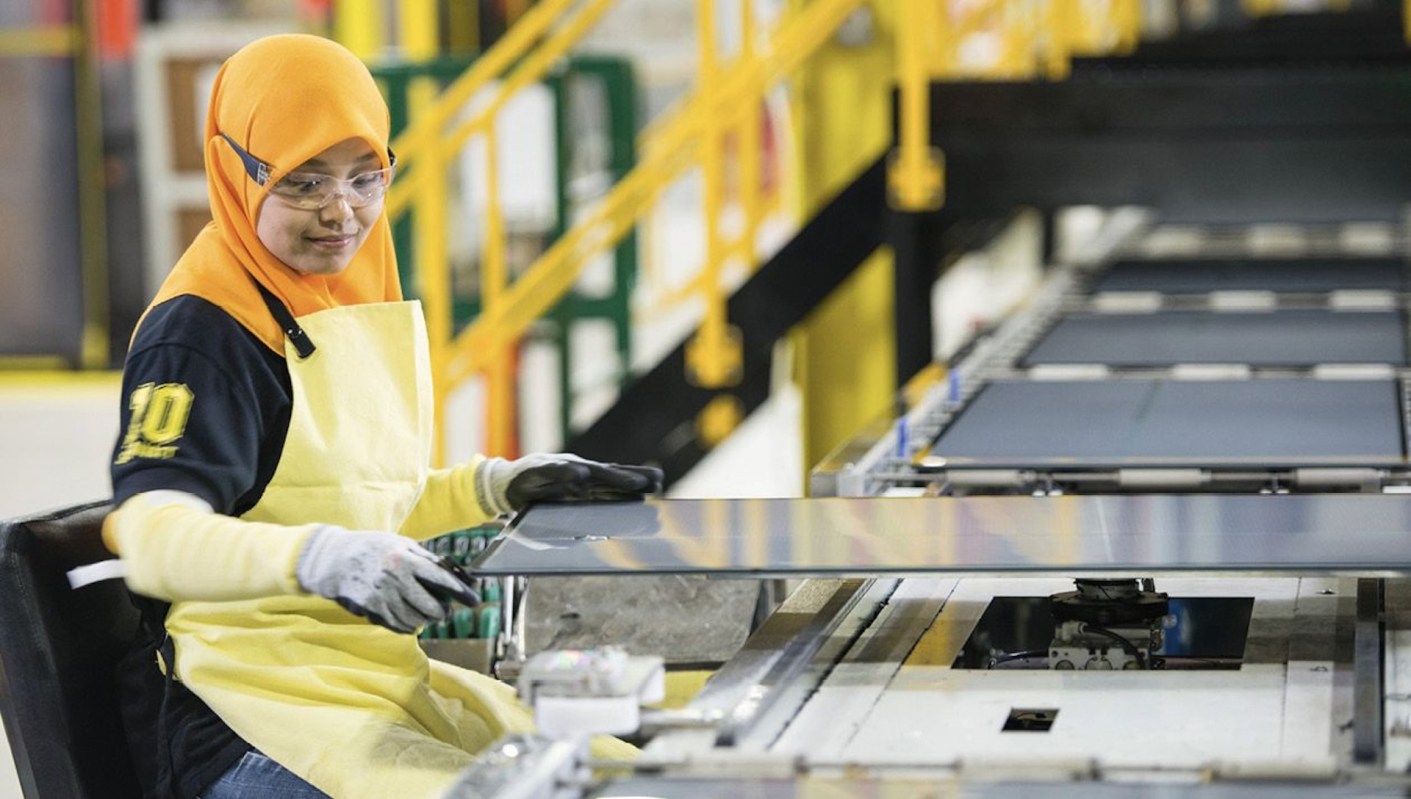
U.S. solar manufacturing has reached a benchmark that once seemed out of reach.
By the second quarter of 2026, domestic factories had cumulatively produced 100 gigawatt-peak direct current of solar PV modules.
The milestone signals a shift in how the industry measures progress, moving the focus away from flashy factory announcements and toward the products actually coming off U.S. assembly lines.
Here's what to know
As PV Magazine USA reported, that 100-GW total covers modules physically made in U.S. plants, tallied factory by factory from records spanning more than five decades.
After years in which announced projects, projected capacity, and factory "map pins" often failed to become significant output, the report argued that this milestone should refocus attention on what factories are actually producing. It described the benchmark as "a sharp wake-up call to the U.S. solar industry," saying real production data gives a clearer view of the market.
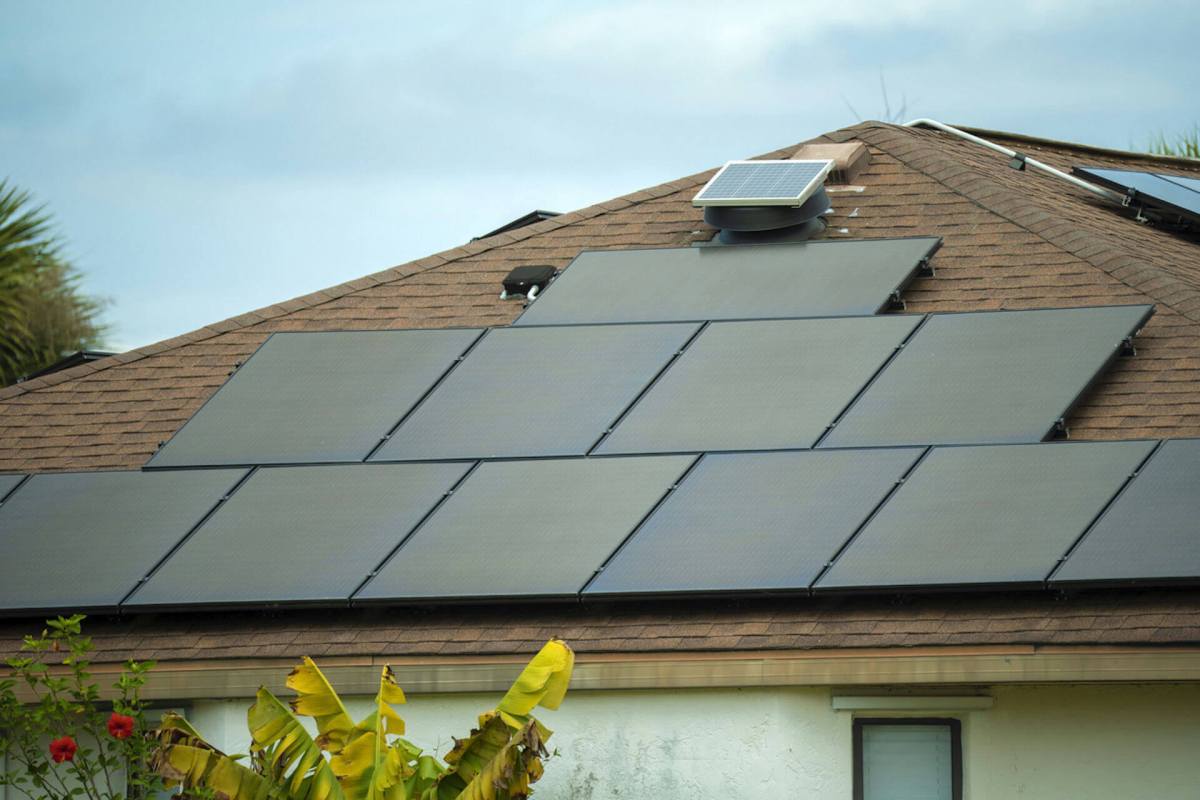
For homeowners, going solar remains one of the best ways to save money on home energy. If you're considering rooftop panels, try EnergySage to get free solar installation estimates and compare quotes.
Domestic output has accelerated sharply since the Inflation Reduction Act became law in 2022. The first 100 GW took about half a century to produce, while the next 100 GW of U.S. module production could arrive in just three years.
More background
The United States was an early force in solar manufacturing. By 1985, domestic producers had made about 100 megawatts of PV modules, and the country accounted for most global sales up to that point before large-scale manufacturing leadership moved to Japan and later to Asia more broadly.
Save $10,000 on solar panels without even sharing your phone number Want to go solar but not sure who to trust? EnergySage has your back with free and transparent quotes from fully vetted providers that can help you save as much as $10k on installation. To get started, just answer a few questions about your home — no phone number required. Within a day or two, EnergySage will email you the best local options for your needs, and their expert advisers can help you compare quotes and pick a winner. |

There were later periods of renewed activity, especially during the thin-film surge from roughly 2007 to 2012, when companies such as Solyndra, MiaSole, Stion, and Abound Solar attracted major attention. Still, many of those investments produced more buzz than durable output.
First Solar has been a notable exception. Analysis of company-level production records showed First Solar was responsible for roughly 39% of total U.S. solar module production through the end of the second quarter of 2026, supported by its Ohio operations and newer factories in Alabama and Louisiana.
Stronger domestic production could mean a more resilient supply chain and a firmer foundation for wider solar adoption. It does not automatically guarantee cheaper panels, but it can help reduce dependence on imported equipment and support more stable growth.
What's being done?
Growth has been driven in large part by policy. Section 201 safeguards helped revive some crystalline-silicon module manufacturing in the late 2010s, and the Inflation Reduction Act's Section 45X Advanced Manufacturing Production Credit further boosted the economics of making that equipment domestically.
More From EnergySage
💡Go deep on the latest news and trends shaping the residential solar landscape


Those incentives helped companies, including Qcells, JinkoSolar, Silfab, Heliene, Canadian Solar, SEG Solar, and T1 Energy, expand or ramp up U.S. operations. The next big question is whether investment in U.S. cells, wafers, ingots, and upstream materials can form a lasting manufacturing ecosystem that supports itself.
For households hoping to benefit from the solar boom, EnergySage can simplify the process. With EnergySage's help, the average person can save up to $10,000 on solar purchases and installations.
EnergySage's solar map shows the average cost of a home solar panel system by state, as well as details on local solar panel incentives. Together, these resources can help homeowners get the best price for rooftop solar panels.
Adding battery storage to a solar setup is one of the best ways to protect your home during outages, save money on energy, and go off-grid. Homeowners can also explore EnergySage for information about home battery storage options, including competitive installation estimates.
"True domestic progress can only be measured by focusing on verified production metrics within an integrated ecosystem," PV Magazine USA's Finlay Colville said.
Where can I learn more?
The 100-GW milestone is part of an effort to rebuild U.S. solar manufacturing.
• Heliene and Suniva moved made-in-USA solar panels closer to market through a multimillion-dollar supply deal.
• First Solar's Ohio-rooted expansion has brought prosperity to communities while anchoring U.S. module output.
• Silfab's supply deal with Pivot Energy showed strong solar demand driving projects across the United States.

Get TCD's free newsletters for easy tips, smart advice, and a chance to earn $5,000 toward home upgrades. To see more stories like this one, change your Google preferences here.






